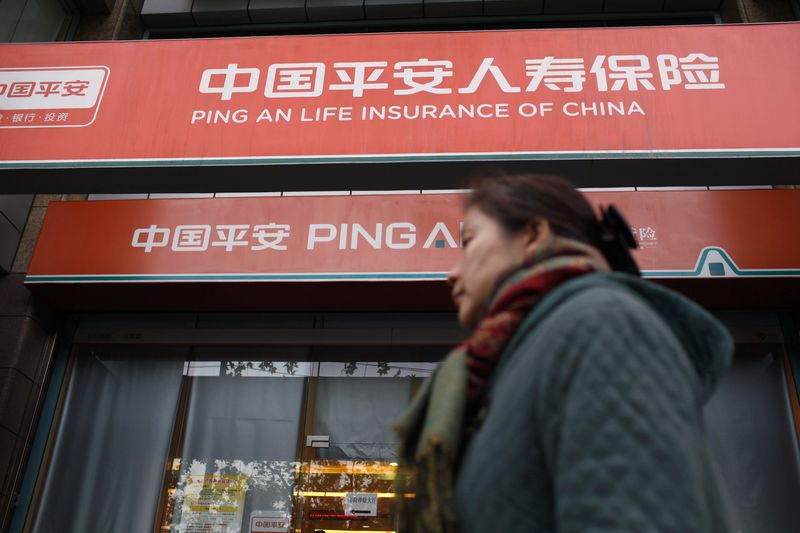
Ping An Insurance reported 7.6% year-on-year operating profit growth to 40.78 billion yuan in Q1, while new business value in life and health insurance rose 20.8% and property & casualty premium income increased 6.8%. Net profit fell 7.4% to 25.02 billion yuan due to investment-related volatility, but shares still rose 5.2% in Hong Kong. The banking unit also posted steady growth, with revenue up 4.7% and net profit up 3.0%, supporting a resilient operating backdrop.
The immediate read-through is not just a strong headline for insurers and banks, but a signal that the market is rewarding defensiveness with embedded optionality. When operating metrics improve despite investment volatility, the equity story shifts from simple earnings quality to balance-sheet resilience: firms with diversified fee pools, sticky liabilities, and cross-sell engines should command a premium over single-line financials in an uneven-growth environment. The second-order effect is competitive rather than macro: large incumbents with distribution breadth can keep taking share from smaller regional players that lack the capital, product breadth, or tech stack to monetize households across insurance, lending, and wealth.
The key risk is that this kind of “good operational, noisy reported profit” setup can reverse quickly if capital markets stop cooperating. In the near term, that means mark-to-market pressure can obscure underlying franchise health for several quarters, creating entry windows on temporary earnings misses. Over 6-12 months, the real catalyst is whether customer acquisition and cross-sell translate into sustained renewal economics; if they do not, the multiple expansion likely fades and the market re-rates the business back toward a plain-vanilla financial.
The contrarian angle is that the market may be underestimating how much of the growth is defensive rather than cyclical. In a weak domestic demand backdrop, households often shift to incumbents perceived as safer rather than cheaper, which can actually widen the moat of the largest platforms. That creates a non-linear outcome: modest macro weakness can still support share gains, while an outright credit or property shock would be the cleanest way to break the thesis, not ordinary earnings noise.
AI-powered research, real-time alerts, and portfolio analytics for institutional investors.
Request DemoOverall Sentiment
mildly positive
Sentiment Score
0.35
