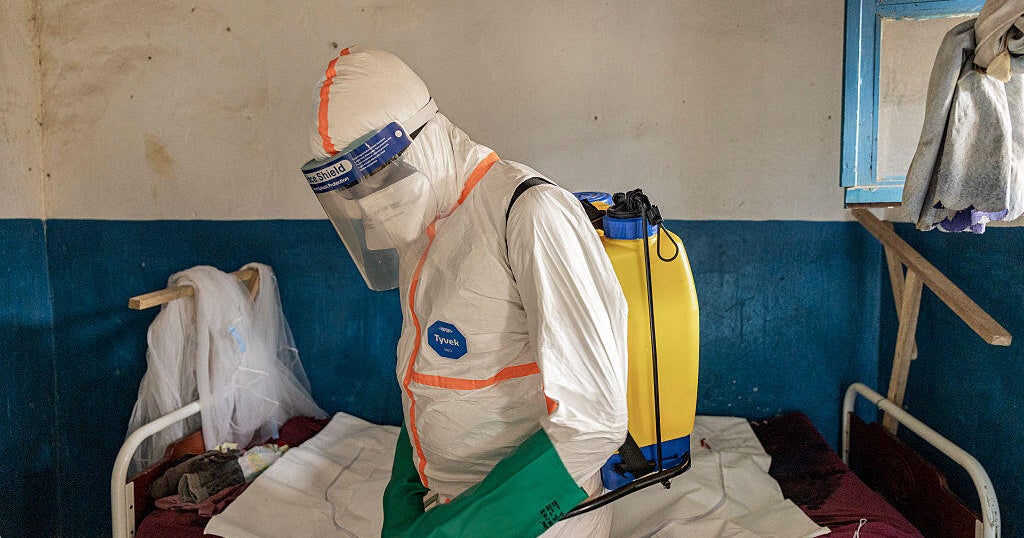
DHS will require all U.S.-bound passenger flights carrying foreign travelers who have been in Congo, Uganda or South Sudan within the prior 21 days to route through Washington-Dulles starting Thursday, as U.S. health authorities tighten Ebola-related controls. The CDC separately barred non-U.S. passport holders with recent travel to those countries from entering the U.S., underscoring an escalating public-health response to an outbreak that WHO says has at least 600 suspected cases and 139 suspected deaths. The move is negative for travel flows and airline operations, but the broader market impact should be limited outside affected routes and carriers.
The immediate market impact is less about headline airlines and more about operational friction at a single U.S. gateway. For carriers with meaningful Africa-to-U.S. connecting traffic, forcing flows through one airport raises misconnect risk, ground-time variability, and crew/aircraft rotation complexity; that creates a small but real cost layer that can persist for weeks if screening protocols remain tight. Cargo is excluded, so the direct hit is on passenger yield and traveler convenience rather than broad trade throughput.
The more interesting second-order effect is on policy and capacity allocation. When public-health rules concentrate processing at one port of entry, bottlenecks tend to migrate from aviation demand to airport services, CBP staffing, and downstream accommodation/logistics near the gateway airport. That can support short-dated demand for airport support services while also raising the odds of a broader travel advisory if case counts keep rising, which would turn a procedural restriction into a demand shock over the next 1-3 months.
For the market, the key risk is that this remains a contained, symbolic response; if so, travel equities likely shrug after an initial de-risking. The contrarian read is that the real downside is not Ebola directly but uncertainty around screening rules and the possibility of additional countries being added, which would hit booking curves before it hits reported traffic. Health system and biotech names only become relevant if this escalates into procurement of diagnostics or protective services; absent that, the listed CHD exposure is effectively noise.
If case growth slows or no U.S. secondary transmission appears within 2-4 weeks, the current restriction layer should fade into operational background. If not, expect a nonlinear response from airlines and travel intermediaries because route planning and pricing can adjust faster than consumers can rebook, amplifying near-term volatility in the most exposed international names.
AI-powered research, real-time alerts, and portfolio analytics for institutional investors.
Request DemoOverall Sentiment
mildly negative
Sentiment Score
-0.20
Ticker Sentiment
