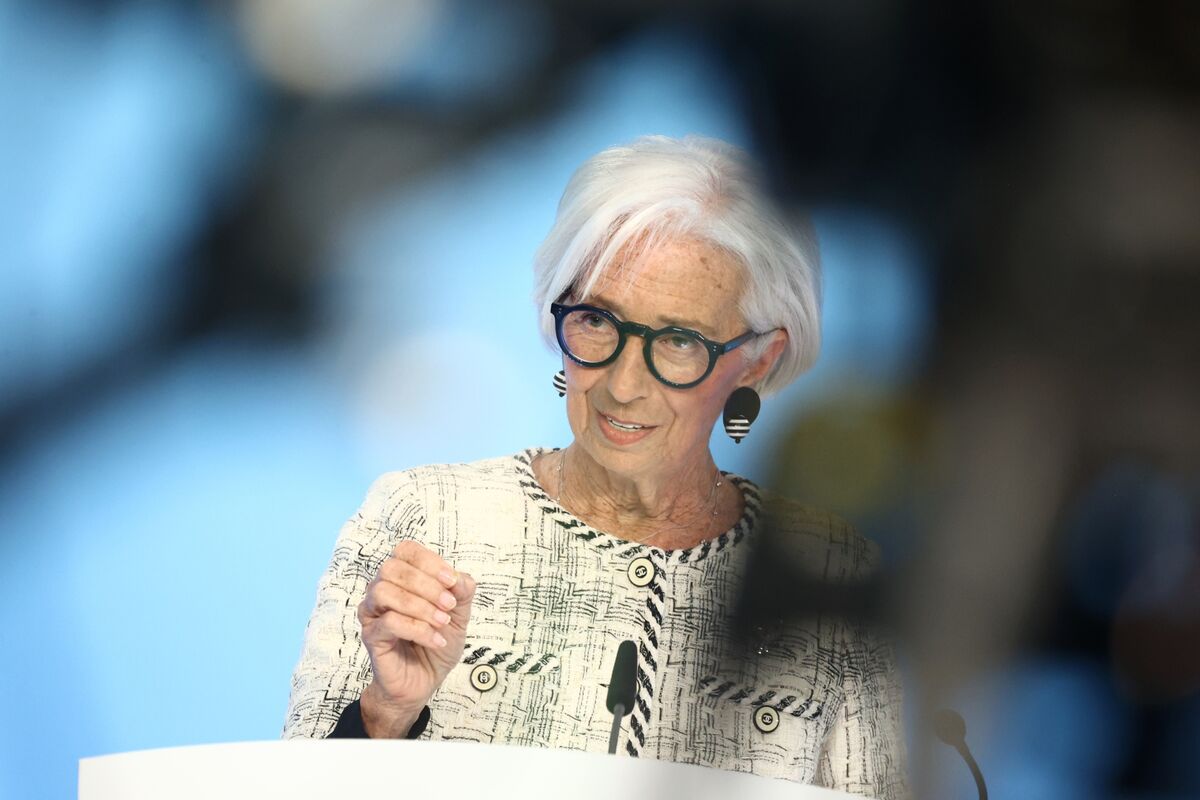
ECB President Christine Lagarde said Europe’s dependence on imported energy—about 60% of total supply, almost all fossil fuels—is "clearly unsustainable" and warned that soaring energy costs tied to the Iran war should be a wake-up call. The remarks reinforce the economic and inflationary risks from geopolitical shocks and support a push toward cleaner domestic energy sources. The article is policy-focused and macro-relevant, but it does not announce a direct market or policy action.
The immediate market read-through is not “more renewables” in the abstract; it is a higher structural risk premium on Europe’s imported energy complex. Any sustained geopolitical shock that tightens gas/LNG and refined-product flows tends to widen the gap between European industrial power costs and US/Asia, which is bearish for marginal European manufacturers, chemicals, and metals even if nominal GDP holds up. The second-order beneficiary is not only renewable developers, but also grid equipment, interconnection, storage, and efficiency plays that monetize capex urgency rather than commodity direction.
The bigger medium-term effect is policy acceleration: Europe has historically needed a forcing function to turn energy security rhetoric into permitting reform, utility-scale buildout, and grid investment. That matters because the bottleneck is no longer just generation economics; it is transmission, balancing, and storage. In that regime, winners are the picks-and-shovels companies that can convert higher capex budgets into recurring orders, while losers are pure-play fossil importers and energy-intensive exporters exposed to margin compression.
Consensus likely underestimates the duration of the adjustment. Energy-import dependency cannot be reduced meaningfully in days or weeks, so the near-term impact is mostly a higher volatility regime for power prices and inflation expectations, with the biggest macro transmission through European rate cuts being deferred rather than reversed. A key contrarian point: if energy prices spike hard enough, it can slow the very transition it is supposed to accelerate by squeezing consumer and sovereign balance sheets, which is why the best trades may be in infrastructure enablers rather than broad clean-energy beta.
The main reversal catalyst is a de-escalation in Middle East risk or an LNG supply normalization, which would quickly compress the geopolitical premium and punish crowded renewable sentiment names. Until then, the risk/reward favors relative-value positioning over outright macro calls: long beneficiaries of grid and efficiency spend, short exposed industrial margin proxies, and avoid chasing the most crowded green names where policy hopes are already discounted.
AI-powered research, real-time alerts, and portfolio analytics for institutional investors.
Request DemoOverall Sentiment
mildly negative
Sentiment Score
-0.20
