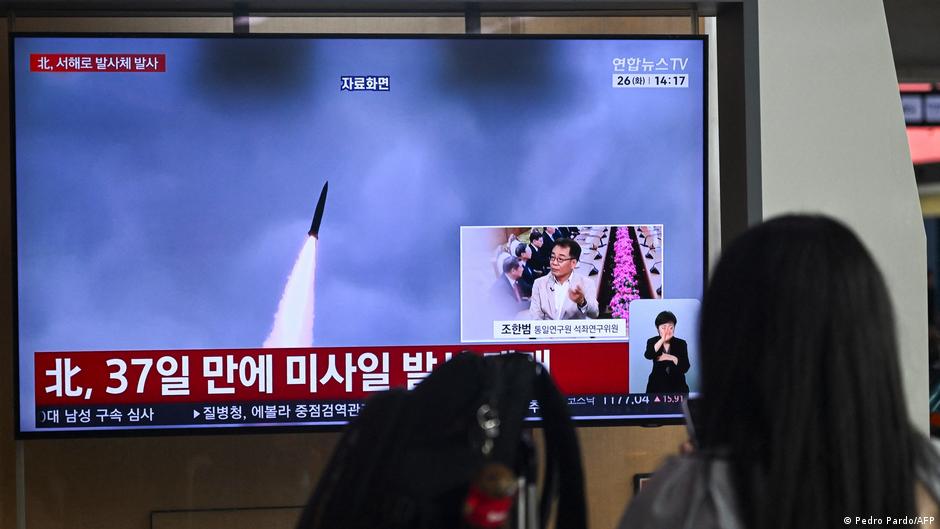
North Korea said it tested a new multi-purpose missile launching system and multiple tactical cruise missile weapon system, with leader Kim Jong Un saying the launches demonstrate upgraded military capability. The tests included AI-guided tactical cruise missiles and a special mission warhead, and were reportedly the country's eighth missile test this year. The developments add to regional tensions and reinforce sanction-related geopolitical risk in Northeast Asia.
This is less a direct market event than a slow-burn risk premium reset. The main second-order effect is not on Korean equities, but on the probability distribution for regional defense spending, missile-defense procurement, and export controls in the U.S., Japan, and South Korea over the next 6-18 months. The AI-guided cruise missile angle matters because it implies a diffusion of lower-cost, more survivable strike capabilities, which usually pushes buyers toward layered sensors, electronic warfare, interceptors, and hardened infrastructure rather than one-off headline responses.
The near-term beneficiaries are defense primes and select electronics suppliers with exposure to missile defense, radar, and command-and-control upgrades. The less obvious losers are civilian logistics and Korea-sensitive industrials if tensions stay elevated: higher insurance premia, contingency inventory buildup, and a modest drag on capex plans can appear before any macro data shows it. The sanctions angle is also important: enforcement often tightens after these events, which can disrupt China-linked transshipment and raise compliance costs for firms with indirect exposure to Northeast Asia supply chains.
The market is likely underpricing duration rather than severity. A single launch cycle fades quickly, but repeated tests can ratchet in a persistent regional bid for defense budgets and keep implied volatility elevated in Japan/Korea-linked assets, especially if rhetoric around deployment near the border hardens. Conversely, the trend reverses only if there is a diplomatic opening or if the U.S./ROK response is surprisingly muted; absent that, the base case is a higher floor for geopolitical risk, not an immediate crash leg.
Contrarian view: the headline may be more bullish for defense than for broad risk-off hedging. Markets often overreact for 24-72 hours, then realize North Korea risk is chronic, not episodic; the better trade is to own the procurement beneficiaries and fade generic Asia beta hedges after the initial spike. The bigger miss is that AI-enabled tactical systems may accelerate spend on counter-drone, EW, and missile defense faster than conventional artillery or legacy platform budgets, creating a relative-value opportunity inside defense rather than across the whole sector.
AI-powered research, real-time alerts, and portfolio analytics for institutional investors.
Request DemoOverall Sentiment
moderately negative
Sentiment Score
-0.35
