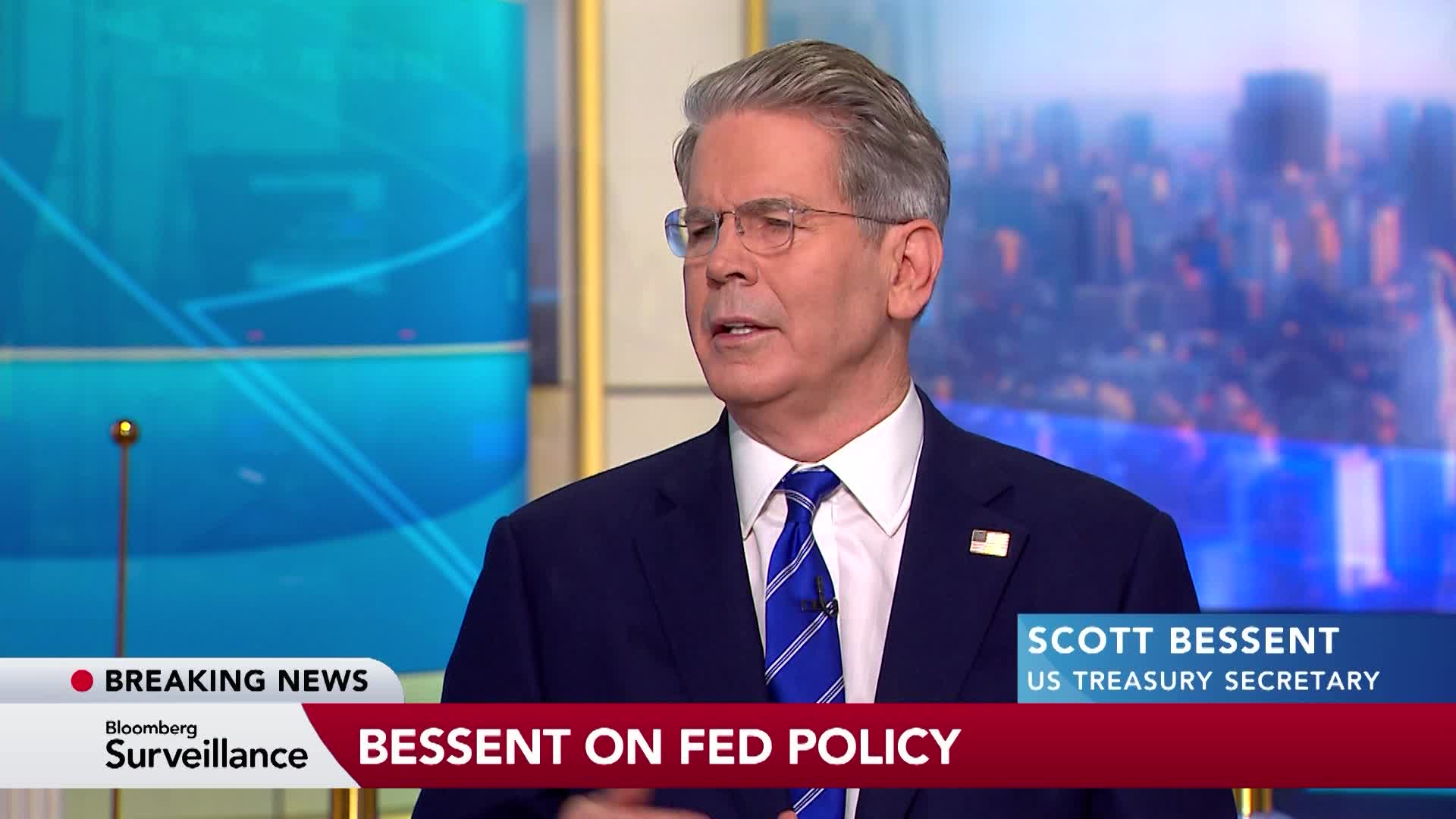
Watch Bessent suggests the Federal Reserve's benchmark interest rate should be 150-175 basis points lower, indicating a view that current monetary policy is overly restrictive. This significant call for substantial easing could signal potential shifts in market expectations regarding future Fed actions and their impact on asset valuations.
Prominent investor Scott Bessent has articulated a strong dovish stance on monetary policy, suggesting the Federal Reserve's benchmark rate is overly restrictive and should be 150 to 175 basis points lower. This call for substantial easing significantly diverges from more modest market expectations and implies a view that current policy is posing a substantial headwind to the economy. The statement is identified as having a dovish tone and a high market impact score of 0.7, indicating that Bessent's opinion is considered influential and could shift market sentiment. Such a significant rate reduction would have broad implications for asset valuations, lowering the discount rate for equities and potentially boosting bond prices, reflecting the "strongly positive" sentiment signal associated with the news.
AI-powered research, real-time alerts, and portfolio analytics for institutional investors.
Request DemoOverall Sentiment
strongly positive
Sentiment Score
0.75
