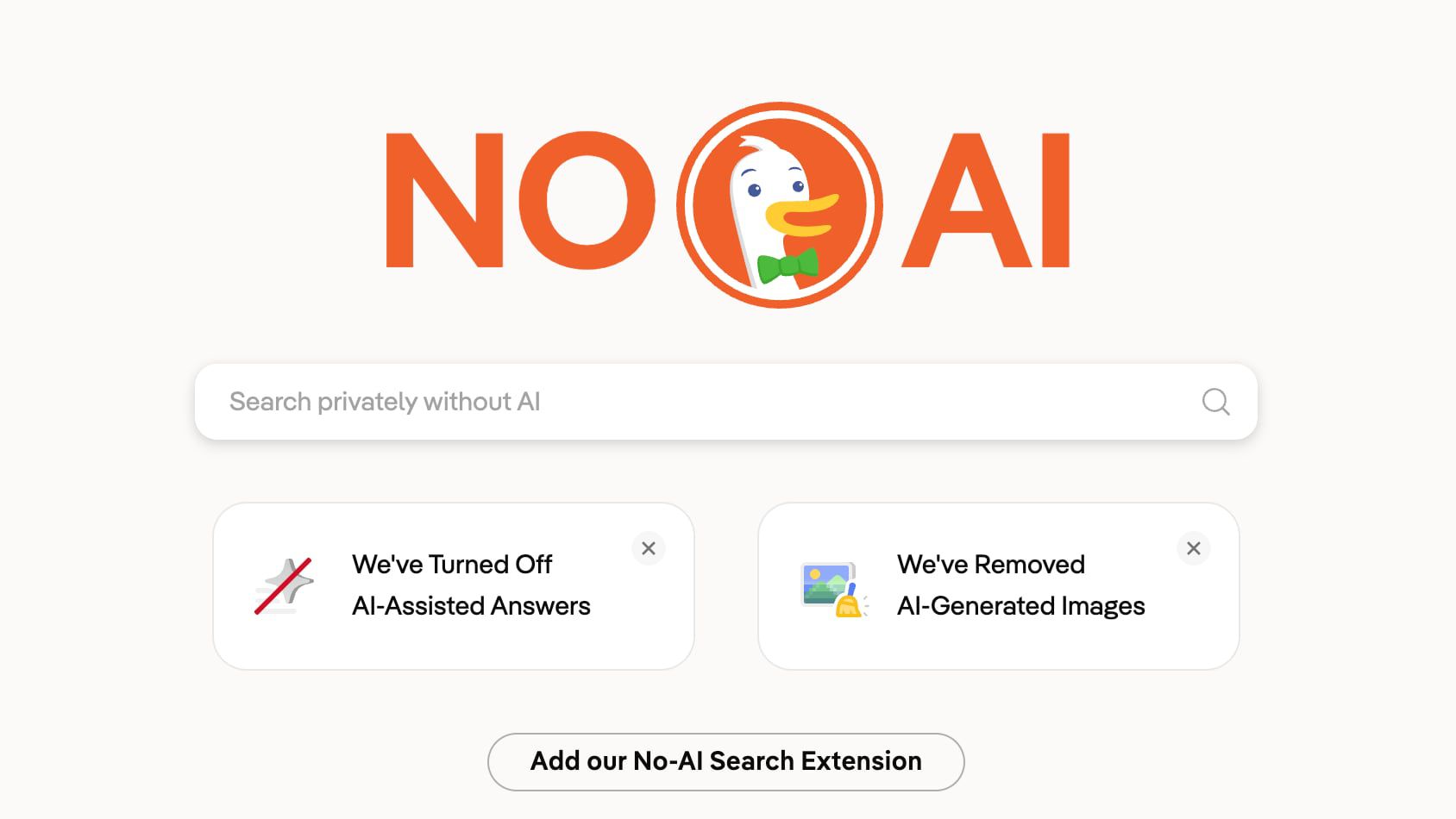
DuckDuckGo said visits to its "No AI" search page more than tripled after Google's May 19 I/O AI search announcements, with traffic hitting 3x by May 28 and averaging about 84% above baseline since then. The surge suggests rising consumer demand for privacy-focused, non-AI search options, and DuckDuckGo is expanding default-No-AI extensions for Chrome and Firefox while planning support for Edge and Opera. The news is positive for DuckDuckGo's positioning, but likely limited in direct market impact.
The immediate beneficiary is not DuckDuckGo so much as the broader anti-friction, anti-surveillance search niche: when a dominant platform pushes harder into AI-mediated answers, it expands the addressable market for users who want a “no intermediary” default. That matters because search behavior is sticky once embedded in browser settings; if this spike converts even a small share into permanent defaults, the monetization value is less about ad yield and more about retention economics and lower acquisition costs over months, not days.
For AAPL, this is a subtle but constructive signal that user preference can swing toward privacy-preserving defaults on iOS/macOS if the UX is simple enough. Apple benefits from any trend that reinforces its privacy brand and weakens the perception that AI must be deeply fused into every query path; however, the bigger second-order effect is leverage in negotiations with search partners and browser-level distribution. If users increasingly opt out of AI-heavy search, Apple’s ecosystem remains the gatekeeper for default settings, which preserves its strategic pricing power.
For OPRA, the read-through is more ambiguous but still supportive at the margin: browser users are showing willingness to change defaults based on trust and control, which is exactly the kind of behavior that can improve engagement for a browser with a privacy-first pitch. The contrarian point is that this is likely a sentiment spike rather than a durable traffic migration unless the incumbent keeps making AI feel intrusive. The real risk to the theme is that once AI search proves useful in high-intent queries, the opt-out cohort may remain vocal but small, limiting long-run revenue displacement.
The market may be overestimating near-term disruption to ad-supported search economics. A 3x jump in a niche “No AI” page can look dramatic, but that does not automatically translate into material share loss; it may simply indicate that a minority of power users are signaling preference. The more durable signal is product segmentation: privacy and AI can coexist, and monetization winners will be the platforms that make that choice explicit without degrading search utility.
AI-powered research, real-time alerts, and portfolio analytics for institutional investors.
Request DemoOverall Sentiment
mildly positive
Sentiment Score
0.25
Ticker Sentiment
