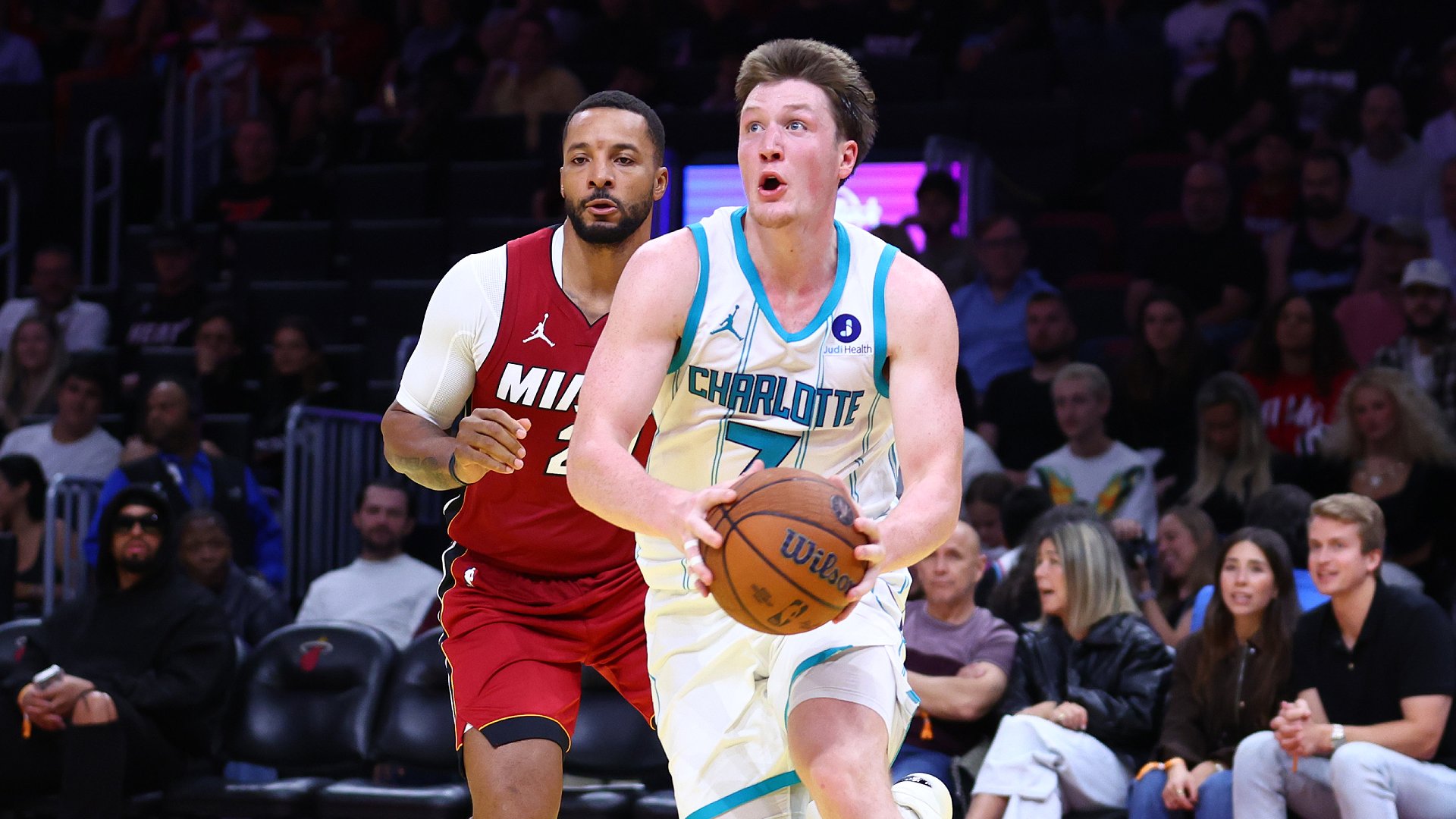
The article previews two NBA Play-In matchups, projecting the Charlotte Hornets over the Miami Heat and the Phoenix Suns over the Portland Trail Blazers. It highlights Charlotte’s late-season surge to 44 wins and Phoenix’s 45-win season despite major injuries, framing both home teams as the hotter, more stable sides. This is sports commentary rather than market-moving financial news, so broader financial impact is minimal.
This is less about basketball and more about the market’s appetite for variance. Single-game elimination compresses outcome distribution, which tends to reward the more marketable, momentum-friendly story: young, high-usage perimeter creators and teams with a visible stylistic edge. In that sense, the two home favorites here are also the more “option-like” assets — higher volatility, higher narrative elasticity, and more room for an upset to create a short-term sentiment spike.
The second-order effect is that the most fragile leg in both games is not star power but perimeter discipline. Teams built around contested-shot denial and transition defense usually outperform in short samples, while offenses leaning on rhythm three-point creation are more sensitive to whistle variance and shooting luck. That means any live-betting or derivative exposure should be biased toward the side with the stronger defensive floor rather than the more explosive offensive ceiling.
The contrarian angle: the market may be overpricing “experience” and underpricing conditioning plus lineup continuity. In play-in environments, veteran teams can become too methodical, while younger groups with higher pace and more shot volume can manufacture enough possession edge to offset late-game mistakes. If either underdog can force the game into a 3-point-heavy, high-pace script, the favorite’s edge narrows quickly over the final 6-8 minutes.
From a time-horizon standpoint, these are days-not-months catalysts, but the broader takeaway is about playoff positioning and brand momentum. A home win by the younger, less established club would likely create a short-lived narrative rerating; a win by the veteran favorite would reinforce the league’s preference for stability and may modestly support near-term media engagement around the first round.
AI-powered research, real-time alerts, and portfolio analytics for institutional investors.
Request TrialOverall Sentiment
mildly positive
Sentiment Score
0.15
