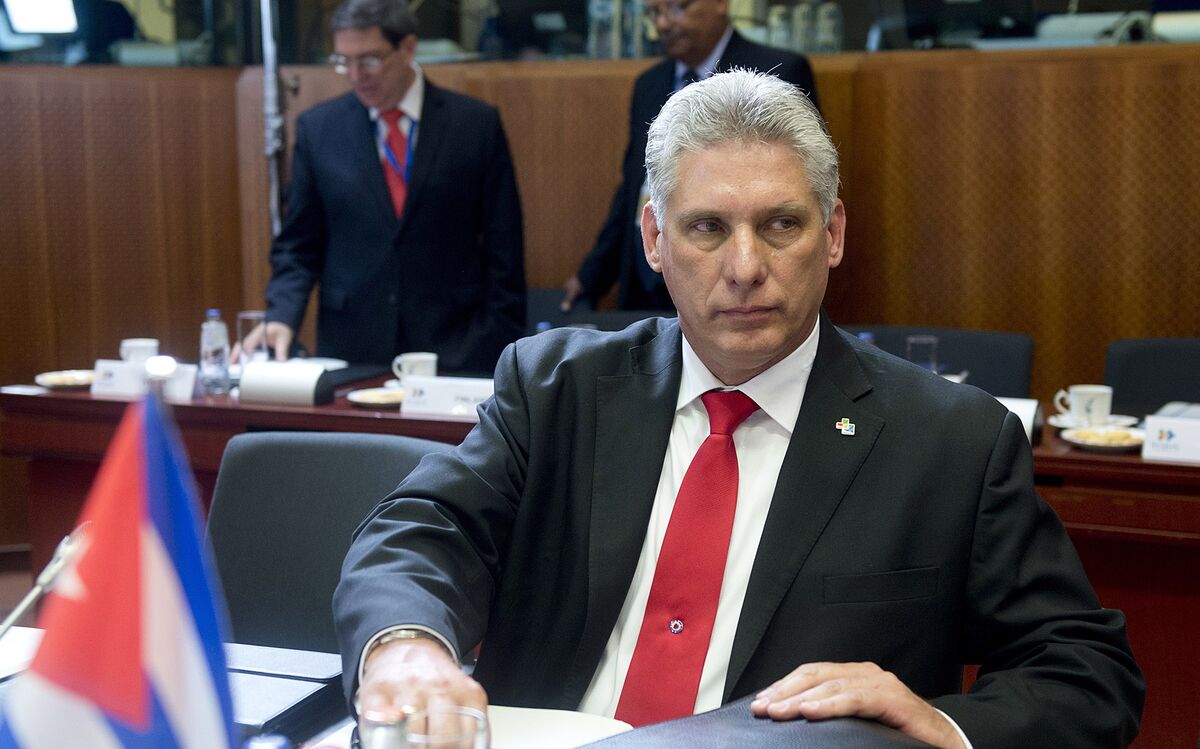
Cuba's UN ambassador Ernesto Soberón Guzmán stated removing President Miguel Díaz-Canel to appease the US is 'out of the question,' signaling political continuity despite US pressure. He cited a de facto oil blockade that is straining Cuba's ability to provide basic services and said bilateral talks should be based on mutual respect. Expect continued geopolitical tension and energy shortages in Cuba, with limited direct market impact but elevated regional political risk.
A sustained cutoff of reliable fuel deliveries to Cuba functions less as a shock to global oil balances and more as a regional maritime and logistics stress test. Cuba’s product shortfalls (order-of-magnitude: low‑100s kbpd) will push suppliers toward ship‑to‑ship transfers, longer ballast legs from non‑US suppliers, and reliance on Venezuela‑style clandestine shipments — a dynamic that tends to lift clean tanker utilization and freight rates by double digits regionally over weeks-to-months while also raising marine insurance premiums.
Politically, the asymmetric risks are front-loaded but persistent: a rapid diplomatic settlement or targeted humanitarian carve-outs can restore flows within 30–90 days and collapse the shipping/insurance premium; conversely, escalation (more aggressive secondary sanctions or direct interdiction) could entrench informal trade networks and sustain elevated TCEs for 3–12+ months. Third‑party actors (Venezuela, private traders, state‑backed shipping) are the wildcards that determine direction and velocity.
Second‑order winners include owners of modern clean product tankers and regional refiners able to re-route tankage to Caribbean customers, plus trading houses that can arbitrage higher-risk cargoes; losers are counterparties exposed to maritime sanctions enforcement (insurers, banks that finance tanker transactions) and any tourism/tour operator equities with concentrated Cuba exposure. The consensus misses the liquidity rotation into short‑term maritime capacity: incremental demand is small versus global barrels but concentrates value into narrow, highly levered sectors (tanker time-charter economics, niche bunkering services).
AI-powered research, real-time alerts, and portfolio analytics for institutional investors.
Overall Sentiment
mildly negative
Sentiment Score
-0.25
