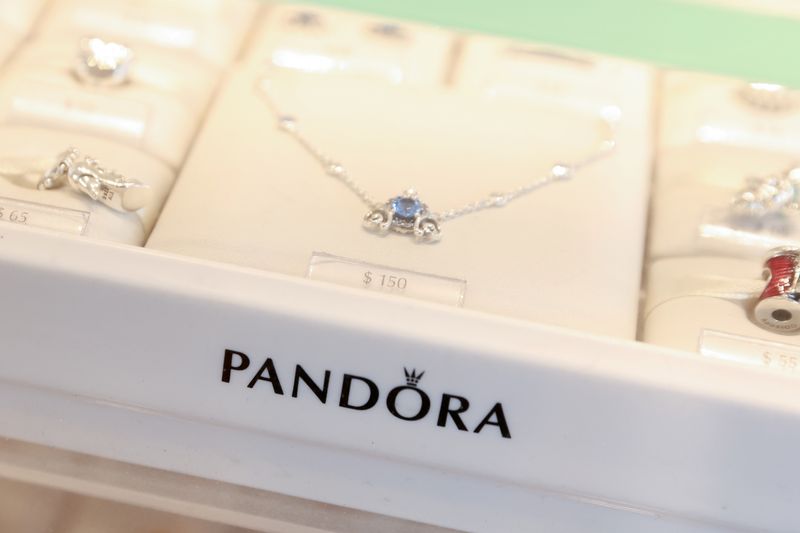
Pandora beat Q1 expectations with revenue of 7.109 billion crowns versus 7.089 billion consensus, operating profit of 1.487 billion crowns versus 1.28 billion expected, and net profit of 942 million crowns versus 777 million expected. Organic growth was 2% vs 1% expected, helped by 6% sales growth in Latin America and 12% in Asia-Pacific, though North America and EMEA both fell 2%. The company kept full-year like-for-like and organic growth guidance unchanged but raised its 2026 sales forecast to 32.0-32.9 billion crowns from 31.6-32.6 billion.
This is less a clean demand inflection than a regional mix and inventory story. The outperformance is being driven by higher-growth geographies while the mature Western consumer is still soft, which matters because that usually leads to margin beats that are harder to extrapolate than top-line beats. The market should not reward the headline EPS beat too aggressively if a meaningful portion of EBIT uplift is timing-related and inventory is rising faster than sales, because that combination often precedes either heavier discounting or a slower gross-margin path over the next 1-2 quarters.
The more interesting second-order effect is competitive: if Pandora can still grow through weaker discretionary spending, it suggests branded jewelry remains taking share from lower-trust, lower-aspiration alternatives rather than expanding category demand. That tends to pressure smaller fashion/jewelry retailers and unbranded players first, while giving omnichannel incumbents with tighter SKU control room to protect gross margin. But if North America consumer sentiment stays weak into the holiday build, the company may be forced to choose between unit growth and inventory efficiency, and the market usually punishes that tradeoff quickly.
The guidance raise is modest enough to read as a confidence signal rather than a true regime change. The key catalyst over the next 30-60 days is whether higher-growth APAC and LatAm can offset a still-decelerating West without incremental promo intensity; if not, the stock likely gives back the earnings beat as expectations reset upward too far. The contrarian read is that the best near-term risk/reward may not be in owning the name outright, but in fading the quality of the beat via the premium valuation of discretionary peers that lack the same geographic diversification.
AI-powered research, real-time alerts, and portfolio analytics for institutional investors.
Request DemoOverall Sentiment
moderately positive
Sentiment Score
0.55
