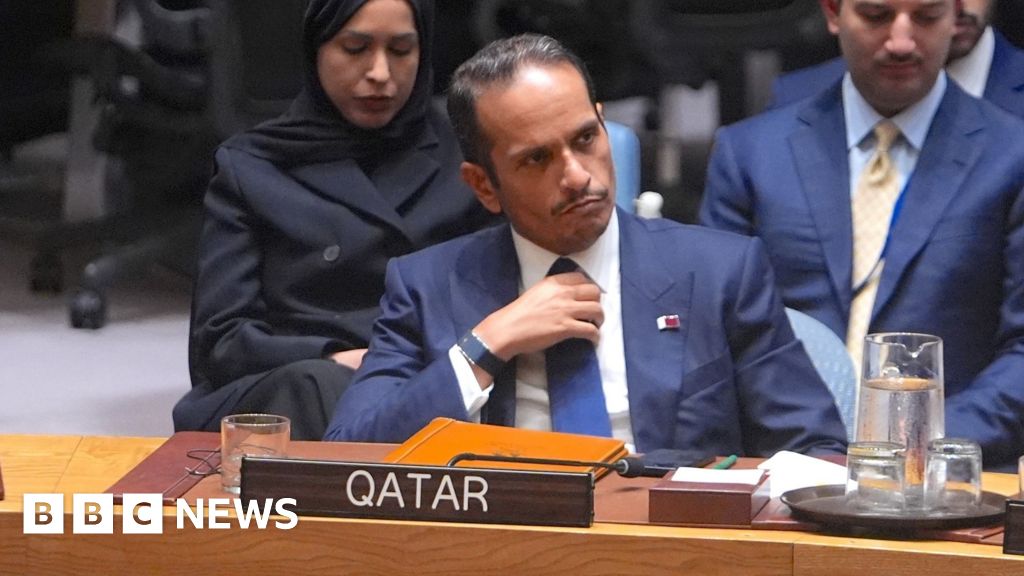
The UN Security Council, with notable US backing, condemned Israeli strikes on a residential compound in Doha, Qatar, which targeted Hamas members. This rare US alignment against an Israeli action, despite not explicitly naming Israel, signals potential diplomatic strain and raises concerns about regional stability. The incident undermines Qatar's crucial role as a mediator in the Israel-Gaza conflict and its status as a key US ally, potentially complicating future diplomatic efforts and impacting security perceptions in the Gulf region.
A significant escalation in Middle East geopolitical risk has occurred following Israeli strikes in Doha, which elicited a rare, US-backed UN Security Council condemnation. This unified statement, despite not explicitly naming Israel, marks a notable deviation from traditional US policy of shielding its ally from such criticism and signals potential diplomatic friction. The attack directly undermines the critical role of Qatar, a key US ally and host to a major American airbase, as a mediator in the Israel-Gaza conflict, with its Prime Minister questioning the viability of hosting future negotiations. This incident challenges the long-held assumption that a close relationship with the US provides a security guarantee for Gulf nations, potentially forcing a reassessment of regional risk premiums. The killing of a Qatari security officer, alongside Hamas members, further complicates the situation by infringing on the sovereignty of the host nation. The mixed messaging from the US President, criticizing the strike while endorsing its objective, adds another layer of uncertainty to an already volatile diplomatic landscape, jeopardizing both peace efforts and the stability of key US alliances in the region.
AI-powered research, real-time alerts, and portfolio analytics for institutional investors.
Request DemoOverall Sentiment
strongly negative
Sentiment Score
-0.70
