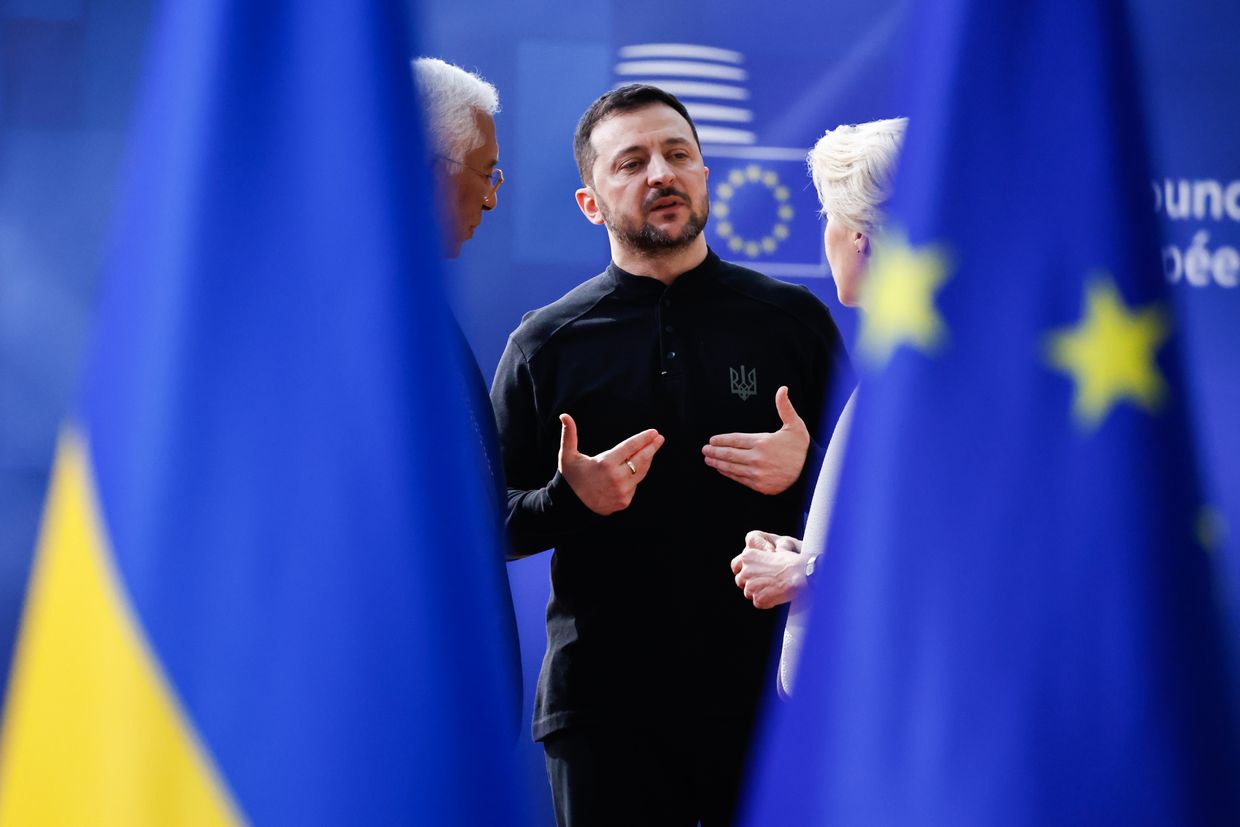
EU officials said there are no concrete plans for Europe-led peace talks with Russia, despite stalled U.S.-mediated negotiations over Ukraine. Kaja Kallas and Antonio Costa both signaled that the bloc is not ready to engage directly yet, while emphasizing internal alignment and continued support for Ukraine. The article suggests only tentative discussion at this stage, with no immediate policy shift or direct market catalyst.
The market takeaway is not that Europe is stepping into a peace role; it is that the policy vacuum is extending the war’s duration premium. That matters because the longer negotiations remain theater rather than process, the more the market has to price a persistent European rearmament cycle, elevated NATO burden-sharing, and continued support flows to Ukraine — all of which are structurally bullish for defense suppliers and defense-capex enablers, not for any near-term “peace dividend” trade.
The second-order effect is on European macro dispersion. A stalled diplomatic track keeps fiscal priorities tilted toward security spending, which supports select industrials and munitions supply chains while crowding out growth-sensitive sectors at the margin. It also raises the probability that Europe pursues more autonomous security coordination, which benefits continental defense primes and border/security infrastructure, but is neutral-to-negative for firms exposed to a rapid normalization in Eastern European risk premia.
The key catalyst window is the next 3-8 weeks: informal ministerial discussions and then the June summit can either formalize a harder EU line or expose internal fragmentation. If Europe converges on a more explicit negotiating framework, defense names may dip briefly on headline de-escalation, but the more likely outcome is rhetorical alignment without substance, which should keep defense order books intact. The bigger tail risk is a sudden U.S.-Russia channel reopening that sidelines Europe; that would compress the geopolitical risk premium faster than a true ceasefire would, but it remains a low-probability event absent battlefield change.
Contrarian view: consensus is overweighting the symbolism of Europe “potentially” talking and underweighting Russia’s incentive to stall. That means the real trade is not a peace bet; it is owning the assets that monetize prolonged ambiguity. Any selloff in defense on diplomacy headlines is likely to be fadeable unless accompanied by verifiable shifts in troop posture, sanctions relief, or a formalized monitoring mechanism.
AI-powered research, real-time alerts, and portfolio analytics for institutional investors.
Request DemoOverall Sentiment
neutral
Sentiment Score
-0.05
Ticker Sentiment
