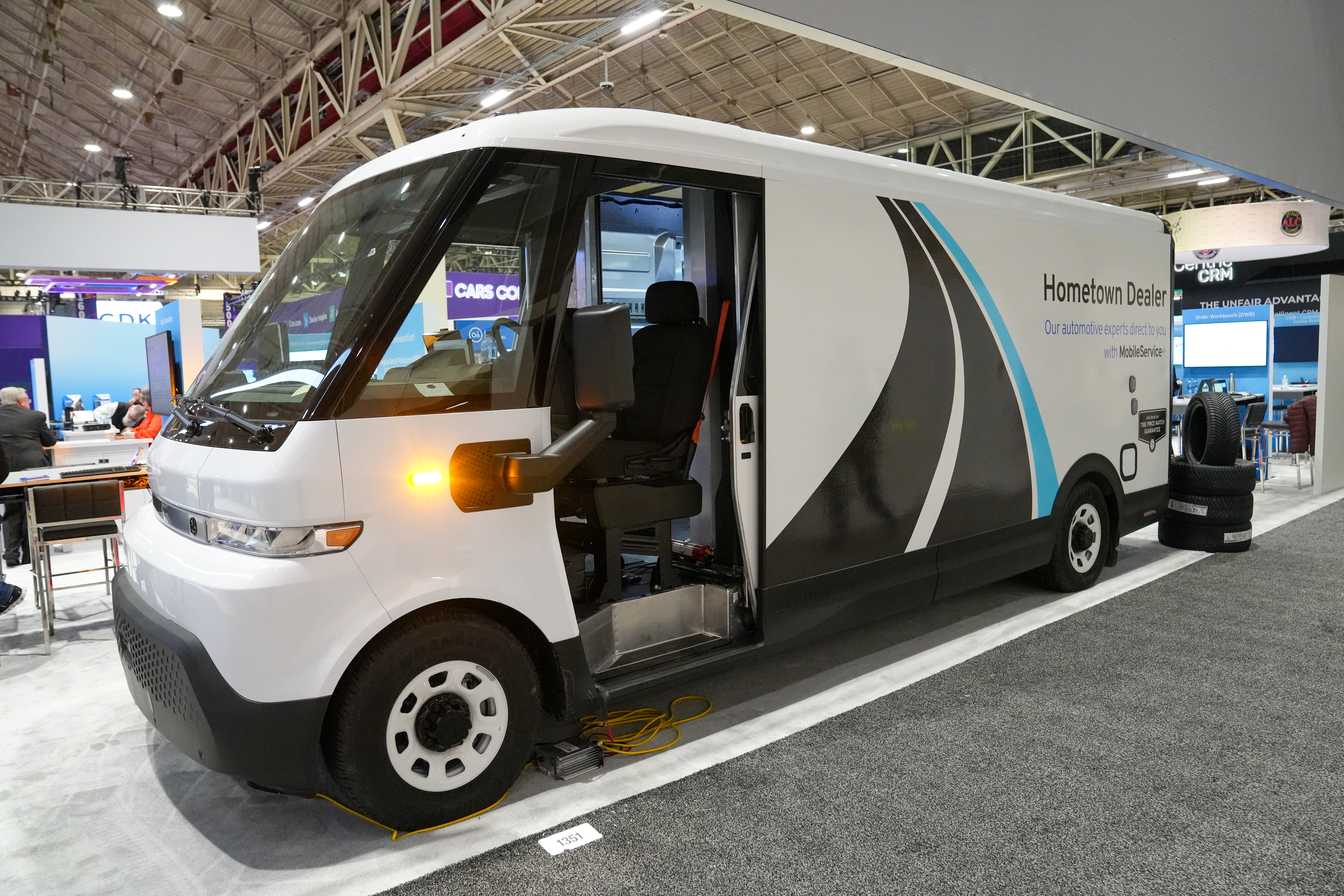
Chinese automakers mounted a conspicuous presence at CES 2026, showcasing vehicles and technology despite the cars not being available for purchase in-market yet. The strong display underscores Chinese OEMs' push to highlight design, software and EV capabilities to global audiences, which could accelerate investor interest in their technology roadmaps and future market-entry strategies even as regulatory, distribution and sales hurdles remain.
Market structure: CES visibility accelerates brand awareness and tech legitimacy for Chinese OEMs (BYD/BYDDF, NIO, XPEV, LI), benefiting battery makers (CATL) and software/chip suppliers that enable ADAS/OTA. Legacy automakers (F, GM, parts suppliers) face ASP compression in entry/compact EV segments — estimate 5–10% downside pressure on ASPs in contested models over 12–24 months if Chinese launches proceed. FX and credit: stronger RMB and Chinese export momentum would tighten Chinese sovereign/bond spreads and raise commodity demand for lithium/nickel, supporting miners.
Risk assessment: Tail risks include immediate US regulatory blocks or tariffs (low probability, high impact) that could wipe out near-term US expansion plans; supply-chain shocks (battery fires/recalls) and IP/legal actions are medium-tail risks. Short-term (days-weeks) effect is sentiment/risk-on; medium (3–12 months) is re-rating of OEMs and suppliers; long-term (2–5 years) is share gains if localization occurs. Hidden dependencies: US dealer networks, charging infra and local manufacturing capacity; catalyst list: concrete US delivery timelines, NA plant announcements, or US trade-policy signals within 60–180 days.
Trade implications: Tilt portfolio toward scalable battery/metals exposure (ALB, LAC) and high-quality Chinese EV hardware/software plays (BYDDY, NIO, XPEV) while underweight ICE-centric OEMs (F, GM) and dated parts suppliers. Use relative-value: pair long XPEV vs short F for 6–12 months targeting 10–20% relative move on successful US launch signals. Use options to express convexity: 6-month 30% OTM call spreads on NIO/XPEV (size 1–2% each) to cap premium.
Contrarian angles: Market may be over-indexing to CES hype — vehicles are not yet for sale so earnings upside is distant; tech licensing or software partnerships could be the real near-term winners (QCOM, NVDA) rather than OEM equity. Historical parallel: Japanese entrants in 1980s initially pressured pricing then localized manufacturing — expect similar political backlash risk. Unintended consequence: accelerated US push for onshore battery supply that benefits non-Chinese miners and incumbents.
AI-powered research, real-time alerts, and portfolio analytics for institutional investors.
Request DemoOverall Sentiment
mildly positive
Sentiment Score
0.30
