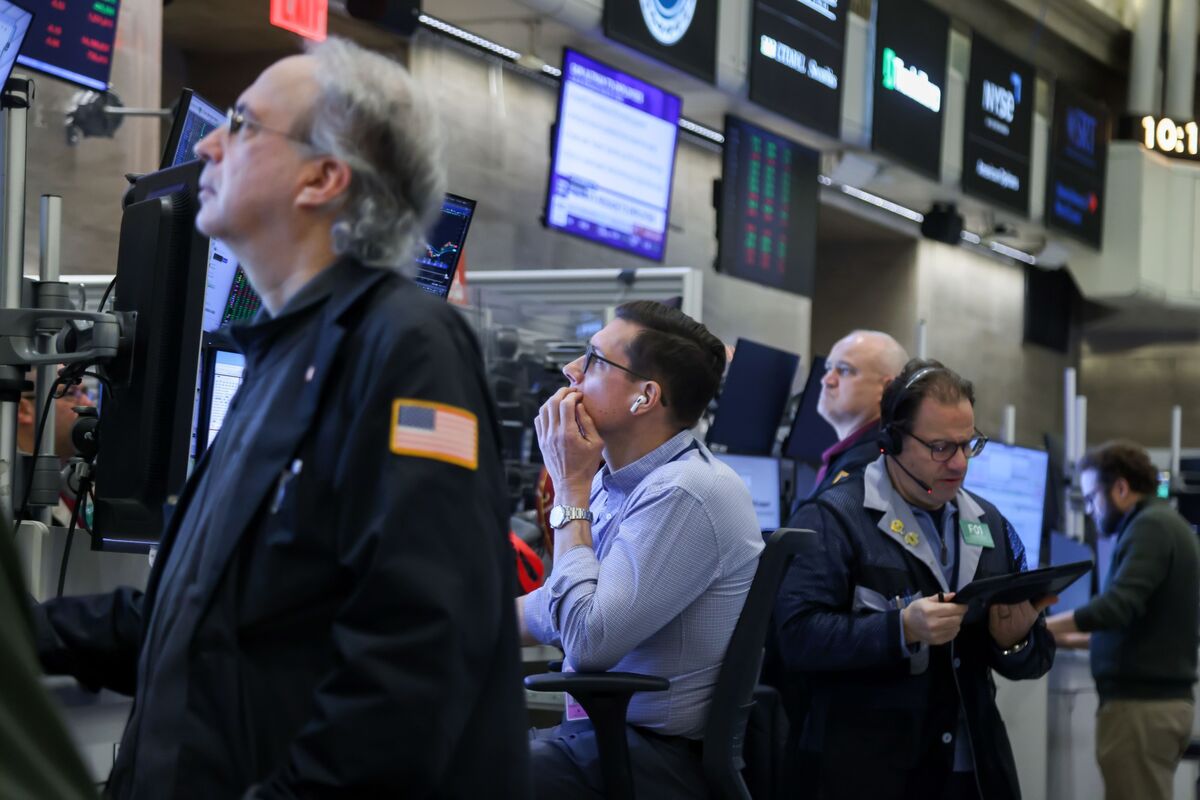
US stocks opened higher, with the S&P 500 up 0.2%, the Nasdaq 100 up 0.3%, and the Dow up 0.1% as investors priced in hopes of a US-Iran peace deal and continued AI spending tailwinds. The S&P 500 is now on track for a ninth straight week of gains, a rare streak matched only four times since 1985. The setup is broadly risk-on and supportive for equities, especially technology and AI-linked names.
The market is starting to treat geopolitics and AI capex as the same trade: a lower-risk, higher-duration equity environment where growth investors can pay up for visibility. That helps the mega-cap complex most, but it also quietly narrows breadth — capital tends to rotate into a small set of “safe winners” when volatility suppresses and macro tail risks fade. The second-order effect is that cyclicals and defensives can both underperform if investors continue crowding into long-duration tech and the handful of supply-chain names levered to AI infrastructure.
The peace-premium is fragile because it is driven by headline risk rather than a durable earnings impulse. If negotiations stall or rhetoric re-escalates, the reversal can be fast: geopolitically sensitive sectors tend to reprice in hours, while the broader index impact is usually more about volatility than direction. Over a 1-3 month horizon, the bigger issue is positioning — a ninth-week win streak leaves systematic and discretionary accounts more exposed to any macro hiccup, so even a modest disappointment in inflation, rates, or forward guidance could force de-risking.
The AI-spending theme is still under-discounted in one important way: markets often reward the infrastructure layer first, but the second-order winners are the companies that can turn higher capex into better pricing power or reduced unit costs within 2-4 quarters. The losers are firms whose AI narratives are mostly promotional and whose margins will be pressured by higher compute, networking, and software spend before benefits arrive. That sets up a classic dispersion trade: expensive beneficiaries with real cash-flow translation versus “AI-adjacent” laggards that may get punished once investors demand evidence rather than anecdotes.
The contrarian view is that this is less a broad bull confirmation than a late-cycle leadership squeeze. When sentiment and trend are both this constructive, upside can persist, but incremental return per unit of risk usually deteriorates sharply; the market can keep grinding higher while hiding an increasing probability of a sharp 3-5% drawdown. The cleanest tell will be whether breadth improves or the rally remains concentrated — if breadth stays poor, the move is more vulnerable than it looks.
AI-powered research, real-time alerts, and portfolio analytics for institutional investors.
Request DemoOverall Sentiment
mildly positive
Sentiment Score
0.35
