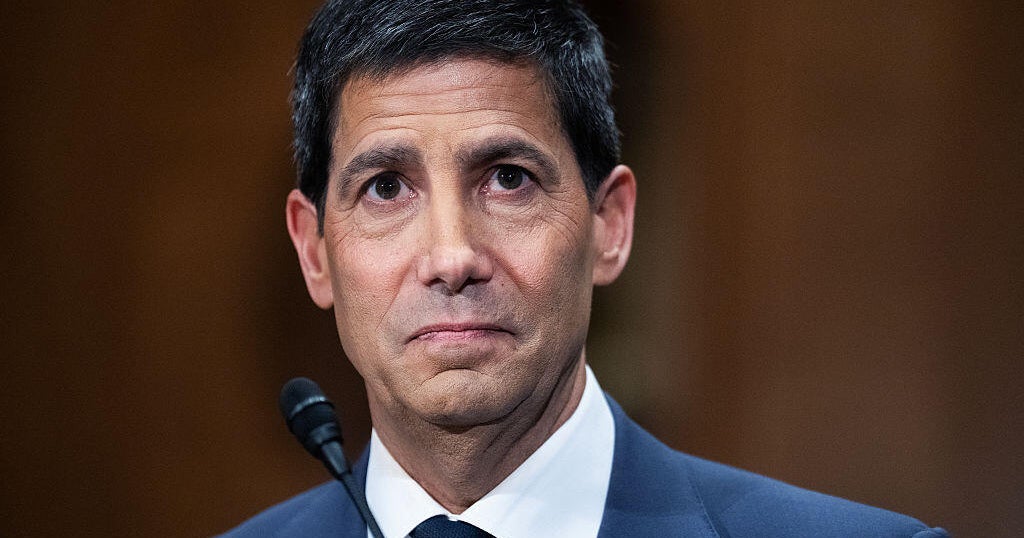
The Senate Banking Committee is set to vote Wednesday at 10 a.m. ET on Kevin Warsh's nomination to replace Jerome Powell as Fed chair, with confirmation likely if he clears committee and later the Senate floor. Warsh has pledged to remain "strictly independent" on monetary policy as the Fed is expected to hold rates steady at its Wednesday meeting. The article also notes that the Justice Department has ended its probe into Powell's headquarters renovation, removing a potential hurdle to Warsh's confirmation.
The market is likely underpricing the difference between a symbolic “independent Fed” narrative and the actual policy distribution over the next 2-3 meetings. Even if the committee vote is a procedural step, a new chair with a political mandate raises the odds of a faster easing bias, which can steepen the front end and bull-flatten in anticipation before any rate move is delivered. The immediate expression is less about a single meeting outcome and more about term-premium compression if investors believe reaction function risk is now asymmetric toward cuts.
The second-order winner is duration-sensitive risk assets that have been penalized by higher real rates, especially unprofitable growth, REITs, and select small caps. Financials are more nuanced: large banks can benefit from lower funding costs and better credit performance, but a rapid fall in rates would squeeze net interest margins before loan demand recovers. The biggest loser on a relative basis is the dollar, particularly versus JPY and gold-backed hedges, because policy credibility concerns tend to raise the market’s probability of a weaker policy path and looser financial conditions.
A key contrarian risk is that the market is already positioned for a dovish regime shift, so the confirmation itself may be a buy-the-rumor event rather than a clean catalyst. If inflation data reaccelerates or the next chair is forced to preserve optics of independence, the first move could be a sharp backup in real yields, especially if Treasury auctions absorb the signal poorly. That makes the next 2-8 weeks more about volatility around expectations than a linear rates rally.
The cleaner medium-term expression is to own convexity rather than chase spot beta: the path dependence around a leadership transition creates more option value than outright duration exposure. If the chair transition is seen as credible and persistent, the market may start pricing 50-75 bps more easing over the next 6-9 months; if not, those same trades can unwind quickly. The memo-worthy edge is in pairing rate sensitivity with political-risk hedges, not just betting on lower nominal yields.
AI-powered research, real-time alerts, and portfolio analytics for institutional investors.
Request DemoOverall Sentiment
neutral
Sentiment Score
0.05
