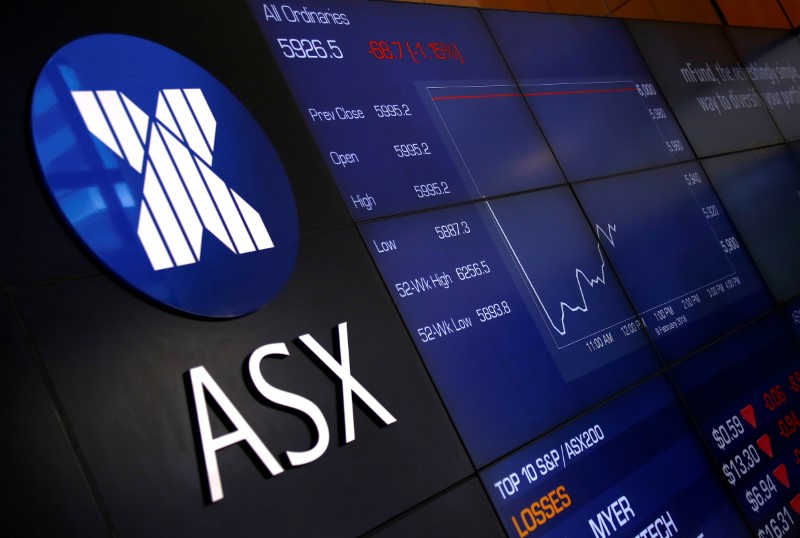
Asian markets fell as heightened tensions in the Strait of Hormuz and Iran-related missile strikes on container ships dampened risk appetite, with Wall Street also weak after the U.S.-Iran escalation. Australia’s ASX 200 dropped 0.6% ahead of a widely expected 25 bp RBA rate hike, while Hong Kong’s Hang Seng fell 0.8% and Singapore’s Straits Times lost 0.3%. Westpac fell 1.8% after missing profit estimates, and Regis Resources slid 4.9% after announcing an acquisition.
The immediate market reaction is less about the headline itself than the repricing of tail risk around energy logistics and policy reaction functions. A sustained disruption risk in the Strait of Hormuz tends to hit Asia first through imported-energy sensitivity: Japan/Korea are closed, but when they reopen the first-order loser is typically rate-sensitive cyclicals and transport, while domestic energy and defense beneficiaries get bid. The second-order effect is that higher crude/gas prices can tighten financial conditions faster than central banks have time to respond, which matters because the market has been leaning toward a soft-landing narrative in rates-sensitive parts of Asia.
Australia is the clearest near-term macro expression because the inflation shock from energy is a direct input into the RBA’s hawkish bias. That creates a nasty asymmetry for local equities: banks and duration-heavy defensives can de-rate even if earnings are stable, simply because the terminal-rate path shifts higher and longer. In other words, the market is not just pricing one hike; it is beginning to price a higher-for-longer regime if oil stays elevated for several weeks.
The tech selloff in Hong Kong is more fragile than it looks. AI-led momentum names are vulnerable to a volatility spike because they were already crowded and extended; when geopolitical shocks hit, the first thing to go is multiple expansion, not earnings. If risk appetite stabilizes and oil headlines fade, the rebound in the tech complex could be sharp, but the next 5-10 sessions likely favor selling strength rather than buying dips.
The contrarian angle is that this may be a better relative-value than outright risk-off trade. A lot of global macro money is already underweight risk assets, so the bigger pain trade may be in local overexposures to rates and energy, not broad index shorts. If diplomatic chatter reduces the probability of sustained shipping disruption, the market can retrace part of the move quickly, especially in the most crowded AI names and in Australia where the rate decision is already mostly priced.
AI-powered research, real-time alerts, and portfolio analytics for institutional investors.
Request DemoOverall Sentiment
strongly negative
Sentiment Score
-0.55
Ticker Sentiment
