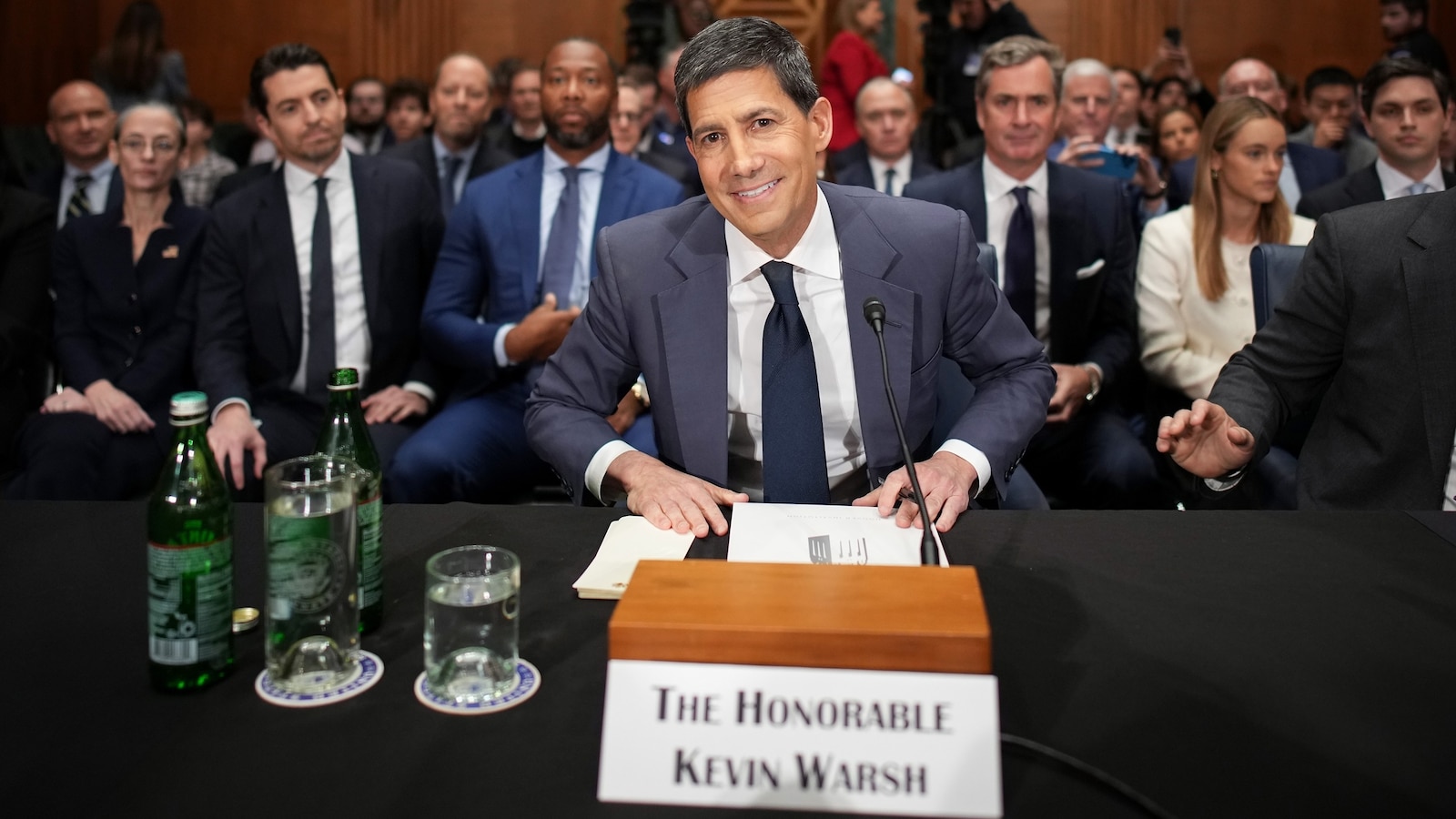
The Fed chair succession fight is unresolved with Jerome Powell's term ending May 15 and Kevin Warsh's nomination stalled by a DOJ investigation into Powell, leaving rate policy and Fed independence in limbo. Powell says he could stay on as interim chair until a successor is confirmed, while Trump says he would fire him if he tries to remain past term end. The standoff comes as the Fed holds rates steady amid elevated inflation and weak hiring, and could influence the path of policy depending on how the confirmation battle and investigation resolve.
The market’s real sensitivity here is not to the identity of the next chair, but to the duration of an unresolved transition. A prolonged vacancy or contested handoff increases the odds of a de facto policy committee split, which usually widens the distribution of outcomes for front-end rates: fewer clean signals from the Fed, more term premium, and a higher probability of sharp 2-year yield swings around data releases. In that setup, the first-order move is often volatility rather than a straight-line rally or selloff.
The second-order effect is that political pressure can create a temporary dovish impulse without delivering durable easing. If markets start to price a chair who is perceived as more politically exposed, breakevens may lift faster than nominal yields because inflation credibility is the easier thing to lose than growth support is to gain. That is the key asymmetry: policy can look easier in the next 1-3 months while the 6-18 month outcome becomes more inflationary and therefore more restrictive.
The biggest underappreciated risk is not a cleanly hawkish or dovish successor, but a governance vacuum that forces the board to operate with reduced legitimacy. That can steepen the curve at the same time it compresses confidence in forward guidance, especially if labor data soften while inflation re-accelerates. In that regime, the market may misread lower front-end rates as benign when they are actually a symptom of institutional stress.
Consensus is likely underpricing how quickly this can resolve into either a headline-driven risk-on rally or a credibility shock. The near-term catalyst window is days to weeks around Senate procedure and DOJ signaling; the medium-term catalyst is the next inflation print after any perceived political interference. If the nomination stalls, the market may initially fade the story, but the repricing risk rises materially as May 15 approaches and the Fed’s communications architecture becomes less coherent.
AI-powered research, real-time alerts, and portfolio analytics for institutional investors.
Request TrialOverall Sentiment
neutral
Sentiment Score
-0.05
