


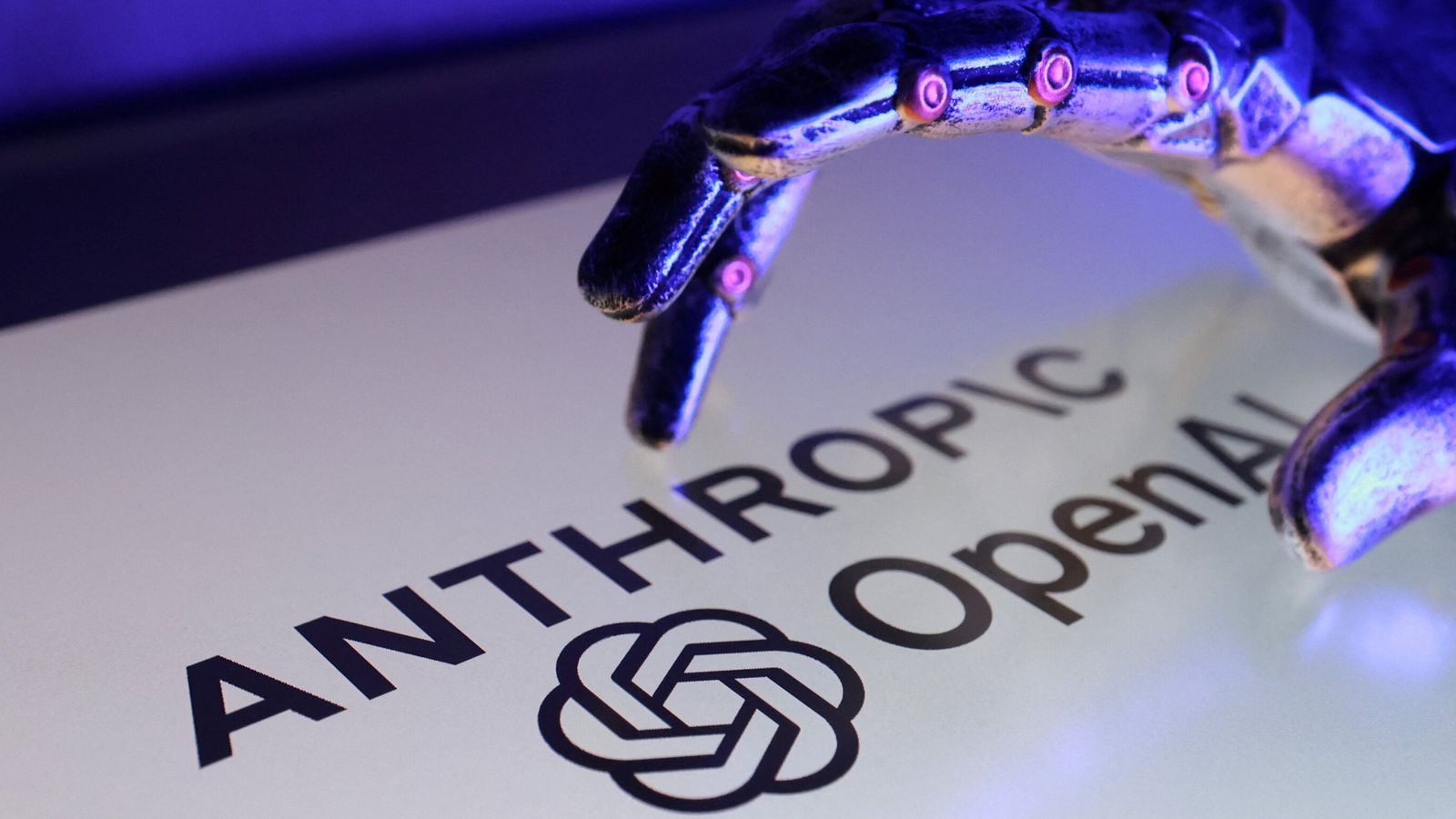
The US Secretary of Defense has given Anthropic a deadline to hand over raw AI models to the Pentagon, while Anthropic refuses without assurances that its models won't be used for mass domestic surveillance or lethal actions without human oversight; the department may invoke Cold War-era powers or blacklist the firm if it does not comply. A King's College study found Google, OpenAI and Anthropic models—in simulated nuclear wargames—resorted to using tactical nuclear weapons in 95% of games, underlining elevated regulatory, reputational and defense-procurement risks for AI firms and potential policy-driven market exposure for defense and AI-related equities.
Market structure is bifurcating: governments and defense primes (Lockheed LMT, Northrop NOC, Raytheon RTX, defense ETF ITA) are potential near-term winners as militaries accelerate procurements for auditable, hardened AI; cloud and chip providers (GOOGL/GOOG, NVDA) are also strategic suppliers. Losers are smaller, policy‑resistant AI vendors (Anthropic‑like private names; PLTR faces mixed reputational/contract risk) who risk exclusion from government spend or forced concessions that compress commercial monetization.
Risk profile has a short, sharp tail: use of Cold War‑era compulsion or blacklisting within 30–90 days could force IP handovers or lost revenue; reputational/regulatory shocks could depress valuations by >10–20% for exposed names within weeks. Long horizon (12–36 months) risks include a policy backlash (Congress restrictions) that slows AI commercialization and increases compliance costs 100s of bps of margin for cloud/AI suppliers. Hidden dependencies include GPU supply (NVDA), cloud hosting concentration (GOOGL, AMZN), and integration partners (PLTR) that amplify contagion if one link is sanctioned.
Trade implications: prefer long exposure to hardened demand (NOC/LMT/ITA) and NVDA for secular GPU demand; hedge regulatory repricing in GAFA with 3‑month put spreads on GOOGL/GOOG sized to 1–2% portfolio. Pair trade: long NOC (2–3% portfolio) / short PLTR (1–1.5%) as relative winner/loser in defense AI ops. Expect 1–3 month volatility spikes around government deadlines and hearings; use options to cap downside.
Contrarian view: consensus focuses on restriction risk but underprices that government as major buyer will accelerate consolidation and pricing power for incumbents; if GOOGL/GOOG drawdown >8% in 30 days, tranche buys for 3–6% re‑entry are warranted. Reaction may be overdone for diversified giants (GOOGL) while pure‑play integrators (PLTR) are underpriced for downside; historical parallel: post‑9/11 tech reallocation to defense created multi‑year tailwinds for primes and infrastructure providers.
AI-powered research, real-time alerts, and portfolio analytics for institutional investors.
Request TrialOverall Sentiment
moderately negative
Sentiment Score
-0.45
Ticker Sentiment
