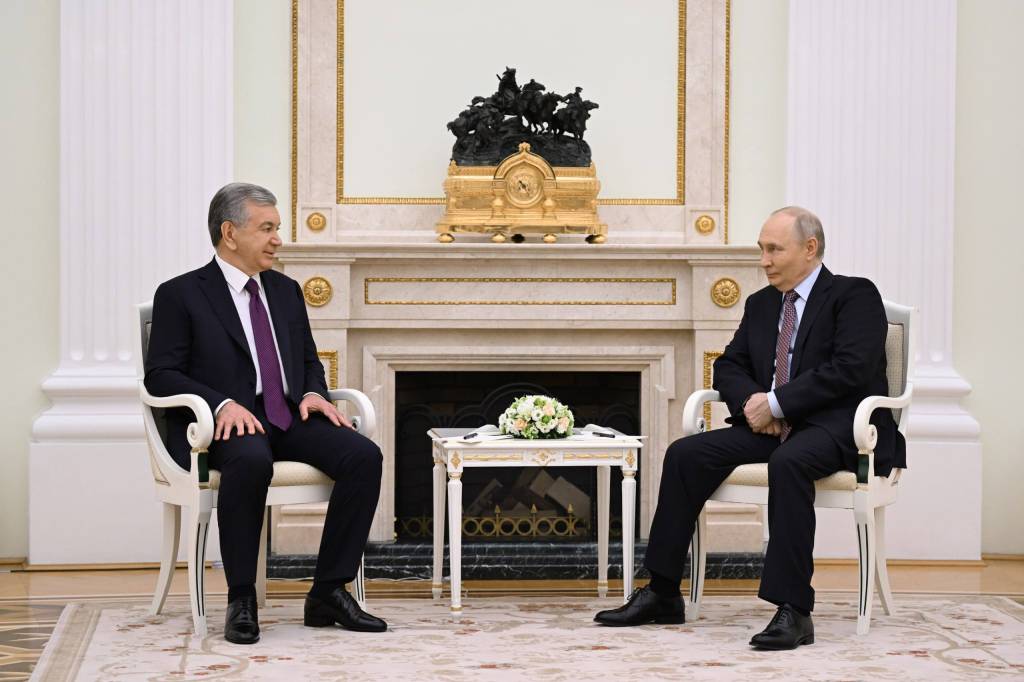
Uzbekistan and Russia held a May 8 meeting in Moscow focused on expanding their comprehensive strategic partnership and alliance. The leaders cited steady growth in trade volumes and progress on projects in industry, energy, metallurgy, and regional cooperation, while also emphasizing cultural and humanitarian ties. The article is primarily diplomatic and factual, with limited immediate market implications.
The strategic value here is less about headline diplomacy and more about keeping a low-friction corridor open for sanctioned-adjacent trade, payments, and industrial inputs. If Moscow can preserve even partial access to Central Asian logistics and manufacturing networks, it reduces the effectiveness of Western containment at the margin and supports Russian import substitution through third-country channels. For Uzbekistan, that relationship likely extends financing, labor-market access, and commodity barter options that can cushion external shocks without requiring full dollar-system dependence.
Second-order beneficiaries are likely to show up in infrastructure, rail, energy equipment, and industrial subcontracting rather than in direct sovereign exposure. The most important signal is not trade growth itself, but the continued willingness to coordinate on project execution despite broader geopolitical fragmentation; that suggests multi-year demand for turbines, grid gear, rolling stock, copper, and construction materials tied to corridor expansion. Any company with exposure to Eurasian transport, power transmission, or industrial maintenance could see incremental orders even if the macro backdrop stays choppy.
The main risk is that this cooperation is vulnerable to secondary sanctions, banking-channel constraints, and payment settlement friction. In the near term, the market may underprice how quickly a tighter enforcement regime could interrupt cross-border projects; over a 6-12 month horizon, the bottleneck is likely finance rather than demand. Conversely, if sanctions enforcement softens or alternative payment rails deepen, the trade corridor could accelerate more than consensus expects, making this a slow-burn rather than a one-day event.
Contrarian view: the market often treats Central Asia as economically peripheral, but in a fragmented trade regime these middle corridors become more valuable precisely because they are boring and politically durable. The opportunity is not an outright directional bet on either country’s equity beta; it is a relative-value expression on logistics and industrial throughput that benefits from persistent geoeconomic bifurcation.
AI-powered research, real-time alerts, and portfolio analytics for institutional investors.
Request DemoOverall Sentiment
neutral
Sentiment Score
0.12
