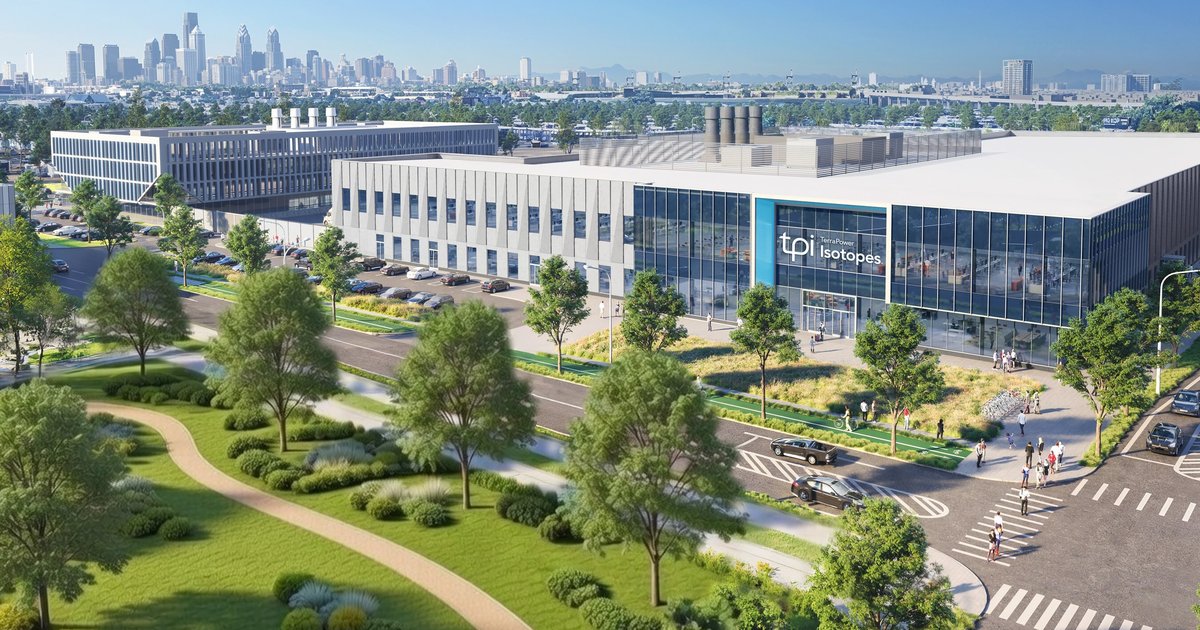
TerraPower Isotopes will build a $450M facility and lease 250,000 sq ft in South Philadelphia to manufacture radioisotope generators for actinium-225, with no construction timeline set. The state is investing $10M and expects 225 full-time jobs over three years; TerraPower will be eligible for tax incentives, and the project anchors HRP Group's 1,300-acre Bellwether redevelopment that includes a nearby $195M DrinkPAK facility and $40M in state road improvements.
This deal is a catalytic nod to concentrated, anchor-tenant-driven buildouts: winners will be the scale suppliers of isotope-handling hardware, local industrial landlords, and regional logistics operators who can internalize hazardous-material workflows. Expect demand for specialized shielding, hot cells, and contamination-control services to jump 2–3x in the Philly corridor over 12–36 months, creating a multi-year aftermarket for OEMs and niche engineering firms rather than a one-off construction boost. Downstream, clinical-stage developers that rely on actinium-225 for trial dosing will see reduced sourcing optionality risk, compressing time-to-pivotal-data by quarters if national production actually scales.
Primary tail risks are regulatory and feedstock constrained: licensing, NRC/security approvals, and availability of target material are 6–36 month gating items that can convert an announced site into a 2–5 year rollout. Construction and specialized labor shortages create a 20–40% cost overrun risk versus typical industrial projects; conversely, bilateral supply contracts with national labs or incumbents could accelerate revenue recognition inside 12–24 months. Watch trancheable milestones—site permits, NRC filings, and first-source feedstock contracts—as discrete catalysts that will reprice exposed equities.
The market is underweight the local real-estate ripple: industrial rents and land values within a 10–15 mile radius can rerate independently of broader CRE prints because of the scarcity of compliant sites for radiological manufacturing. The contrarian angle is that headlines foreground national supply relief while the true bottleneck is a handful of skilled technicians and qualified shipping lanes; until those move, equity upside is conditional, not guaranteed.
AI-powered research, real-time alerts, and portfolio analytics for institutional investors.
Request DemoOverall Sentiment
moderately positive
Sentiment Score
0.45
