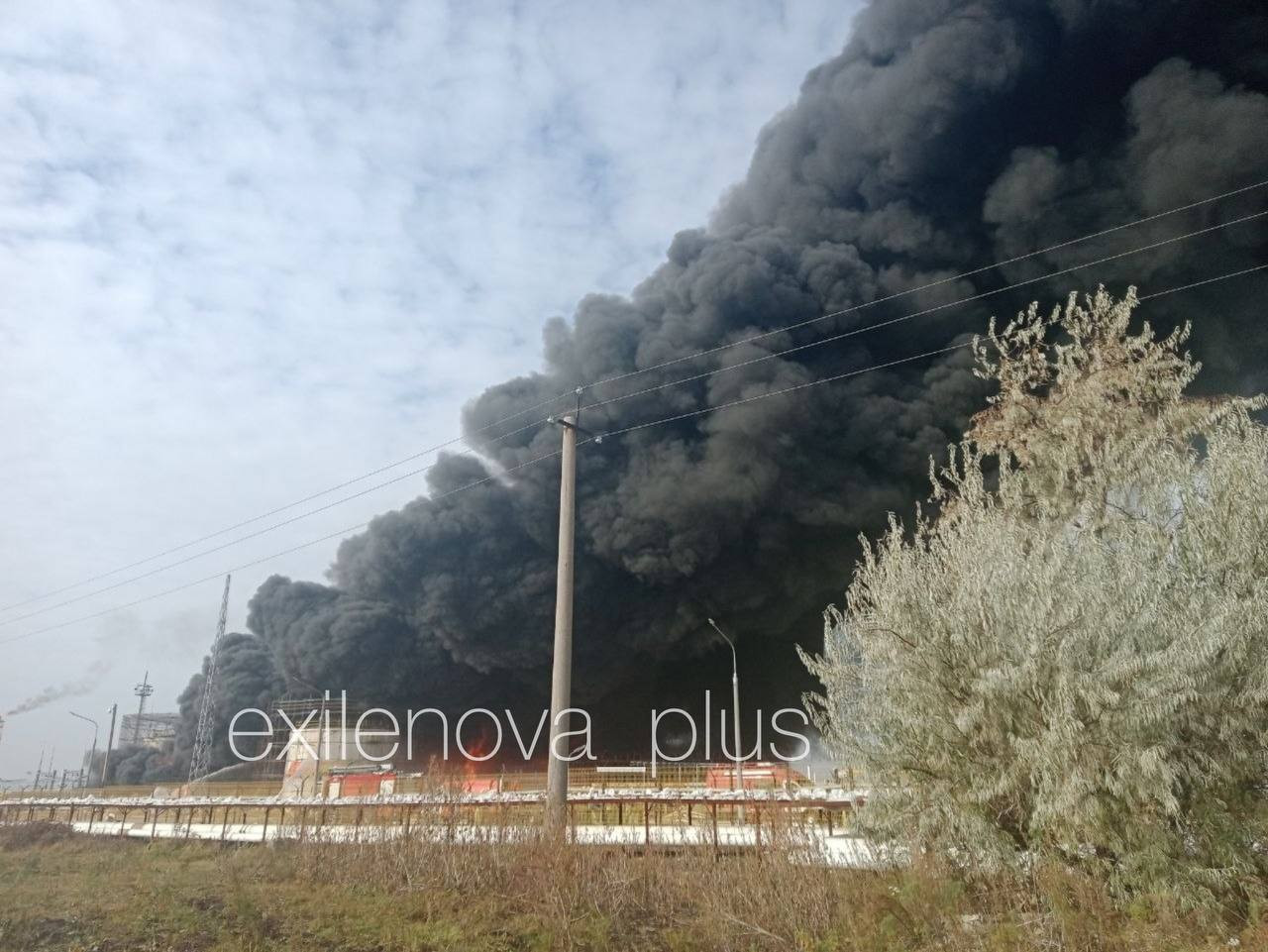
Drone strikes hit Russian energy and port infrastructure across multiple regions overnight, including the Syzran and Novokuibyshevsk refineries, an oil depot in Krasnodar, a terminal at Vysotsk, and a port facility in occupied Sevastopol. The two Samara refineries alone process over 16 million tons of oil annually, while 27 drones were intercepted in Leningrad region and emergency flight restrictions were triggered at airports in Saratov, Penza, Samara, Ulyanovsk, and Pskov. The attacks increase disruption risk to Russian fuel output, export logistics, and regional energy security.
The key market read is not the headline supply loss by itself, but the escalation in attack breadth and the implied degradation of Russia’s spare resilience. When multiple nodes across refining, storage, and export logistics are hit in the same window, the second-order effect is a higher probability of temporary product tightness in the Black Sea/Baltic complex and a wider risk premium in middle distillates than in crude. That matters because the market often prices crude disruptions first, but refiners and shipping/insurance bottlenecks tend to reprice later and more persistently.
For energy equities, this is a cleaner positive for non-Russian upstream and integrated names than for refiners. If Russian product exports are intermittently impaired, European diesel and jet cracks can stay elevated even if crude benchmarks only spike modestly, supporting global downstream margins outside the strike zone. The loser set is broader than Russia: regional carriers, port operators, and any industrial input chain exposed to higher bunker fuel and freight costs will see margin pressure within days to weeks, especially in Europe where inventories are less forgiving than in the US.
The tactical risk is that the move can fade if Russia reroutes flows faster than expected or if Ukraine’s campaign prompts a rapid repair-and-dispersal response that reduces the hit rate. The more important medium-term catalyst is whether insurers, shippers, and buyers start demanding a persistent risk premium for Black Sea/Baltic barrels, which would turn episodic damage into a structural discount on Russian export economics. That transition is what could meaningfully widen the spread between benchmark oil and delivered product prices over the next 1-3 months.
Consensus may be underestimating how quickly this becomes a transport/logistics problem rather than just an oil headline. Once port and terminal disruptions become frequent, the binding constraint is not refining capacity but physical movement, which can amplify volatility in freight, marine insurance, and distillate spreads. In that scenario, the trade is less about directional crude and more about being long the volatility and margin beneficiaries of a disrupted supply chain.
AI-powered research, real-time alerts, and portfolio analytics for institutional investors.
Request TrialOverall Sentiment
strongly negative
Sentiment Score
-0.62
