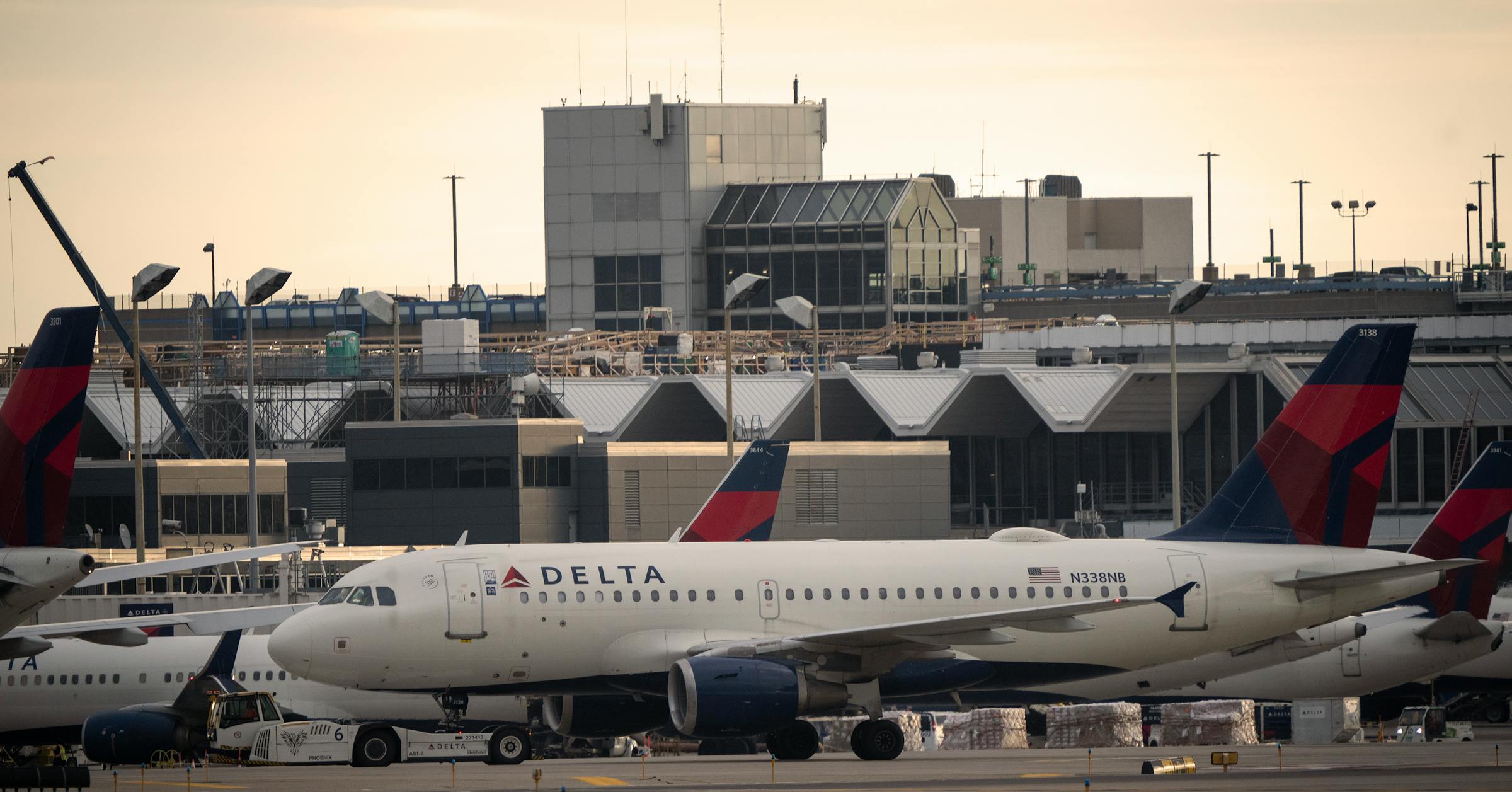
Following a U.S. pre-dawn attack on Venezuela and President Trump's statement that Nicolás Maduro and his wife were captured, the FAA restricted airspace around Puerto Rico and other Caribbean islands, leading to dozens of flight cancellations in Puerto Rico, the U.S. Virgin Islands and Aruba. Delta scrubbed multiple flights at Minneapolis-St. Paul International, issued a waiver for travel to/from 13 Caribbean airports Jan. 3-6 with rebooking expected by Jan. 9, creating short-term operational disruption for carriers and potential near-term revenue and tourism losses in the region.
Market structure: Immediate winners are defense/security providers and short-term travel insurers; losers are airlines (DAL exposed) and Caribbean-dependent leisure operators due to cancelled capacity and rebooking costs. Larger network carriers (Delta) absorb rebooking but face unit cost pressure — expect 3–8% margin hit per week of sustained airspace closures for affected transits. On supply/demand, this is a tactical supply shock to seat availability (spot fares on rerouted flights could rise 5–15% over 1–2 weeks) while overall demand remains intact.
Risk assessment: Tail risks include escalation that expands FAA closures to larger LATAM corridors or a sustained insurance/route-cost shock; low-probability but would cost airlines 1–3% EBITDA per week of closure beyond two weeks. Time horizons: immediate (days) = booking volatility and IV spikes; short-term (weeks) = revenue deferrals and claims; long-term (quarters) = higher route insurance and potential capacity reallocation. Hidden dependencies: cruise lines, Caribbean hotel REITs, and local FX of Venezuela/nearby tourism economies could transmit losses.
Trade implications: Direct short-edge: tactical short/put positions on DAL for 30–60 days to capture IV and near-term revenue risk; hedge with long exposure to defense (ITA) or LMT for geopolitical flight-to-quality. Options strategies: buy 30–45d OTM puts on DAL if IV>40% or buy strangles if IV>50%; consider pair trade long ITA (2–3% weight) vs short DAL (1–2% weight) for 1–3 months. Rotate out of leisure/heavy-Caribbean exposure and into travel-insurance and aerospace suppliers.
Contrarian angles: Market may overprice prolonged disruption — historical parallels (regional hurricane disruptions) show 1–3 week demand recovery and fill-in redeployments, creating a buying window if DAL price drops >15% on no-escalation. Unintended consequence: forced consolidation of routes could improve incumbents’ pricing power over 2–4 quarters, so deep, unhedged shorts beyond 3 months carry regime risk. Use tight triggers and monitor FAA/White House releases and oil moves as exit/cut signals.
AI-powered research, real-time alerts, and portfolio analytics for institutional investors.
Request DemoOverall Sentiment
moderately negative
Sentiment Score
-0.35
Ticker Sentiment
