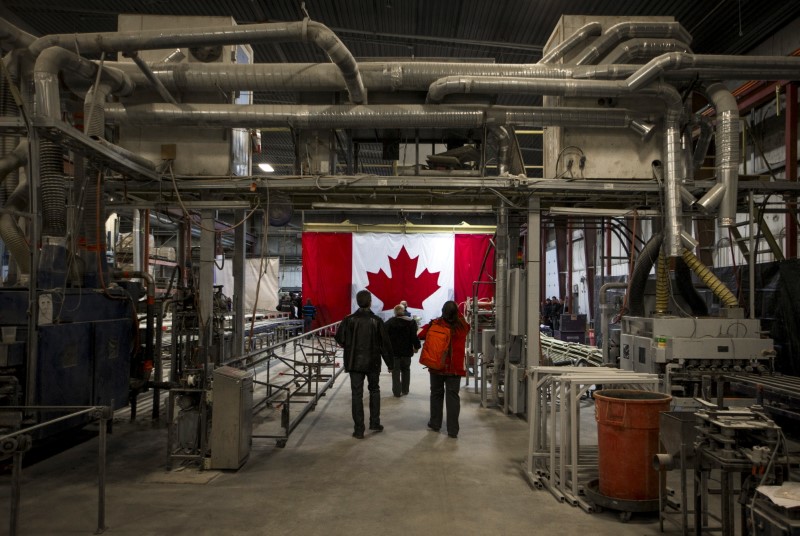
Canada's manufacturing sector contracted for the eighth consecutive month in September, with the S&P Global PMI falling to 47.7 from 48.3, indicating a deepening downturn. This sustained decline was driven by falling output, new orders, and persistent export weakness, particularly due to U.S. tariff disruptions, leading firms to cut back on employment, inventories, and purchasing amid subdued confidence. While overall business confidence declined, a positive development is the dissipation of price pressures, with input costs rising at a slower pace, potentially providing further justification for the Bank of Canada's recent interest rate cuts despite the ongoing uncertainty and firms' reluctance for capital outlays.
Canada's manufacturing sector exhibited a deepening contraction in September, with the S&P Global Manufacturing PMI falling to 47.7 from 48.3 in August, marking the eighth consecutive month of decline. The downturn is primarily driven by an accelerated fall in output and new orders, exacerbated by persistent export weakness. Trade frictions with the U.S., Canada's largest export market, remain a significant headwind, contributing to a slump in new export business. In response, firms are proactively cutting back on employment, purchasing activity, and inventory levels amid subdued confidence and ample spare capacity, as evidenced by a steep decline in backlogs of work. A notable counterpoint within the report is the dissipation of price pressures, with input costs rising at a slower pace. This trend lends support to the Bank of Canada's recent interest rate cuts and suggests underlying inflation is moderating, though it has not been sufficient to reverse the decline in overall business confidence or encourage capital investment.
AI-powered research, real-time alerts, and portfolio analytics for institutional investors.
Overall Sentiment
strongly negative
Sentiment Score
-0.75
Ticker Sentiment
