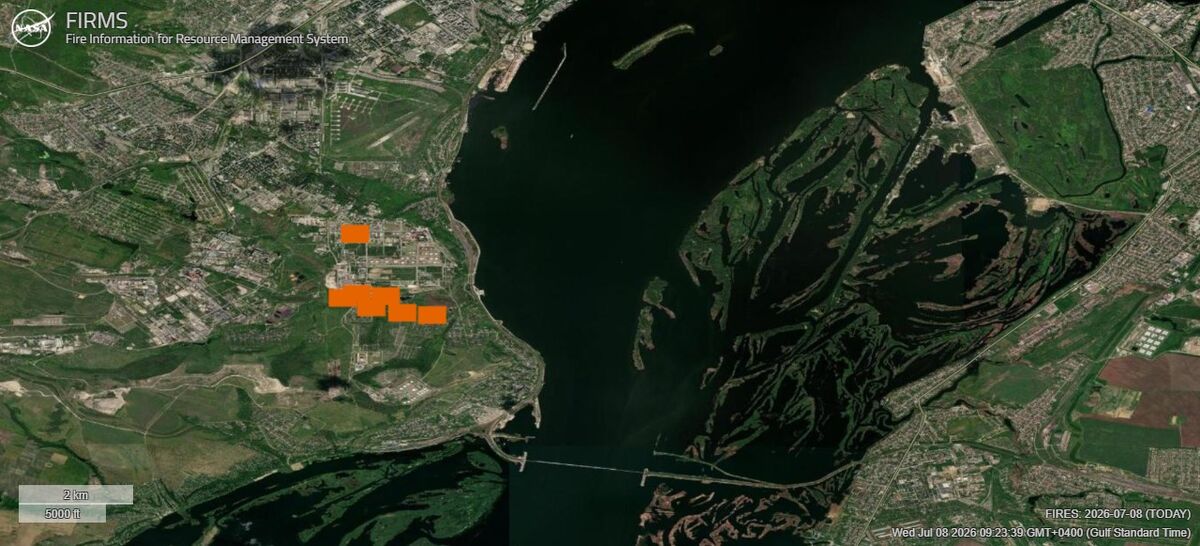
A Ukrainian drone attack sparked a fire at Russia’s Saratov refinery after an overnight strike, with officials citing industrial damage and 1 fatality. Two tankers were also hit in the latest attacks targeting Russia’s energy infrastructure, raising the risk of supply disruptions. The event is likely to be sector-moving as it increases near-term uncertainty for energy flows and pricing.
The near-term market mechanism is a risk premium shift from crude into refined products and shipping. A refinery outage in Russia matters more for diesel/gasoil cracks than for headline Brent, because product supply is harder to reroute quickly and Europe still leans on imported middle distillates; that supports U.S./non-Russian refiners with incremental margin upside if cracks widen for even 2-6 weeks.
Second-order, the hit to tankers can be more important than the fire itself if it changes routing, insurance, and port discipline in the Black Sea. That creates a modest tailwind for tanker names and a tail risk for any freight-sensitive importer, while defense/drone-countermeasure names gain a longer-duration budget backdrop if strikes on energy infrastructure keep repeating over the next 1-3 months.
Contrarian view: the market may overprice the crude shock and underprice the repair/rerouting response. Russia has shown it can restore throughput and shift barrels; if there are no follow-on strikes or if export logistics normalize within 1-2 weeks, the crude bid should fade while the product-market tightness persists. The key falsifier is a fast retracement in Brent plus no sustained move in ULSD cracks or tanker rates.
AI-powered research, real-time alerts, and portfolio analytics for institutional investors.
Request DemoOverall Sentiment
moderately negative
Sentiment Score
-0.35
Ticker Sentiment
