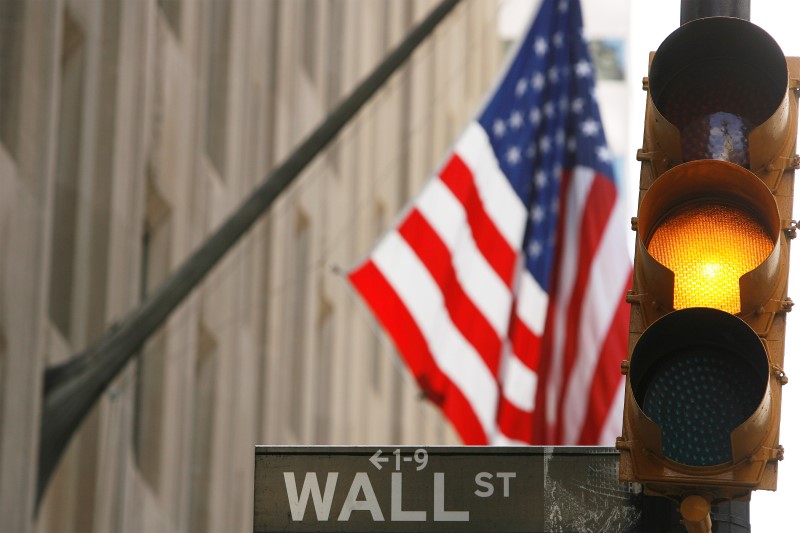
U.S. equities rallied sharply, with the S&P 500 up 1.1%, the Nasdaq Composite up 1.9%, and the Philadelphia Semiconductor Index jumping 6.4% to a record high after a U.S.-Iran deal eased geopolitical risk. Intel surged over 10% after reports Apple would work with it on U.S.-made chips, while oil prices fell on expectations that the Strait of Hormuz reopening will restore Middle East supply flows. Futures later pulled back modestly, with S&P 500 futures down 0.2% and Nasdaq 100 futures down 0.3% ahead of the Juneteenth holiday.
The immediate macro winner is not just equities broadly, but the duration-sensitive parts of the market: lower oil reduces the probability of a late-cycle inflation re-acceleration, which in turn gives the Fed more room to avoid overtightening. That matters most for semis and other long-duration growth names where multiple expansion is tightly linked to real-rate pressure; if front-end yields drift lower for even a few sessions, the rally can extend beyond the initial headline impulse.
The more interesting second-order effect is in supply chains and capex behavior. Intel’s move is not just a stock-specific catalyst; it reinforces the idea that policy-backed domestic semiconductor investment is becoming a strategic procurement theme, which can bleed into equipment, foundry, and power-management suppliers over the next 3-12 months. Apple is a subtler beneficiary/loser mix: higher memory costs may compress handset margins unless it can push pricing without demand elasticity showing up, and that creates a relative winner in premium Android and component vendors that are less exposed to the same cost stack.
On energy, the market is likely underpricing how quickly the “geopolitical risk premium” can come back if the deal fractures or implementation stalls. A 60-day negotiation window is short enough that option markets should still retain convexity value, especially for crude-sensitive hedges, because the downside in oil may be larger in spot than in implied volatility. If peace holds, the next regime shift is not in oil itself but in inflation expectations and cyclical leadership rotation: airlines, transports, chemicals, and consumer discretionary could outperform as input-cost relief shows up with a lag.
The contrarian read is that the chip rally may be crowded faster than the macro improvement justifies. If positioning is already leaning long semis into a holiday-thinned market, any disappointment in the follow-through from the Apple-Intel narrative or a re-tightening in financial conditions could produce a sharp mean reversion over days, not months. In that sense, the better asymmetry is likely in cross-asset hedges and relative-value expressions rather than outright beta chasing.
AI-powered research, real-time alerts, and portfolio analytics for institutional investors.
Request DemoOverall Sentiment
strongly positive
Sentiment Score
0.72
Ticker Sentiment
