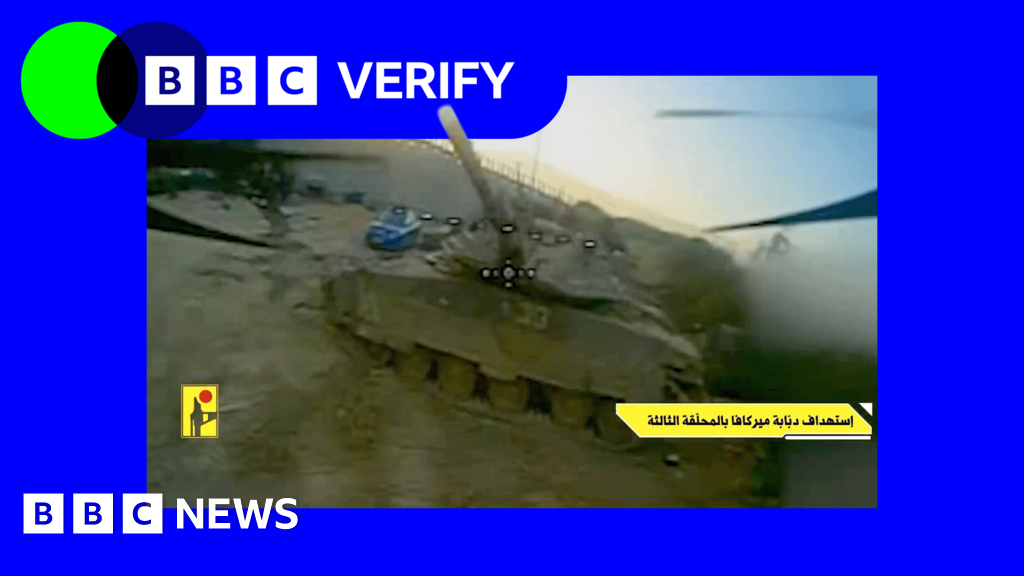
Hezbollah has expanded FPV drone attacks against Israel, with BBC Verify geolocating 35 verified strike videos since 26 March and nearly 100 apparent attacks shared on Telegram. Israeli reports indicate 4 IDF soldiers and 1 civilian killed in FPV strikes, with dozens injured, while Hezbollah’s fibre-optic-guided drones are said to cost only $300-$500 each and remain difficult to jam or intercept. The escalation underscores a material battlefield shift in drone warfare and raises near-term defense and regional security risk.
The market implication is not the headline damage, but the asymmetry in cost exchange: a sub-$500 airborne munition is forcing the IDF to spend orders of magnitude more on dispersion, hardening, sensor fusion, and soldier survivability. That shifts the marginal spend from offensive systems to point defense and base protection, which typically benefits niche counter-UAS, EW, and battlefield networking vendors more than traditional missile-defense primes. The deeper second-order effect is operational: if cheap FPV drones remain effective, Israel is pressured to move heavier assets less frequently and concentrate them less densely, which lowers tempo and increases logistics friction across the southern front.
The near-term catalyst is not a single strike but the learning curve. FPV tactics are cheap to iterate, so the threat can compound over weeks faster than procurement cycles can respond; that means the risk window is measured in 1-3 months, not quarters. If fibre-linked systems truly reduce jamming effectiveness, the first meaningful reversal would likely come only from procedural adaptation — better local detection, physical barriers, decoys, and pre-emptive hunter-killer patrols — rather than a software or EW fix. That argues for continued pressure on exposed armored maneuver assets and any platform reliant on clean electromagnetic environments.
The contrarian point: the obvious conclusion is to buy defense broadly, but the real winners may be subscale and less obvious suppliers tied to layered drone defense, ruggedized comms, thermal optics, short-range interceptors, and base-hardened infrastructure. Large-name primes may see headlines, but budget reallocation usually takes time and can be diluted by bureaucracy, so the trade is likely in the second derivative rather than the first. On the other side, any belief that drone saturation alone changes the strategic balance is probably overdone; it raises local casualty risk and operating costs more than it changes campaign-level outcomes unless scaled into a much wider proliferation shock.
AI-powered research, real-time alerts, and portfolio analytics for institutional investors.
Request DemoOverall Sentiment
strongly negative
Sentiment Score
-0.75
