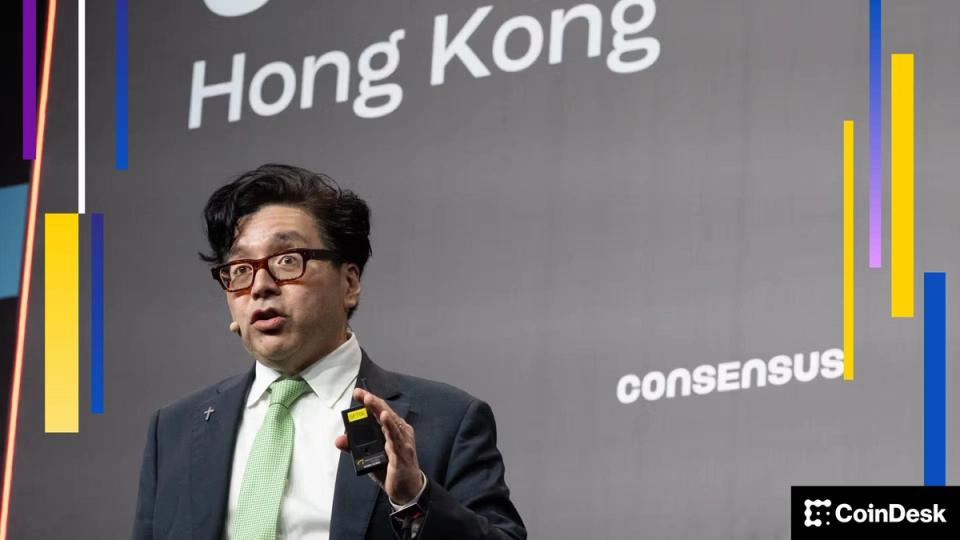
Bitmine bought 60,999 ETH last week, raising its holdings to 4,595,562 ETH (≈$10.0bn) while maintaining $1.2bn in cash. The firm currently stakes 3.04m ETH, producing about $180m of annualized revenue with potential to reach ~$272m as more tokens are locked, even as unrealized losses on its treasury are estimated at ≈$6.5bn. Shares were nearly 9% higher pre-market as ETH rallied ~8.4% over 24 hours; chairman Tom Lee attributed crypto outperformance to higher oil and Iran-war driven growth concerns, noting Ethereum has outperformed the S&P 500 by ~2,450bps. Portfolio implication: strong scale and staking income support Bitmine’s business model, but the sizable unrealized loss and crypto market volatility warrant cautious position sizing.
Bitmine’s corporate accumulation strategy creates non-obvious market plumbing effects: concentrated corporate treasuries reduce free float of ETH-like assets, which amplifies basis moves in futures and repo when either the corporate or macro liquidity profile shifts. That makes short-dated funding spreads and basis swaps natural leading indicators for stress long before spot cracks, because a concentrated seller under funding pressure will hit derivatives markets first.
The firm’s operating cashflow from staking functions as a de facto coupon on its crypto exposure, which compresses realised volatility for the equity relative to spot ETH but raises idiosyncratic counterparty and custody risk tied to staking mechanics and validator slashing. Over a 3–12 month horizon, changes to staking rules, a forced lock-up increase, or a regulatory clamp on custodial staking could swap that ‘coupon’ from an asset stabiliser into a liability that forces asset sales.
Key tail risks live at two timeframes: days–weeks for liquidity-driven deleveraging (margin calls, repo squeezes, sudden cost-of-carry changes), and months–years for regulatory/structural shocks (staking classification, reserve-asset rules) that would reprice treasury-heavy issuers across the sector. Macro inputs that matter most are rate volatility and real-growth signals, not raw oil headlines—the latter is an imperfect proxy and can reverse quickly if growth fears translate into risk-off flows.
Consensus treats treasury accumulators as leveraged “cheap” ways to play crypto upside; the missing piece is optionality concentration. That creates asymmetric outcomes: modest ETH appreciation benefits many holders, but a governance or liquidity event centered on large treasuries can create outsized equity dislocations that are exploitable via relative-value trades.
AI-powered research, real-time alerts, and portfolio analytics for institutional investors.
Request DemoOverall Sentiment
mildly positive
Sentiment Score
0.25
Ticker Sentiment
