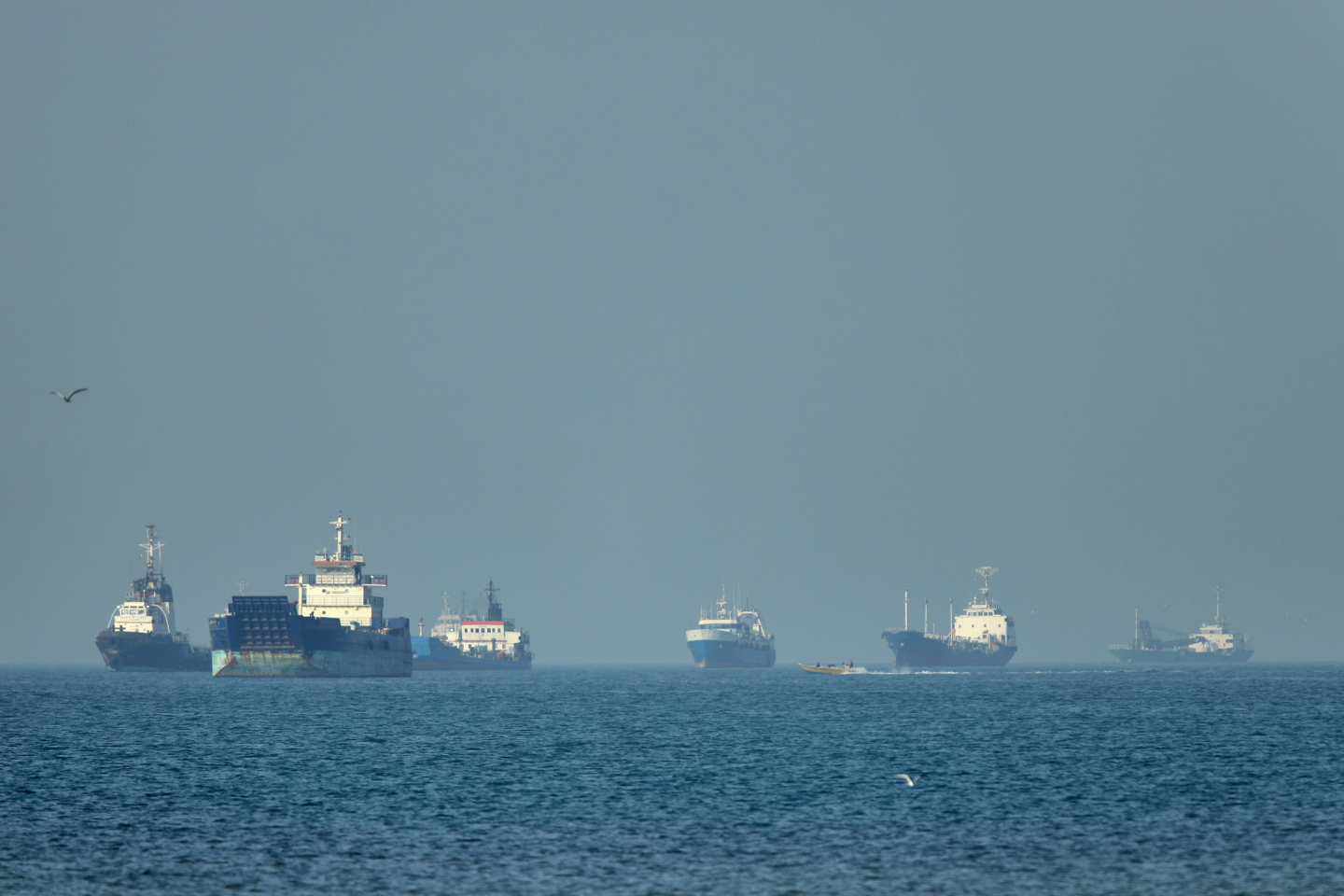
The article outlines 11 scenario pathways showing how prolonged instability in the Strait of Hormuz could raise oil prices, insurance premiums, freight costs, and LNG prices while disrupting global supply chains. It highlights risks ranging from Gulf logistics breakdown and uncontrolled escalation to a Russia-Iran-China energy bloc and heightened inflationary pressure in Europe and Asia. The piece is broadly negative for energy importers, global trade, and geopolitical stability, with market-wide implications.
The market is likely underpricing how quickly a “temporary” Hormuz premium can migrate from spot crude into a broader transport-and-credit tax. The second-order winner set is not just upstream energy, but any asset with low Middle East exposure and pricing power in freight/insurance: U.S. LNG exporters, North Sea barrels, and non-Gulf tanker exposure benefit if rerouting persists for months rather than days. The biggest loser is the Gulf marginal barrel, because even without a physical shutdown, higher turnaround times and insurance friction can permanently compress netbacks and shift customer preferences toward more reliable supply chains.
The most important asymmetry is that the shock can be inflationary without being growth-accretive for producers outside the region. Europe and Asia absorb the cost first, but the more durable damage shows up in industrial margins, airline/freight costs, and working capital needs across import-dependent sectors. That creates a delayed earnings hit over 1-3 quarters, while the immediate market reaction will be concentrated in front-month crude, tanker rates, and nat-gas/LNG curves. If instability becomes “managed,” volatility stays elevated even if spot prices retrace, which is structurally bearish for risk assets because uncertainty itself becomes the commodity.
The contrarian risk is that investors focus too much on headline war probability and too little on coalition drift and logistics degradation. A full blockade is not required for energy and shipping markets to reprice; sustained insurance stress can do the work. Conversely, the key reversal catalyst is a credible multilateral maritime security package or a rapid loss of Iranian ability to sustain low-level disruption—either would compress the risk premium fast, likely within days to weeks. Over a 6-12 month horizon, the more important question is whether buyers lock in alternate routes and contracts, because that would convert a geopolitical shock into a permanent reallocation of demand away from the Gulf.
AI-powered research, real-time alerts, and portfolio analytics for institutional investors.
Request DemoOverall Sentiment
strongly negative
Sentiment Score
-0.65
