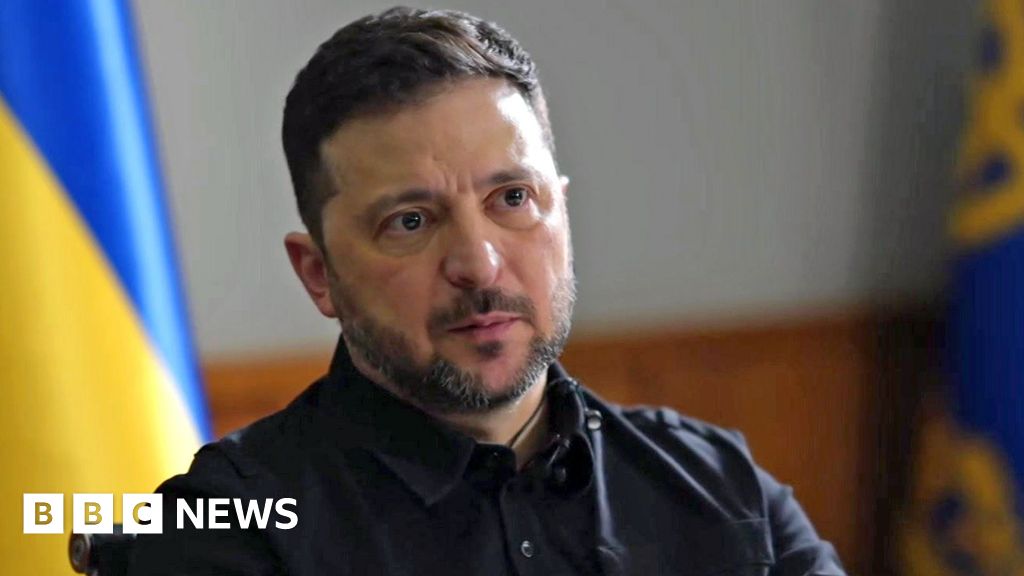
Ukrainian President Volodymyr Zelensky warned that Vladimir Putin has effectively started a wider global conflict and rejected territorial concessions as the basis for a ceasefire, arguing such withdrawals would betray citizens and only temporarily satisfy Russia. He said Ukraine needs sustained military and economic pressure, security guarantees (requiring congressional backing) before holding elections, and licences to produce US systems such as Patriot missiles—licenses which have not been granted—while noting the US has curtailed direct aid shipments though it still provides intelligence and indirect weapons via European purchases. The interview signals continuation of geopolitical risk, potential for a protracted conflict, heightened defense procurement demand, and ongoing political uncertainty that could influence sovereign risk and defense-sector flows.
Market structure: Prolonged Ukrainian resistance with constrained diplomacy raises demand for defense hardware, air-defence, precision munitions and Western logistics (winners: RTX, LMT, NOC, GD; losers: European airlines, tourism, cross-border retail). Energy supply risks (Russian export restrictions or secondary sanctions) keep upside pressure on Brent and EU gas into 1–6 months; safe-haven bid supports gold and USD in the near term. Competitive dynamics favor large integrated defense primes with licensing/IP (Raytheon/RTX) over smaller subcontractors; production bottlenecks (missiles, semiconductors) can sustain pricing power for suppliers with capacity. Risk assessment: Tail risks include NATO escalation (low-probability, high-impact) causing >10% global equity drawdowns and Brent >$120 within weeks; a Russian energy embargo or wider sanctions shock could push EU gas >2x current levels over 3–6 months. Short-term (days–weeks) outcomes hinge on US aid flows and major diplomatic events; medium-term (3–12 months) depends on weapons deliveries and licensing decisions. Hidden dependencies: Congressional approvals, US presidential rhetoric volatility, and supply-chain choke points (chip fabs, propellant) — all non-linear catalysts that can flip sentiment quickly. Trade implications: Position for asymmetric defense upside and commodity volatility while hedging macro risk: long large-cap defence equities/LEAPs and energy exposure; buy near-term index protection around political calendar (Geneva/G7/election windows). FX: overweight USD vs EUR if European energy pain deepens; short country/sector exposures with Russia linkage (banks, utilities) and travel-exposed names. Options: favor protected call spreads on primes and cheap put spreads on broad indices to monetize higher realized vol. Contrarian angles: Consensus that US aid is permanently cut is likely overdone — Congress has history of late funding which would re-rate defense and EM exposure; markets may already price an overly bearish European growth hit, creating attractive entry for select cyclicals post-dip. Defense names with backlog and export licences are under-owned; if licensing/tech transfer accelerates (6–12 months) some primes could rerate 20–40%. Beware of single-event ceasefires that produce sharp mean-reversion in oil and gold, creating short windows to trim positions.
AI-powered research, real-time alerts, and portfolio analytics for institutional investors.
Request DemoOverall Sentiment
strongly negative
Sentiment Score
-0.60
