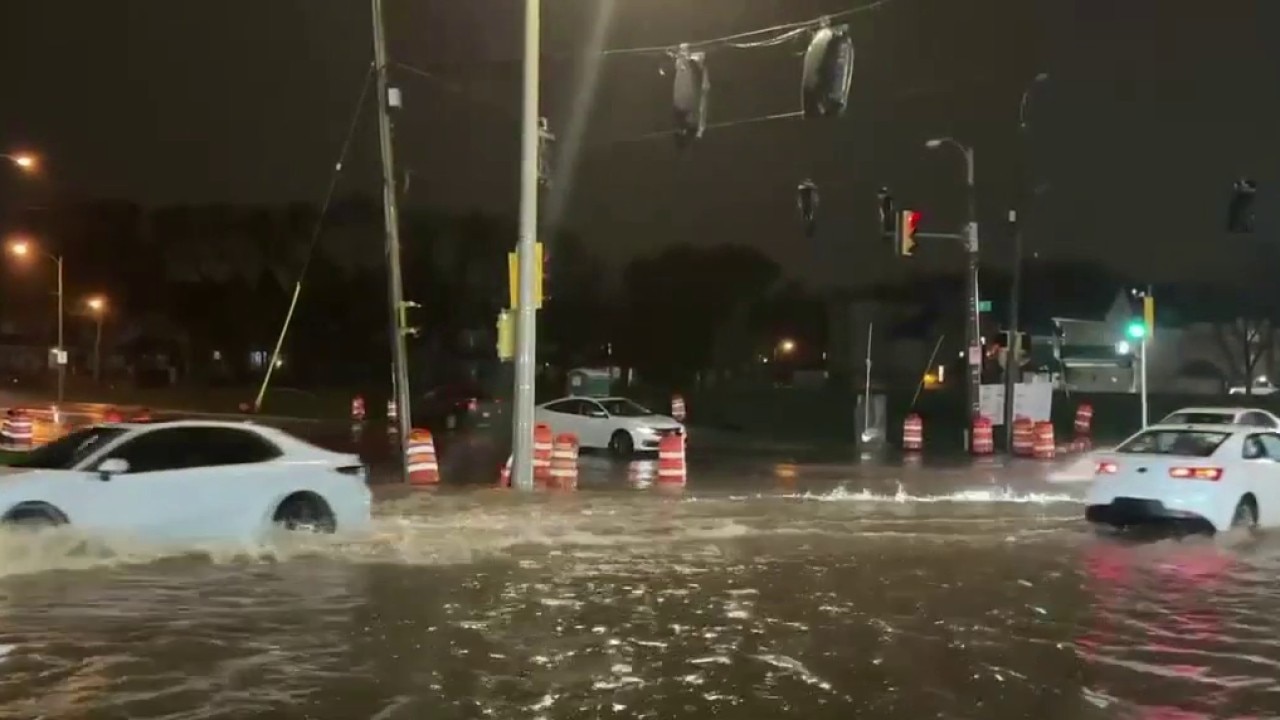
Flooding triggered major freeway closures across Milwaukee County on Wednesday evening, including all southbound lanes of I-43 at Becher and a full northbound closure expected at Holt. Additional shutdowns were reported at I-43 and Mitchell and near the Stadium Interchange, while officials urged drivers to stay off the roads and warned conditions could worsen. Marquette University police also warned of dangerous flooding near campus and advised people to avoid standing water and flooded streets.
The immediate market impact is not the headline flood itself, but the asymmetry between short-duration disruption and longer-duration inspection/repair spend. For the next 24-72 hours, the cleanest winners are not traditional “storm” names so much as emergency response, temporary traffic control, and downstream maintenance contractors that monetize lane closures, pumping, barrier deployment, and rapid restoration. The more interesting second-order effect is that urban flooding disproportionately stresses bridge approaches, signal systems, and subgrade/aggregate layers, which can convert a one-day closure into a multi-week procurement cycle for municipalities and DOT vendors.
The broader losers are logistics-dependent local distribution networks: last-mile carriers, fuel delivery, and time-sensitive manufacturing inputs face near-term route friction, but the bigger risk is service-level degradation rather than outright volume loss. In a metro like Milwaukee, even a brief closure can propagate into same-day inventory misses for regional warehousing and create labor-hour inefficiency for fleets that keep drivers idle or reroute around congestion. If the event persists into the morning commute, expect a temporary spike in overtime, claims frequency, and small-business revenue leakage around the affected corridors.
The contrarian view is that the market often overestimates the economic damage from a single localized flood event and underestimates the procurement follow-through. Unless there is repeated rainfall over several days, this is usually a 1-2 week operational nuisance rather than a material earnings event. The higher-conviction trade is to fade any knee-jerk bearishness on transportation names tied to the region and instead look for beneficiaries of inspection, repair, drainage, and road-safety spend over the next 1-3 months.
AI-powered research, real-time alerts, and portfolio analytics for institutional investors.
Request DemoOverall Sentiment
moderately negative
Sentiment Score
-0.35
