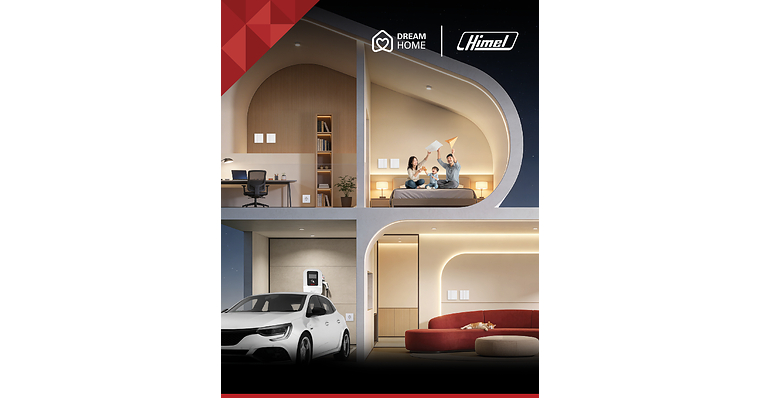
Himel lance/étend sa campagne mondiale « Dream Home » (thème « Light Up Living ») pour promouvoir une offre résidentielle intégrée combinant design, sécurité et fonctionnalités intelligentes, incluant boîtiers de câblage Altivo, finitions Nerio et prises sur rail Verso. La campagne met aussi en avant un chargeur EV de 2e génération, lauréat du « Top Innovation Award », positionnant l’entreprise sur une mobilité plus propre et des solutions plus connectées. L’annonce est principalement marketing/produit, sans chiffres financiers ni guidance, donc un impact boursier attendu limité.
This reads more like channel positioning than a hard demand signal. The real economic value is not the product launch itself but the attempt to sell a bundled, specification-led solution that raises installer stickiness and improves attach rates across wiring, charging, and home-control accessories. If that strategy is working, the winner is the distribution layer and the larger electrical OEMs with broad portfolios; the loser is the fragmented, price-led accessory market where gross margins are more vulnerable to feature creep and design differentiation.
The second-order effect is on competitive pricing, not unit volumes. In residential and light-commercial electricals, once one vendor frames the purchase as an integrated "future-proof" package, rivals are forced either to match on software/industrial design or concede share to lower-cost regional brands. That dynamic tends to benefit quality compounders such as ABB, Schneider Electric, Legrand, and Eaton more than pure-play EV charging names, because the cross-sell opportunity sits inside their existing channel relationships rather than in a standalone charger market that remains installation-constrained.
Near term, I would treat this as a watch item rather than a trade: the press release does not prove incremental orders, and the EV charger element is still too small to matter unless distributor sell-through is confirmed. Over 1-3 months, the catalyst would be evidence that residential electrification and EVSE are lifting mix in actual bookings; over 6-18 months, a real upgrade cycle in emerging-market housing and home-office retrofits could modestly support premium electricals. The thesis is falsified if peers report flat residential order growth or if EV adoption slows enough that charger attach rates remain promotional rather than recurring.
AI-powered research, real-time alerts, and portfolio analytics for institutional investors.
Request DemoOverall Sentiment
mildly positive
Sentiment Score
0.12
