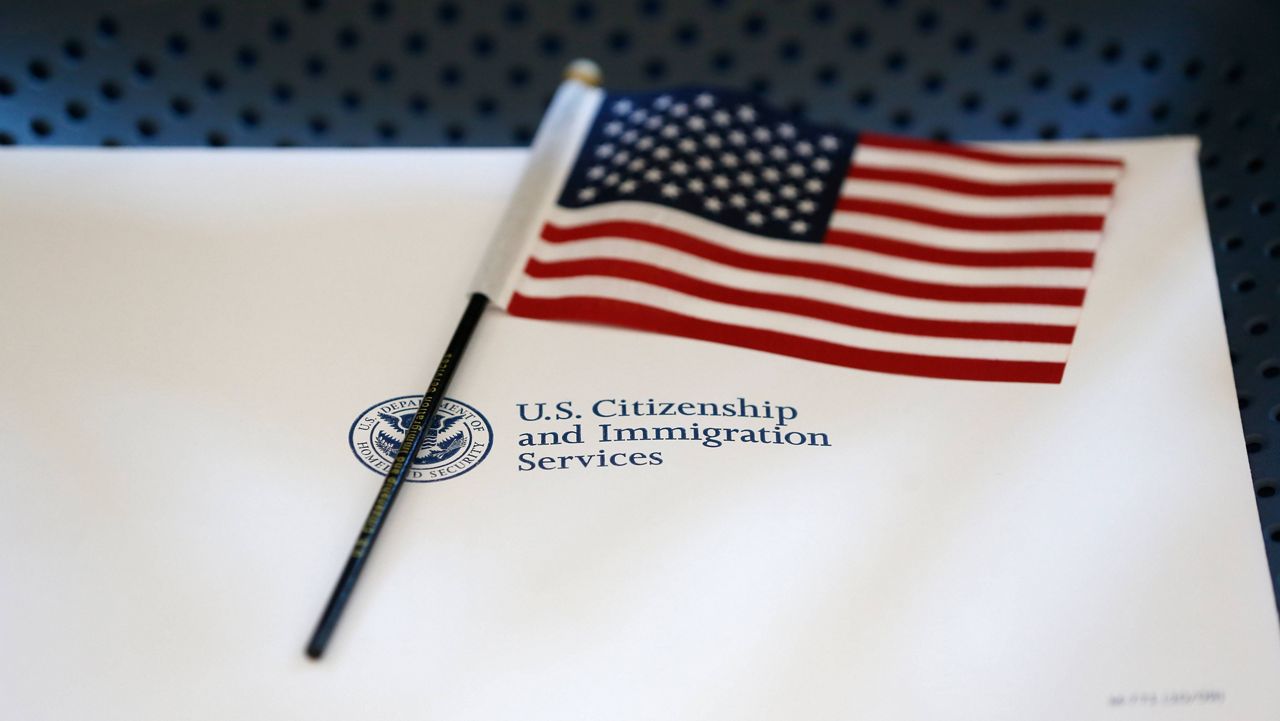
The Trump administration said foreigners in the U.S. seeking green cards must generally leave and apply from their home countries, reversing decades of adjustment-of-status practice except in extraordinary circumstances. The policy could affect hundreds of thousands of applicants annually, including spouses of U.S. citizens, workers, students, and humanitarian cases, and may create processing delays, family separations, and barriers for applicants from countries without active U.S. consular services. The change is likely to tighten legal immigration flows and could have broad sector-level implications for employers, schools, and immigration services.
This is not just an immigration headline; it is a friction shock to labor allocation and household formation. The first-order economic effect is delay, but the second-order effect is a lower conversion rate from temporary work/student status into durable residency, which reduces the expected value of U.S. labor-market entry for higher-skill migrants. That matters most in sectors already reliant on foreign-born labor pipelines — healthcare, STEM, hospitality, and higher education — where employers will face longer vacancy durations, higher wage pressure, and more use of expensive interim staffing.
The most exposed public-market lever is not a single ticker but duration-sensitive service businesses tied to visas, relocation, and cross-border mobility. Universities and private education operators could see softer international enrollment demand if the U.S. becomes less usable as a long-run destination, while employers in travel, lodging, and consumer categories with immigrant-heavy workforces may see incremental wage inflation and turnover. Over 6-18 months, this is a margin story, not a revenue collapse: small changes in turnover and recruiting costs can compress operating leverage in labor-intensive names.
The biggest tail risk is implementation ambiguity. If the rule is selectively waived for high-value workers, the market may dismiss it as political signaling; if enforced broadly, expect a meaningful chilling effect on applications and a backlog in consular processing that could persist for quarters. A near-term reversal would require court intervention, administrative clarification, or carve-outs for specific categories, so the trade should be structured around the probability of enforcement rather than the headline itself.
Contrarian angle: the consensus may underappreciate the beneficiaries of bottlenecks. Domestic staffing firms, in-country legal/process outsourcing, and employers with heavy citizen labor pools gain relative bargaining power if foreign labor becomes less flexible. In other words, the real alpha may be in shorting labor-intense businesses with weak pricing power rather than betting directly on any immigration-adjacent political theme.
AI-powered research, real-time alerts, and portfolio analytics for institutional investors.
Request DemoOverall Sentiment
moderately negative
Sentiment Score
-0.45
