
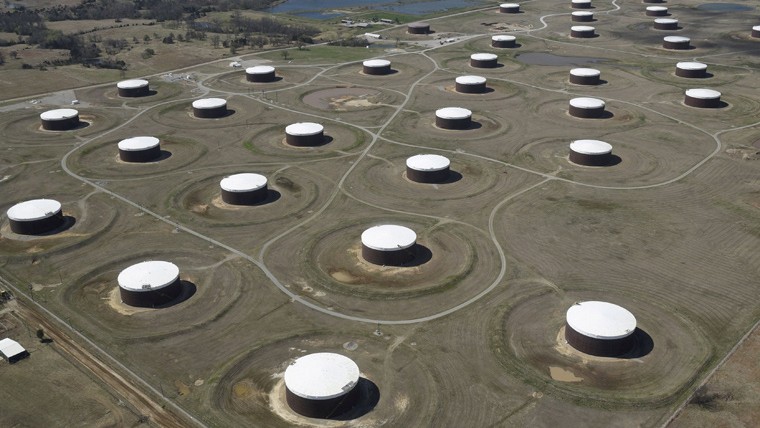
US crude inventories fell by 2.8 million barrels in the week ending May 22, while the SPR drew down by 9.1 million barrels to 365.1 million barrels, the lowest since April 2024. Gasoline stocks fell 3.199 million barrels and Cushing inventories dropped 2.875 million barrels, but crude benchmarks were already sharply weaker, with Brent down 4.14% to $95.46 and WTI down 4.51% to $89.66. The data points to continued tight physical balances and should remain relevant for oil prices and energy-linked assets.
The tape is signaling a classic inventory-to-price dislocation: physical balances are tightening faster than prompt futures are discounting, which usually resolves either through a sharp rebound in prompt crude or a delayed demand response. The most important second-order effect is that sustained draws in crude, gasoline, and Cushing reduce the market’s ability to absorb any geopolitical interruption, so near-dated options skew should stay bid even if headline spot prices continue to soften. In other words, the market is treating a temporarily rich supply buffer as if it were a structural surplus.
The cleaner winners are refiners and integrateds with large downstream exposure, but only if they can source barrels cheaply enough; if prompt spreads re-tighten, the margin benefit gets competed away quickly. Midstream names with fixed-fee exposure should outperform upstream beta in a noisy tape because they are less exposed to outright price direction and more to volumes, while high-cost shale producers face the most risk if the move lower extends another 5-10% over the next 2-6 weeks. Cushing draws also matter technically: they can steepen prompt backwardation, which supports nearby futures but can hurt carry-trade shorts and suppress inventory financing economics.
The contrarian view is that this could be an overreaction to a transitory inventory signal rather than a durable bearish inflection. If physical draws persist into the next 2-3 weekly reports, the market may be forced to reprice a tighter summer balance and unwind the recent decline fast; if they do not, the path of least resistance is lower because speculative length has likely started to rebuild into weakness. The key catalyst window is the next 1-3 weeks, when any supply disruption, SPR slowing, or a modest demand surprise could trigger a sharp reversal in prompt crude and the crack structure.
Risk is asymmetric around geopolitics: an escalation that threatens export flows would matter more now because inventories are no longer ample enough to cushion a shock. That makes short crude gamma attractive only if sized small and paired with tight risk controls; otherwise the better risk/reward is to express a view through relative value rather than outright directional exposure.
AI-powered research, real-time alerts, and portfolio analytics for institutional investors.
Request TrialOverall Sentiment
mildly negative
Sentiment Score
-0.15
Ticker Sentiment
