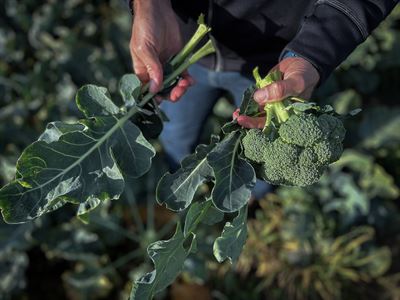
Swedish NGOs, researchers and industry partners have developed a process to harvest and process broccoli leaves—currently largely left in fields—potentially doubling usable broccoli yield without extra land or inputs. Sweden harvests ~2,800 tonnes of broccoli annually, with only ~20% (florets) typically used and nearly 70% of edible broccoli lost; the initiative converts edible upper leaves into ingredients, with IKEA Sweden launching a limited-quantity broccoli leaf soup in stores from late January and plans to scale use in the 2026 harvest. The initiative reduces food waste, lowers per-kilogram climate impact and offers a scalable, low-cost input for plant-based retail products, though near-term commercial impact is limited.
Market structure: This is a locally disruptive efficiency improvement rather than a commodity shock — Sweden produces ~2,800 t of broccoli/year and harvesting upper leaves could double usable output locally, lowering domestic fresh-broccoli effective unit costs and increasing supply to processors and foodservice. Winners: Swedish processors, foodservice operators (IKEA, Martin & Servera), and retailers that can market lower-cost, ESG-branded plant products; losers: import-dependent fresh-produce aggregators and cold-chain players facing margin pressure. Pricing power shifts toward branded/processed plant-food players who capture value from formerly wasted biomass. Risk assessment: Immediate market impact is negligible on global produce prices; material effects play out over months-to-years (scale by 2026 harvest). Tail risks include food-safety/regulatory pushback, labor/harvest logistics failing to scale, or reputational backlash if products underperform — any of which could wipe out projected margin gains. Hidden dependencies: increased processing/packaging capex, seasonal labor, and refrigeration capacity; catalysts include IKEA scaling beyond Sweden or EU subsidies on food-waste reduction. Trade implications: Tactical exposures favor Swedish retail/foodservice and global consumer staples with efficient innovation pipelines. Expect modest margin expansion for adopters (target +50–150 bps over 12–24 months if scaled), limited impact on bonds/FX, but credit spread compression for small processors that convert waste to commodity ingredients. Options-play horizon: 6–18 months to capture adoption news flow and 2026 harvest signals. Contrarian angle: The market underestimates operational execution risk and overestimates immediate scalability — adoption requires capex and supply coordination, so early entrants could disappoint despite the ESG narrative. Historical parallels: vegetable-byproduct valorization (e.g., citrus peels) delivered brand uplift only after 1–3 years and concentrated winners. Unintended consequence: lower fresh-vegetable spot prices in Sweden could pressure margins for incumbent growers unless leaf-harvesters pay new premiums.
AI-powered research, real-time alerts, and portfolio analytics for institutional investors.
Request DemoOverall Sentiment
mildly positive
Sentiment Score
0.30
