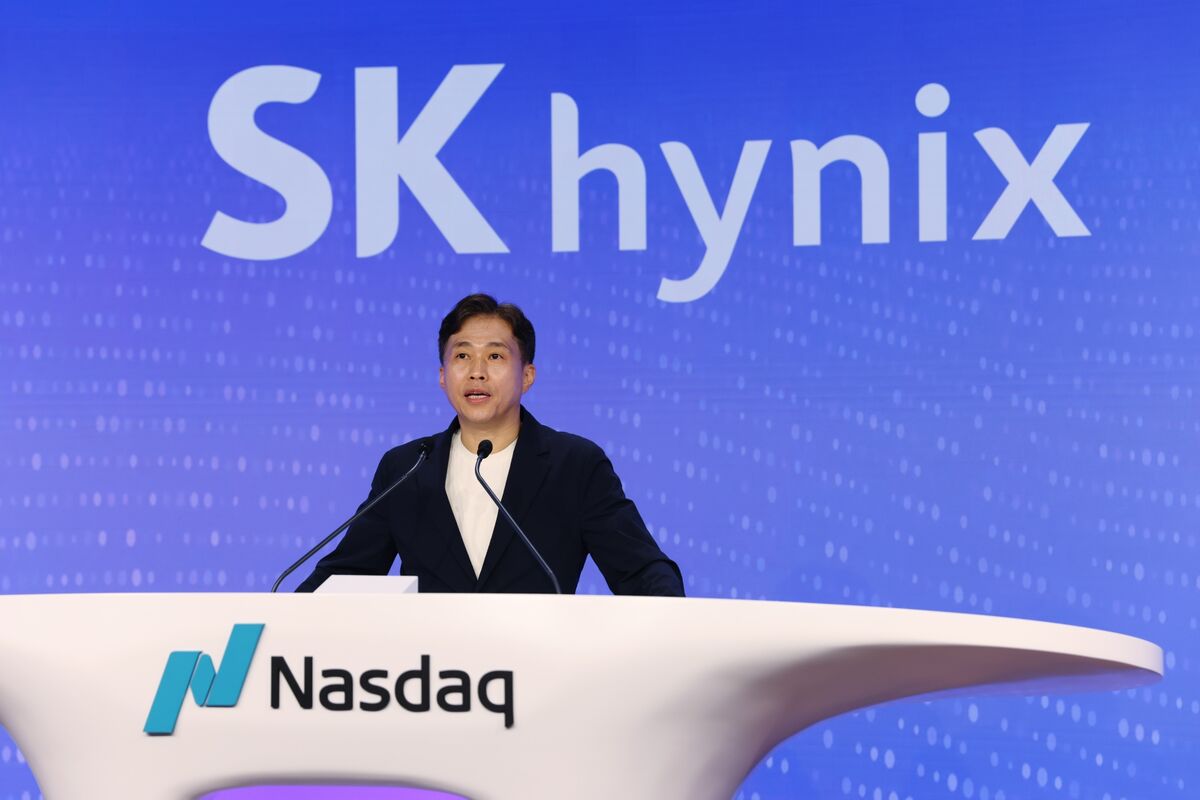
SK Hynix CEO Kwak Noh-Jung expects the memory-chip shortage to persist beyond 2030, with customers signing long-term contracts on the belief supply constraints will last longer. The company’s commentary suggests continued pricing power and stronger visibility into demand/supply balance through the decade, following its record-setting US stock offering.
This is bullish for the memory oligopoly, but the cleaner read is that pricing power should accrue first to the most constrained/high-spec nodes, not the entire semiconductor complex. That favors MU and any AI-linked HBM exposure, while downstream buyers — DELL, HPQ, auto OEMs, and device assemblers — face a slower, less visible margin squeeze through higher component costs and larger precautionary inventories. If customers are already locking in long-dated supply, the market is signaling that spot pricing may stay tight long enough for contract resets to become the real earnings driver.
Second-order, the shortage can actually delay broader supply relief: when buyers commit early, incumbents gain visibility to justify capex, but actual wafer output and packaging relief lag by multiple quarters. That means equipment names like AMAT, LRCX, and KLAC are not the immediate winners; they only benefit if the shortage persists long enough to force a new capex cycle, which is more of a 6-18 month story than a next-quarter trade. The immediate reaction is usually multiple expansion for memory suppliers, but the more durable effect is earnings revision upward from higher realized ASPs and better mix.
The contrarian risk is that management commentary from a memory leader is partly strategic messaging: it can be used to support pricing and investor enthusiasm for a recent equity raise. The thesis breaks if Samsung/Micron add supply faster than expected, if HBM packaging constraints ease, or if end-demand weakens and channel inventory rebuild stalls. Watch for contract price changes, capex guidance, and inventory days; if those normalize while shares keep running, the move becomes a fade rather than a trend.
AI-powered research, real-time alerts, and portfolio analytics for institutional investors.
Overall Sentiment
mildly positive
Sentiment Score
0.15
