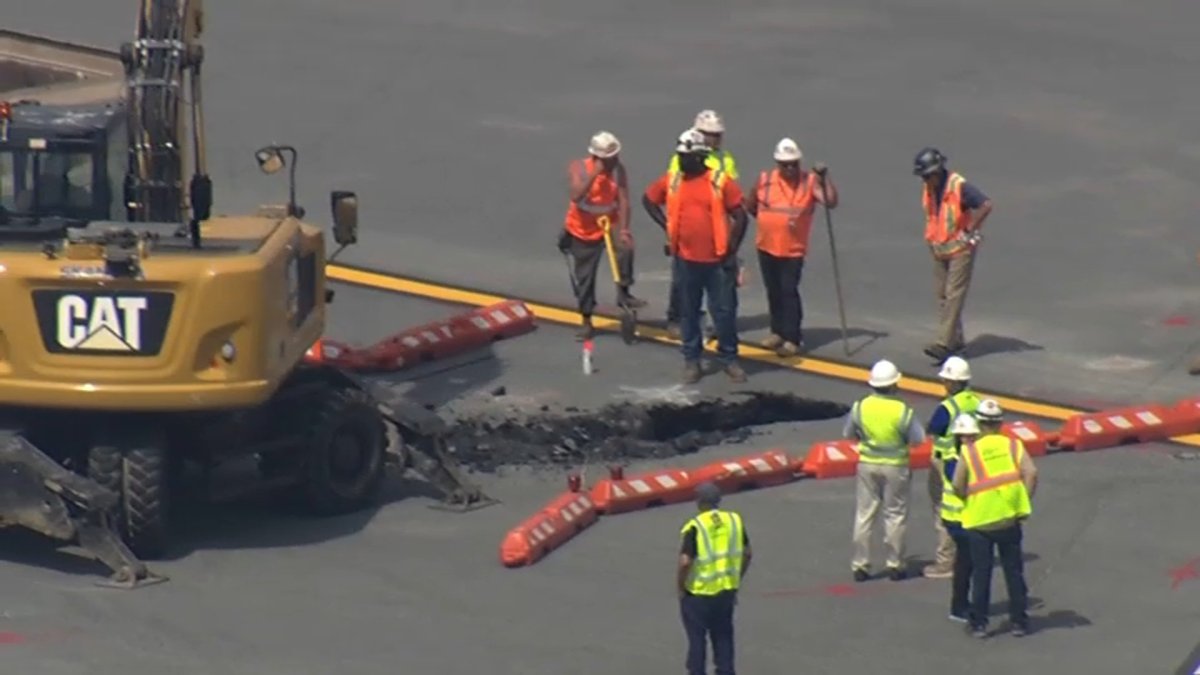
A sinkhole near Runway 4/22 at LaGuardia Airport forced a runway shutdown, with delays already running about 1.5 hours as of 2:30 p.m. Repairs were expected to take several hours, and storm forecasts for Wednesday afternoon could further disrupt operations. The incident raises near-term travel disruption risk at the New York City hub, though the broader market impact should remain limited.
This is a near-term operational shock, not a structural aviation thesis. The first-order effect is localized capacity loss at a constrained New York slot airport, which tends to reprice regional schedules faster than it changes quarter-level fundamentals; the real market impact shows up in same-day disruption costs, misconnects, and reaccommodation rather than demand destruction. The bigger second-order effect is that weather plus infrastructure fragility creates a compounding delay regime: once one hub tightens, the network effect pushes delays into airline utilization, crew legality, and aircraft rotation efficiency across the Northeast.
Air Canada is the cleanest single-name exposure because its New York–Toronto/Montréal business mix has meaningful short-haul frequency that is highly sensitive to hub reliability, and disruption often hits premium and connecting traffic harder than leisure. If this becomes a multi-day issue, AC can absorb higher reaccommodation and crew repositioning costs without obvious top-line recovery, because passengers on transborder routes have more viable substitutes than on long-haul international sectors. The market usually underestimates how quickly a few days of disruption can bleed into the following week through aircraft out-of-position and customer schedule distrust.
Contrarian view: the move may be overdone if repairs are completed within hours and weather does not materially worsen. In that case, the earnings impact is likely immaterial and the event becomes a volatility spike rather than a fundamental revision. The more important medium-term issue is not this specific sinkhole, but the repeated evidence that airport infrastructure and weather exposure can create recurring operational risk premiums at Northeast carriers and airports, which supports a small but persistent discount to schedule reliability until capacity redundancy improves.
AI-powered research, real-time alerts, and portfolio analytics for institutional investors.
Request DemoOverall Sentiment
mildly negative
Sentiment Score
-0.25
Ticker Sentiment
