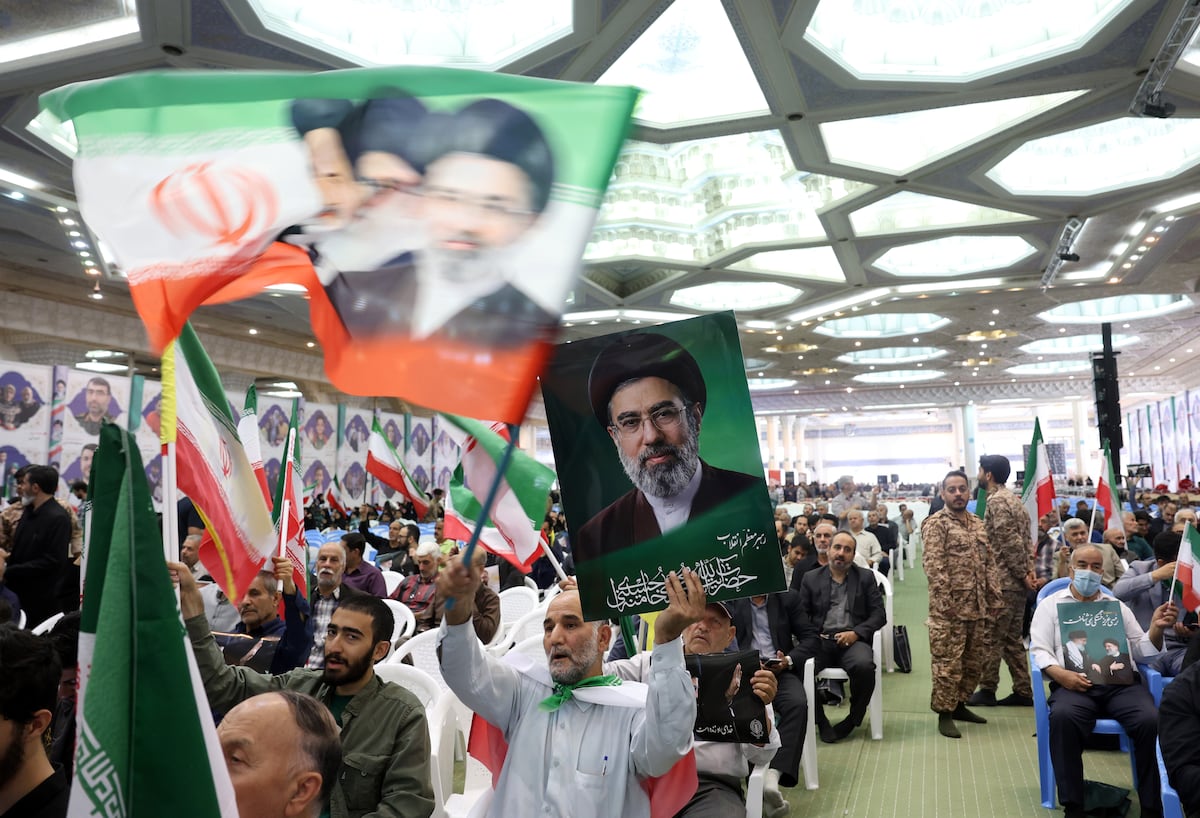
Iran is seeking partial release of roughly $100 billion-$120 billion in frozen overseas assets, with about $12 billion held in Qatar seen as the most likely first tranche. The article says unfreezing funds could stabilize Iran’s rial, help fund reconstruction after war damage, and act as an economic lifeline, while signaling Washington may be softening its negotiating stance. The issue is tied to broader talks over the Strait of Hormuz, Iran’s nuclear program, and sanctions relief, making it geopolitically significant and potentially market-moving for oil and FX.
The market is likely underpricing the signaling value of a partial sanctions relief package: even a limited release of trapped sovereign cash would validate a broader de-escalation regime and compress geopolitical risk premia across the region. The first-order beneficiary is not Iranian growth so much as liquidity stabilization — a lower-probability tail event for a currency spiral, import seizure, or disorderly domestic unrest that would otherwise force emergency policy responses and raise spillover risk into energy shipping and regional credit.
The second-order effect is on energy and freight, not just Iranian macro. Any credible path to funds release increases the odds of a near-term Hormuz risk discount unwind, which is bearish for oil volatility and bullish for shipping names with Middle East exposure, but only if the agreement looks durable. The bigger tell is what is absent from the draft: if missile and proxy constraints are deferred, the market may wrongly extrapolate peace while leaving the core military risk intact, setting up a sharp re-risking if implementation stalls.
From a cross-asset perspective, this is a mild negative for crude, defense sentiment, and safe-haven FX, but the move is likely more in vol than spot. The contrarian view is that the headline is more of a liquidity backstop than an economic reopening: Iran can use released cash to prioritize imports, currency defense, and internal stability, but that does not restore structural growth or remove sanction leakage. If traders overread it as normalization, the cleaner expression is to fade the first relief rally and own optionality on renewed stalemate over timing, verification, and tranche size.
The main catalyst window is days to weeks for deal headlines and tranche language, with a longer 1-3 month path for implementation risk. The key reversal trigger would be a breakdown over the release mechanics or evidence that the funds are being structured as escrow rather than usable reserves, which would preserve sanctions pressure while still leaving headline risk elevated.
AI-powered research, real-time alerts, and portfolio analytics for institutional investors.
Request DemoOverall Sentiment
mildly negative
Sentiment Score
-0.15
