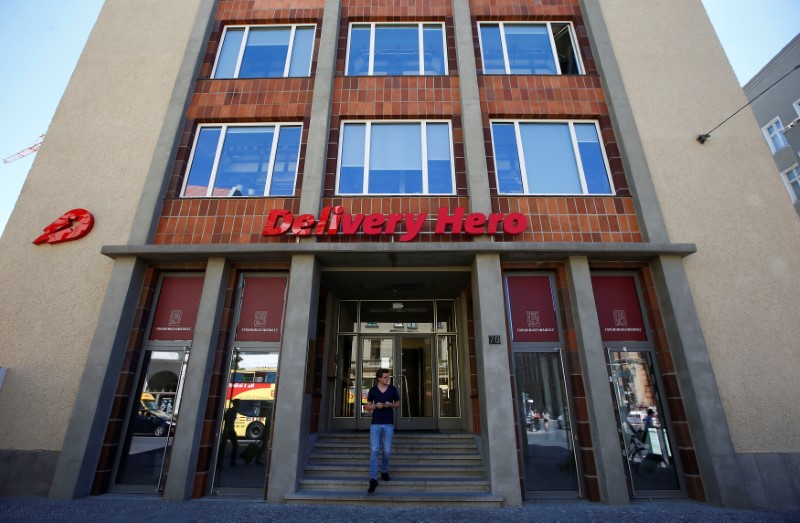
Uber and DoorDash have reportedly held talks with Delivery Hero investors about a possible buyout, with shareholders seeking more than €40 per share versus a current market value of about €10.2 billion. Uber has already lifted its stake to 19.5% from roughly 7%, while DoorDash is said to be focused on the Middle East unit and Uber on a potential full takeover. The article points to a meaningful M&A catalyst for Delivery Hero and potential asset-split value creation.
The market is effectively re-rating Delivery Hero as a breakup candidate, not an operating company, and that changes the entire comp set. The key second-order effect is that strategic value can exceed public-market value when a platform’s regional assets map cleanly to separate acquirers: one buyer can pay for share, another for geography, and financing friction is lower for asset-level deals than a whole-company takeover. That makes the current price action less about fundamentals and more about optionality collapsing into a bid framework, which can keep the stock elevated even if a full acquisition never closes.
For UBER, the important read-through is not simply ownership concentration but control optionality: a larger stake can be used to influence asset routing, governance, or a negotiated carve-out that improves Uber’s regional footprint without paying for the entire balance sheet. If Uber is able to cherry-pick assets rather than do a full takeout, the economic value of the stake could be disproportionately higher than the mark-to-market implied by a minority position. For DASH, the asymmetric prize is cleaner: if it can acquire the Middle East exposure only, it avoids the integration drag of the broader company while still buying a high-growth region with strategic adjacency.
The main risk is time. These situations often gap on headline and then bleed for weeks if the process turns into a multi-party auction with no immediate binding path; the premium can compress quickly if buyers disagree on carve-out structure or if the board pushes for a process that maximizes price rather than speed. The contrarian angle is that the crowd may be overestimating certainty and underestimating execution friction: governance disputes, antitrust complexity across regions, and cultural/operational integration can all reduce the odds of a clean all-cash close. In that setup, the best risk/reward is not chasing the target after a massive run, but structuring exposure around the bidders and using options to express asymmetric upside with defined downside.
AI-powered research, real-time alerts, and portfolio analytics for institutional investors.
Request DemoOverall Sentiment
moderately positive
Sentiment Score
0.45
Ticker Sentiment
