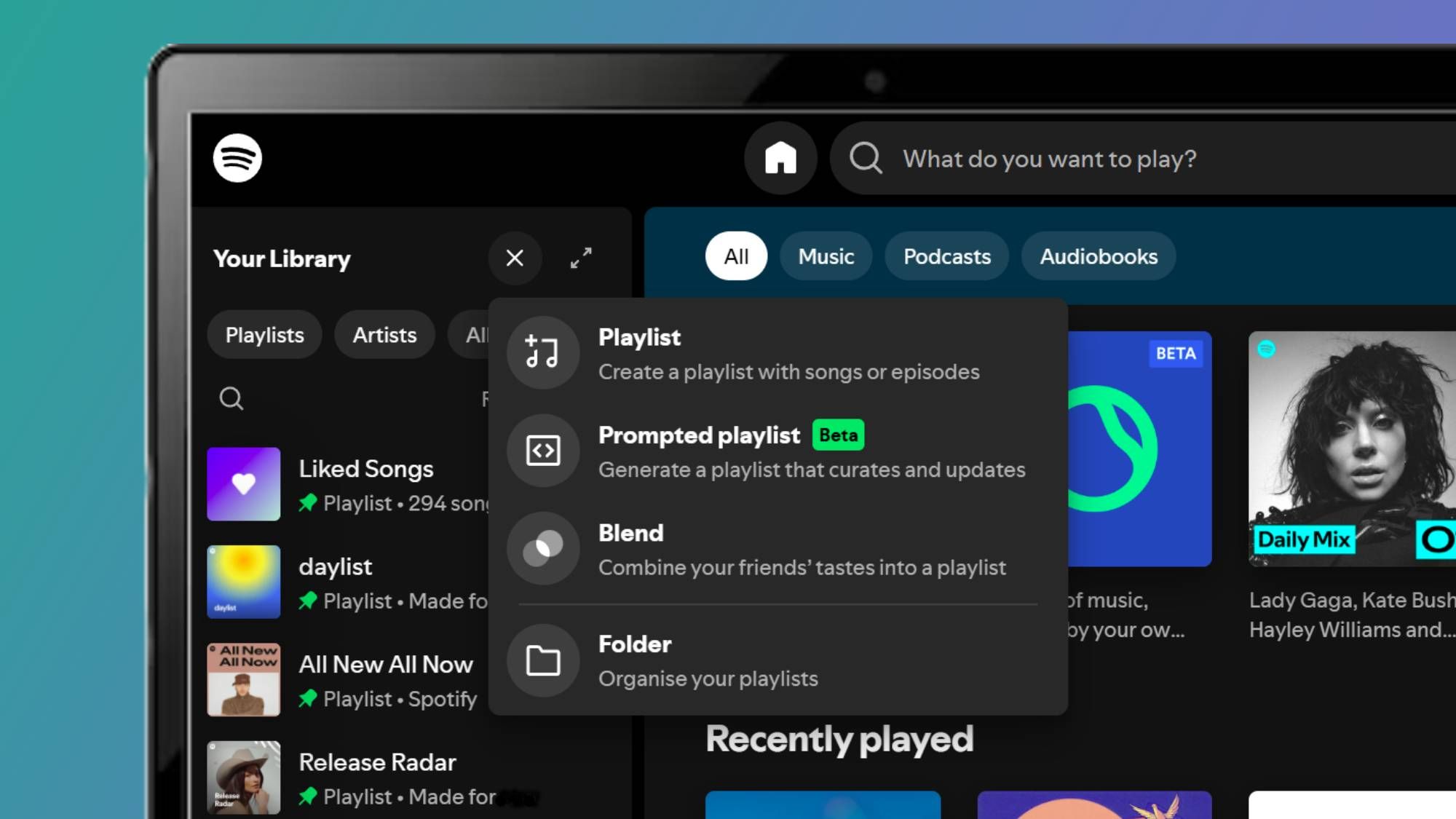
Playlist folders may be added to Spotify's mobile app after 16 years of desktop-only availability, with code strings indicating users could create, name, delete and manage folders (add/remove playlists) from mobile and receive delete confirmations. The change would close a long-standing UX gap versus rivals like Apple Music and Tidal and could modestly boost mobile engagement and ease of playlist management, but rollout timing is uncertain and Spotify has not commented.
A mobile UX parity move that meaningfully reduces friction in playlist organization is a low-cost product lever with outsized behavioral effects: easier organization lowers the activation energy for creating and reusing playlists, which disproportionately increases engagement among the top 10–15% of power users who generate ~40–60% of streams. Expect incremental metrics to show up first in playlist creation rate and session frequency (weeks, not years); meaningfully changed ARPU/ad CPM should be observable within 2–4 quarters if retention lifts by even a few percentage points.
Second-order economics tilt in Spotify’s favor: more user-curated structure produces cleaner session-level signals that feed recommender models, improving ad targeting and reducing wasted impressions. If targeting efficiency improves CPMs by 5–10% for a single percentage-point uplift in time-in-app, gross monetization per MAU could move enough to offset modest increases in royalty payouts from additional streams — a positive on margin if Spotify converts those engagement gains to ad monetization rather than just longer passive listening.
Competitive dynamics are subtle: incumbents with similar features (Apple, Tidal) lose less from parity, but smaller third-party playlist tools and curator marketplaces could see reduced demand. Operationally the change is lightweight (client UI + metadata schemas) so rollout risk is product-execution and UX regressions rather than licensing or capex; watch A/B cohorts and support tickets for early bleed-through. Privacy/regulatory friction is low but monitor ad-targeting opt-in signal changes.
The consensus will treat this as a small UX polish; the contrarian case is that it’s a durable retention lever when combined with downstream recommender improvements — i.e., a 2–3% sustained ARPU lift over 12–18 months is plausible and underpriced today. That makes small, time-limited asymmetric exposures attractive while keeping position sizing modest given execution and adoption risk.
AI-powered research, real-time alerts, and portfolio analytics for institutional investors.
Request DemoOverall Sentiment
mildly positive
Sentiment Score
0.20
Ticker Sentiment
