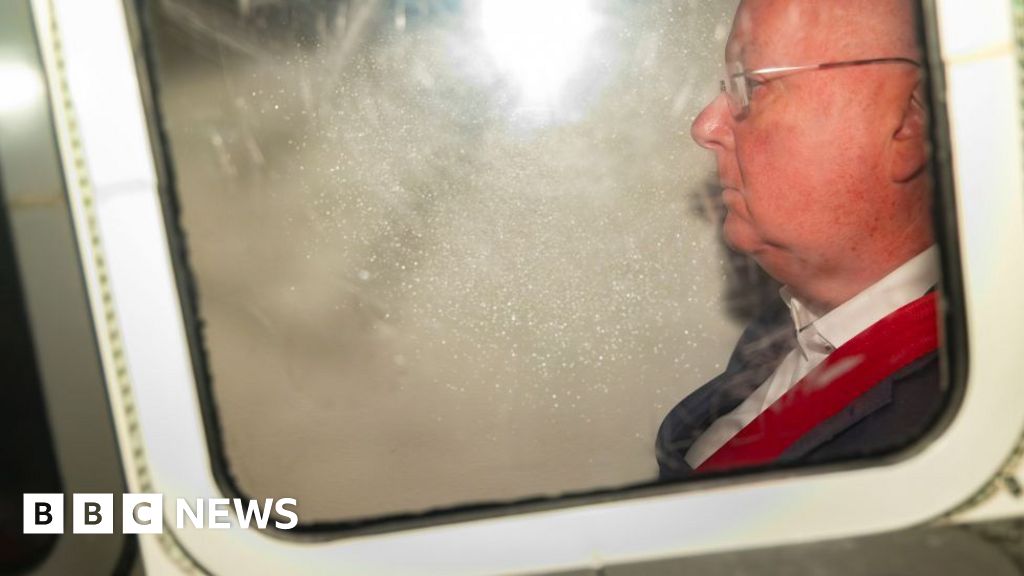
Former SNP chief executive Peter Murrell pleaded guilty to embezzling £400,310.65 from party funds over 12 August 2010 to 19 October 2022 and has been remanded in custody ahead of sentencing on 23 June. The case involves alleged misuse of funds for luxury goods, a £124,550 motorhome, cars and other personal purchases, prompting a major governance scandal for the SNP. While highly damaging politically, the direct market impact is limited.
This is a governance shock with limited direct market beta, but meaningful second-order effects on Scottish policy execution and the broader anti-incumbency narrative in UK politics. The near-term winner is opposition credibility: every additional headline extends the overhang on SNP fundraising, internal cohesion, and voter confidence, which can leak into local administrative decisions where party infrastructure and government machinery overlap. The loser is not just the party balance sheet; it is the perceived quality of institutional controls around political organizations, which raises the probability of donor hesitation and higher compliance costs across the sector.
The key market implication is less about Scotland specifically and more about the risk premium on political distraction during a period of constrained fiscal capacity. If the SNP leadership spends months litigating governance failures, policy bandwidth for housing, transport, and energy permitting deteriorates, which can delay project approvals and dampen sentiment for UK domestically exposed contractors and infrastructure names with Scottish revenue mix. The reputational spillover could also make large donors more cautious toward politically exposed charitable or civic vehicles, a subtle headwind for adjacent fundraising ecosystems.
The main catalyst window is the sentencing date and any further disclosures from the 125-page record set, which can reset the news cycle repeatedly over the next 4-8 weeks. Tail risk is not an immediate financial hit but a prolonged erosion of trust that compounds into election performance and staffing churn; that matters because governance scandals tend to be sticky once they enter public consciousness. A reversal would require a clean severing of current leadership from prior structures and a credible independent governance reform program, but absent fresh policy wins the narrative remains asymmetrically negative.
Contrarian view: the headline severity may be over-discounted into SNP-specific assets because there is no obvious tradable equity to short directly. The better expression is relative rather than absolute: underweight UK domestically sensitive names that depend on efficient local government delivery, while avoiding overtrading the news itself since the market impact is likely to be diffuse and slow-moving rather than binary.
AI-powered research, real-time alerts, and portfolio analytics for institutional investors.
Request DemoOverall Sentiment
extremely negative
Sentiment Score
-0.85
