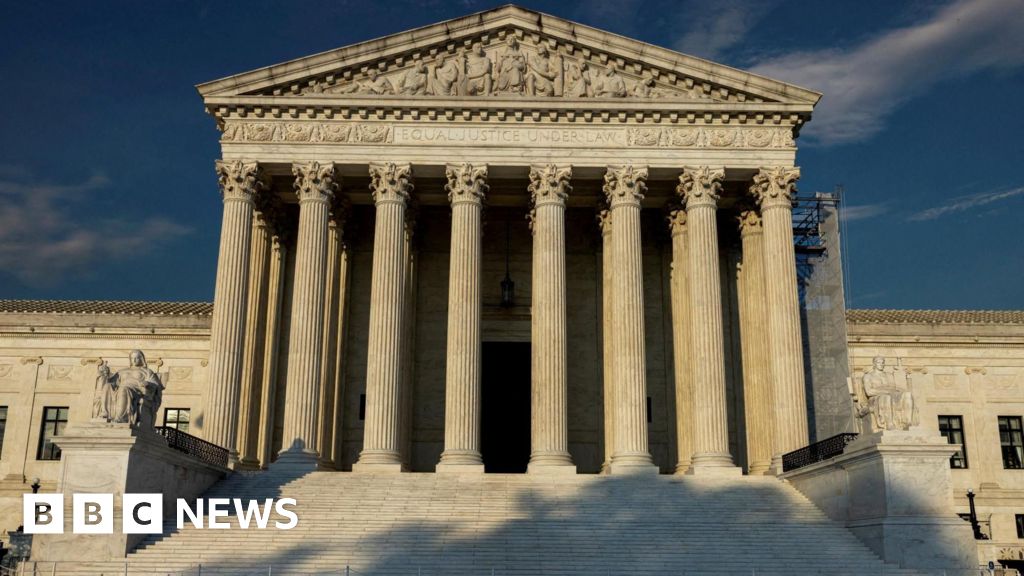
The US Supreme Court blocked Alabama's request to carry out a nitrogen gas execution of death row inmate Jeffery Lee, leaving in place lower-court rulings that the method likely violates the Constitution's ban on cruel and unusual punishment. The decision is limited to one case but underscores ongoing legal and regulatory constraints on capital punishment methods. Market impact is minimal, with the story primarily relevant to legal and public policy rather than financial markets.
The market read here is less about capital punishment policy and more about the Court signaling a willingness to police novel state-sanctioned procedures that create reputational and constitutional overhang. That raises the odds of additional injunctions against other states' execution protocols, which in practice means higher legal friction, longer timelines, and more variability in state correctional operations. The second-order effect is not direct P&L exposure but an incremental drag on political-capital stocks tied to “law-and-order” positioning, especially where litigation becomes a recurring headline risk rather than a one-off event.
The more important dynamic is asymmetry across states: jurisdictions using experimental or lightly tested methods now face a higher evidentiary bar, so one adverse ruling can effectively freeze an entire execution pathway for months or years. That shifts leverage toward plaintiffs’ counsel, medical experts, and civil-rights groups, while forcing states to spend more on defense, procedural redesign, and alternative protocols. If this gets litigated into a broader constitutional standard, the issue can migrate from a niche legal fight to a durable federalism headline that intermittently surfaces in election cycles.
Contrarian take: the immediate market impact is probably overestimated because there is no direct listed-company exposure, and this is not a binary policy reversal. The larger but subtler risk is that the Court’s split hints at a future 5-4 framework where procedural deference narrows, which would make similar cases easier to block on emergency dockets. That creates a tail risk for states that treat execution logistics as administratively settled, but also a catalyst for a broader debate on judicial override and criminal-justice discretion in conservative states.
From a trading lens, this is best viewed as a catalyst for event-driven political volatility rather than a standalone macro theme. The cleanest expression is to fade any knee-jerk move in “tough on crime” rhetoric names if the headline gets repriced into broader legislative enforcement expectations; the true impact should show up only if this becomes a repeatable Supreme Court pattern over the next 6-12 months.
AI-powered research, real-time alerts, and portfolio analytics for institutional investors.
Request DemoOverall Sentiment
mildly negative
Sentiment Score
-0.15
