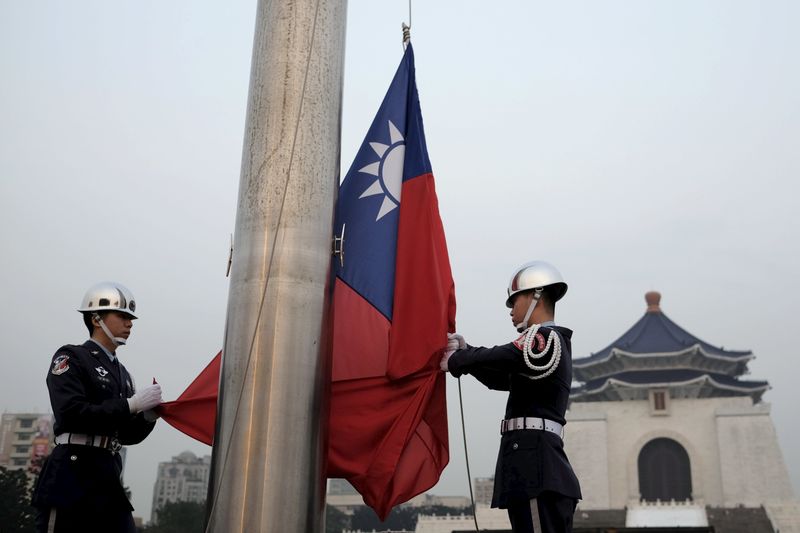
Taiwan President Lai Ching-te completed a surprise visit to Eswatini amid escalating tensions with Beijing, after China allegedly tried to block overflight permissions for his aircraft. The trip underscores persistent geopolitical friction over Taiwan’s sovereignty and could keep risk sentiment cautious in East Asian and related emerging markets. No direct corporate or earnings impact is indicated, so the likely market effect is limited.
The market takeaway is not the diplomatic theater itself, but the probability of a longer-duration friction regime that raises the cost of doing business across the Taiwan Strait and adjacent shipping lanes. That matters most for companies with exposure to semiconductors, precision manufacturing, and transshipment logistics: even modest increases in airspace/route uncertainty can add inventory buffers, rerouting costs, and delay penalties that hit margins before they hit revenue. The immediate equity signal is less about an event-driven spike and more about a slow accretion of risk premium in Asia-linked supply chains.
The more interesting second-order effect is capital allocation. Berkshire’s cash balance approaching a record is a tell that large pools of capital still see more optionality in holding dry powder than in paying up for geopolitical risk assets. If tensions persist, quality balance-sheet names with U.S.-centric earnings should continue to screen as relative winners versus export-dependent industrials and Asia revenue concentration stories. In that setup, BRK.B behaves like a defensive liquid call option on future dislocation rather than a classic value compounder trade.
For USEA and other defense-adjacent or infrastructure proxies, the catalyst is not a single crisis but the ratcheting of procurement budgets and resilience spending over the next 6-18 months. The more governments worry about overflight denial, port access, and communications disruption, the more spending shifts from discretionary CapEx to redundancy, security, and dual-sourcing. The contrarian risk is that investors may be overpricing immediate escalation while underpricing how quickly policy headlines can fade; that argues for tactical rather than outright directional exposure.
AI-powered research, real-time alerts, and portfolio analytics for institutional investors.
Request DemoOverall Sentiment
mildly negative
Sentiment Score
-0.15
Ticker Sentiment
