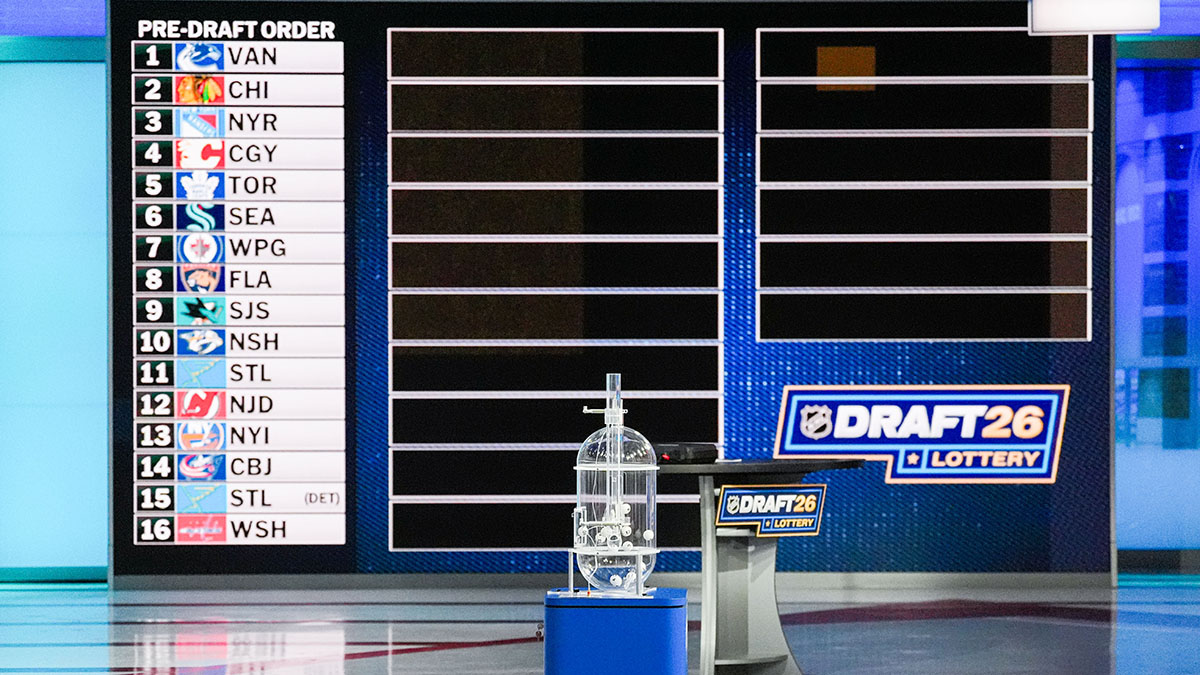
The Bruins will not receive Toronto’s 2026 first-round pick after the Maple Leafs won the NHL Draft Lottery and will pick No. 1 overall. Boston is now set to receive Toronto’s 2027 first-round pick or, depending on lottery and protection conditions, the 2028 first-round pick to complete the Brandon Carlo trade. The update is procedural and has limited market relevance beyond sports-related media coverage.
The immediate market read is that Toronto converted a near-term uncertainty into a longer-dated asset, which is usually a net positive for a contender because it preserves roster flexibility. From a franchise-management lens, pushing the pick out by one or two years effectively gives Toronto a chance to depreciate the asset through competitive success, which lowers the expected value of the selection transferred to Boston and increases the odds the Bruins are paid in a less favorable draft slot. For the Bruins, the trade-off is that the asset becomes more optionality than certainty: the value is now tied to Toronto’s future standings and the league’s draft topology, both of which are hard to forecast but likely more volatile than the original 2026 outcome.
The second-order effect is on incentives around roster quality and deadline behavior. A top-10 protected structure creates asymmetry: if Toronto is genuinely bad in 2027, they may face a perverse incentive to manage around the protection threshold, but if they are merely mediocre, Boston could end up with a more valuable unprotected 2028 first. That makes the pick effectively a convex claim on Toronto’s organizational trajectory — the worse Toronto becomes, the more likely Boston captures a premium asset, but the path includes a possible delay and a scenario where the Flyers absorb the 2027 pick instead.
The contrarian angle is that markets and fans typically overestimate the downside of delayed picks and underestimate how often protected selections become better than the original asset class. In NHL terms, an unprotected future first from a non-bottoming team can be more valuable than a protected near-term pick, especially if the club’s window narrows or injuries hit. The real beneficiary may be Boston’s asset base if Toronto remains good enough to keep the pick in play but not dominant enough to make the future first trivial.
Catalyst-wise, the relevant horizon is 12-24 months, not days. The key reversal would be Toronto sustaining elite performance or making a major roster upgrade that pushes the eventual first deep into the draft, which would cap Boston’s upside; conversely, a step-down season would sharply re-rate the asset. The only near-term risk is mispricing the pick as dead money when in reality it has become a longer-duration, higher-variance claim.
AI-powered research, real-time alerts, and portfolio analytics for institutional investors.
Request DemoOverall Sentiment
neutral
Sentiment Score
-0.05
