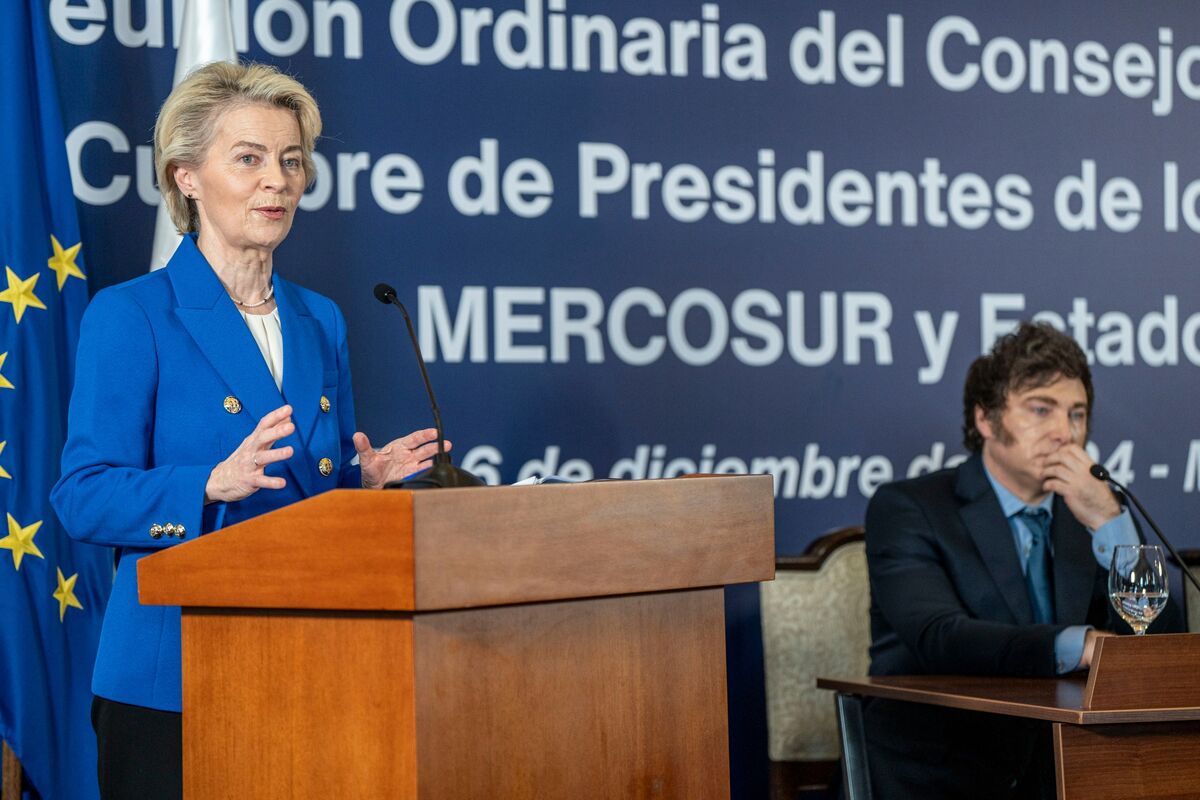
The European Union Commission is actively advancing its trade agenda, with the long-stalled Mercosur pact with South American nations now reaching its final stages. To overcome skepticism from member states like France and Poland, the agreement includes a specific mechanism that will activate if import volumes fluctuate by 10%. This strategic push underscores the EU's focus on securing new trade relationships amidst evolving global tariff environments.
The European Union Commission is actively advancing the long-stalled Mercosur trade agreement, indicating a strategic pivot to secure new trade partnerships in response to global tariff pressures. The deal's progression is significant, yet it faces internal headwinds from skeptical member states like France and Poland, creating notable execution risk. To address these concerns, a key provision has been introduced: a special mechanism that activates upon a 10% fluctuation in import volumes. This safeguard is a critical 'sweetener' designed to protect sensitive domestic industries, likely agriculture, from sudden market disruption. The inclusion of this clause highlights the delicate political balancing act required to achieve consensus within the EU, while the push for the deal itself underscores the bloc's focus on diversifying supply chains and strengthening its geopolitical trade position.
AI-powered research, real-time alerts, and portfolio analytics for institutional investors.
Request DemoOverall Sentiment
mildly positive
Sentiment Score
0.25
