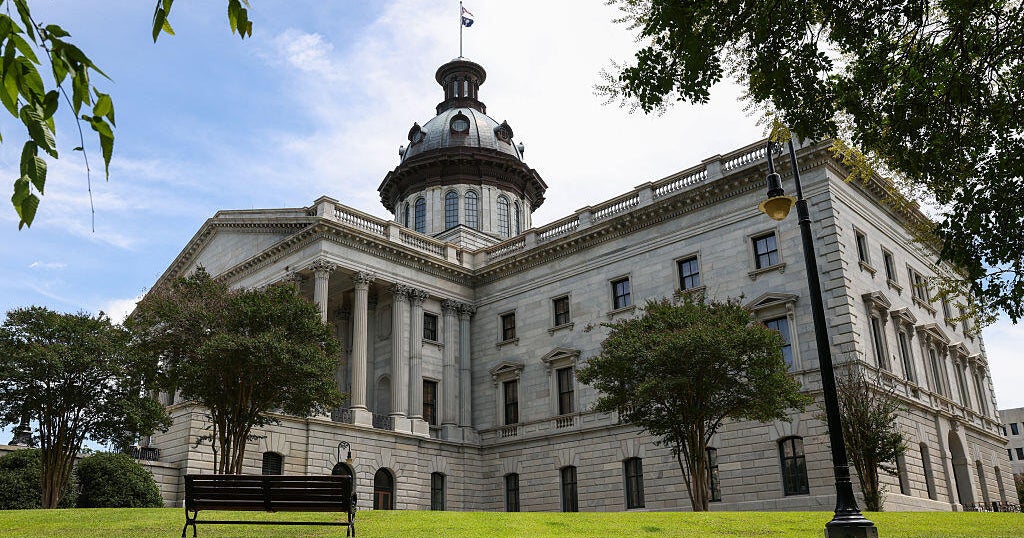
South Carolina's Senate rejected a Republican plan to cancel ongoing congressional primaries and redraw districts to target Rep. Jim Clyburn, leaving the current election process intact for now. The article also notes a federal injunction blocking Alabama's GOP-backed map and broader GOP-led redistricting efforts across several states ahead of the midterms. The developments are politically significant but have limited direct market impact.
The immediate market read is not about Congress itself but about the probability that high-profile, state-level election engineering keeps running into legal friction. That matters because the GOP’s redistricting edge is now increasingly path-dependent on courts and timing, not just political control; every injunction or delay raises the odds that mid-cycle map changes miss the practical cutoff for 2026 candidate filing and fundraising allocation decisions. The second-order effect is that incumbents in the most exposed districts should see a temporary reduction in electoral volatility, which lowers the value of rushed map changes as a strategic weapon.
The Alabama ruling is the more important signal for investors because it suggests race-conscious map design still carries material litigation risk even after recent Supreme Court shifts. That creates a non-linear setup: if courts continue to block aggressive redraws, the GOP’s expected seat pickup shrinks, which slightly improves the odds of a narrower House margin and a lower probability of sweeping policy changes on taxes, antitrust, and healthcare. Conversely, if the Supreme Court stays lower-court injunctions, the market could quickly reprice toward a more durable pro-business legislative backdrop over the next 1-3 months.
The contrarian angle is that the consensus may be overestimating how much redistricting can change the 2026 House map in time. Legislative changes are costly, legally fragile, and often produce unintended seat risk in adjacent districts; the real winner may be incumbency and legal inertia rather than either party. That means the biggest trading implication is not a broad partisan bet, but a volatility trade around litigation dates and state legislative deadlines, with the potential for short-lived headline-driven moves rather than a durable regime shift.
AI-powered research, real-time alerts, and portfolio analytics for institutional investors.
Request DemoOverall Sentiment
neutral
Sentiment Score
-0.05
