
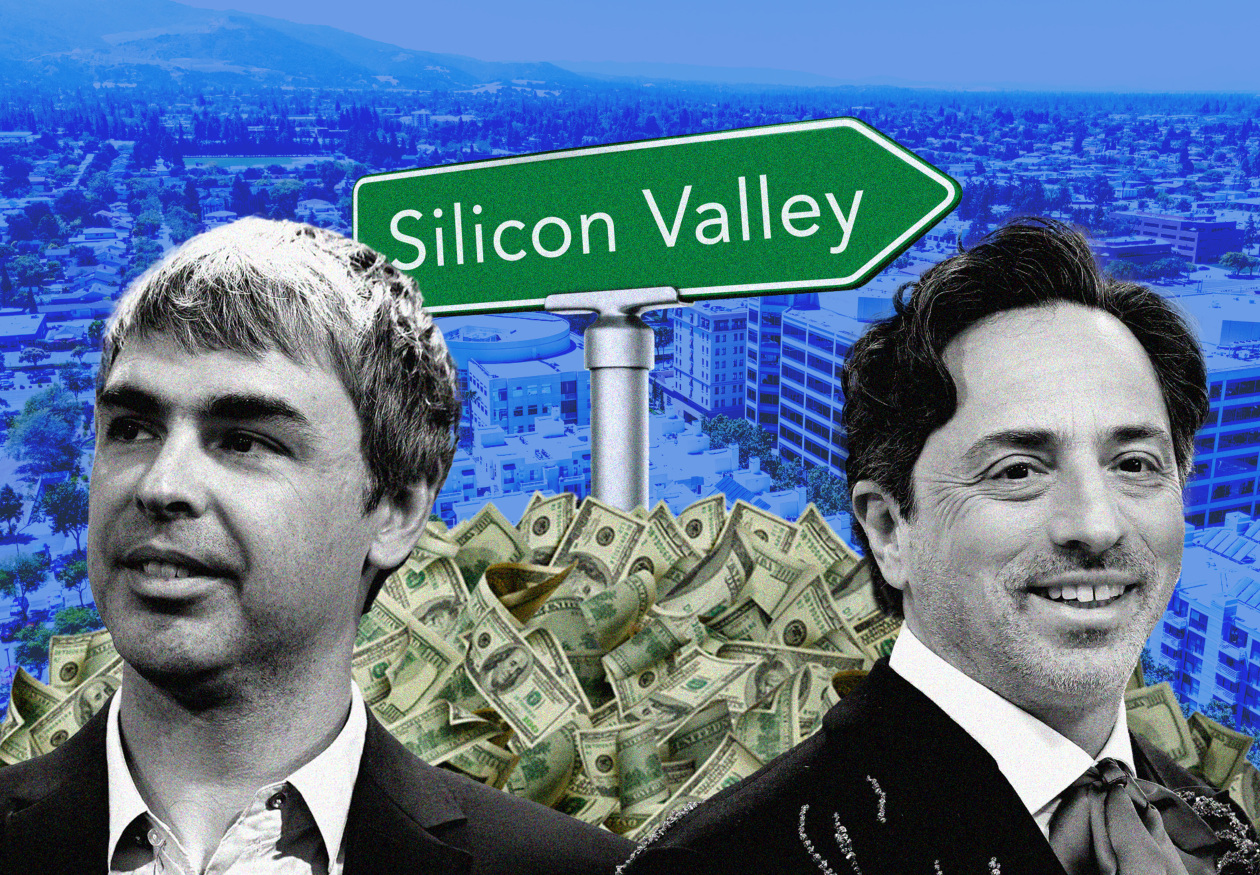
The article argues against California's proposed one-time billionaire tax, with Alphabet co-founder Sergey Brin warning that it would push the state toward socialism. It frames Silicon Valley's wealth as having been built in part on government support, suggesting the debate is political and ideological rather than a direct business catalyst. Market impact is limited because this is commentary, not a policy change or company-specific earnings event.
This is less a direct earnings issue for GOOGL than a signaling event about the durability of California's innovation bargain. The market should care because any policy that increases perceived state-level expropriation risk raises the required return on founder-controlled tech equities, especially where valuation already embeds premium for optionality and governance insulation. The immediate P&L impact is negligible; the larger effect is on sentiment, employee retention, and the willingness of founders to keep economic activity, IP, and political influence anchored in California.
The second-order loser is not just GOOGL but the broader Bay Area ecosystem: private capital may increasingly prefer structures and jurisdictions with lower tax and regulatory uncertainty, which can slowly erode California's clustering advantage. That matters over months to years, not days, because high-skill labor and venture formation are sticky until a policy regime starts altering expected after-tax returns enough to change location decisions at the margin. If this debate broadens, expect incremental benefits to states like Texas and Florida, plus lower-tax public comps that can market themselves as better domiciles for scaled tech and AI firms.
The contrarian view is that the headline overstates near-term execution risk. A one-time wealth levy is politically noisy but mechanically hard to implement at scale, and the larger probability is dilution through courts, exemptions, or timing slippage. For GOOGL specifically, this can become a buy-the-dip setup if the stock weakens on governance rhetoric, because the business remains globally diversified and the policy path here is more about marginal multiple compression than fundamental cash-flow impairment.
Catalyst timing matters: in the next few weeks the trade is mostly narrative-driven, but over 6-12 months any serious ballot progress could pressure multiples for mega-cap California tech by 1-2 turns if investors start pricing in recurring fiscal raids. The tail risk is a broader anti-tech policy coalition that couples wealth taxes with higher capital gains, housing, or labor regulation, which would be more meaningful than this proposal alone.
AI-powered research, real-time alerts, and portfolio analytics for institutional investors.
Request TrialOverall Sentiment
neutral
Sentiment Score
-0.05
Ticker Sentiment
