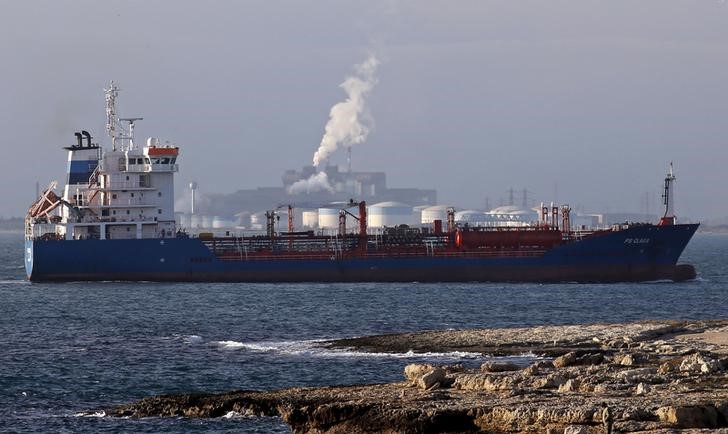
Iraq’s crude exports through the Strait of Hormuz collapsed to 10 million barrels in April from a historical monthly baseline of about 93 million barrels, tightening supply amid the Iran war. Brent settled up 1.2% at $83.80 a barrel and WTI rose 1.4% to $79.50 as Middle East shipping disruptions lifted global crude risk premiums. Iraq said it is exporting 200,000 barrels per day through Ceyhan and plans to raise that to 500,000 barrels, while also targeting 5 million barrels per day in steady production capacity.
This is less about a one-day oil pop and more about a regime shift in the physical market. If Hormuz throughput stays impaired, the marginal barrel becomes a logistics problem, not a geology problem, which tends to re-rate prompt contracts first and front-end refiners second. The biggest winners are non-Hormuz exporters with spare pipeline or Atlantic Basin optionality; the biggest losers are Asian refiners, tanker routing economics, and any country reliant on Middle East crude delivered on a just-in-time basis.
Second-order effects matter here: a sustained chokepoint disruption should steepen the Brent structure, widen regional differentials, and raise product cracks more than headline crude. That creates a mixed signal for integrated majors — upstream cash flow improves, but downstream margins can get hit if crude outruns product pricing or if freight/insurance costs spike. The market is also underestimating how quickly buyers may preemptively hoard inventories for 4-8 weeks, which could exaggerate the move before any actual shortage is visible in OECD stocks.
The main reversal risk is political or military de-escalation, but the more realistic medium-term cap is demand destruction and strategic response. If Brent holds above the low-80s for several weeks, Asia’s discretionary buying should slow and Chinese state actors may lean more aggressively on SPRs, swaps, and term rerouting, reducing the scarcity premium. If the disruption persists for months rather than days, the real trade is not just higher oil — it is higher volatility across shipping, petrochemicals, airlines, and EM current accounts.
Consensus may be too focused on headline oil beta and not enough on dispersion. This setup favors volatility structures and relative-value positioning over outright directional chasing, because the upside from a supply shock is fast but the downside from a diplomatic reset can be equally abrupt. The cleaner expression is long assets with direct scarcity exposure and short sectors with delayed pass-through and weak pricing power.
AI-powered research, real-time alerts, and portfolio analytics for institutional investors.
Request DemoOverall Sentiment
moderately positive
Sentiment Score
0.35
