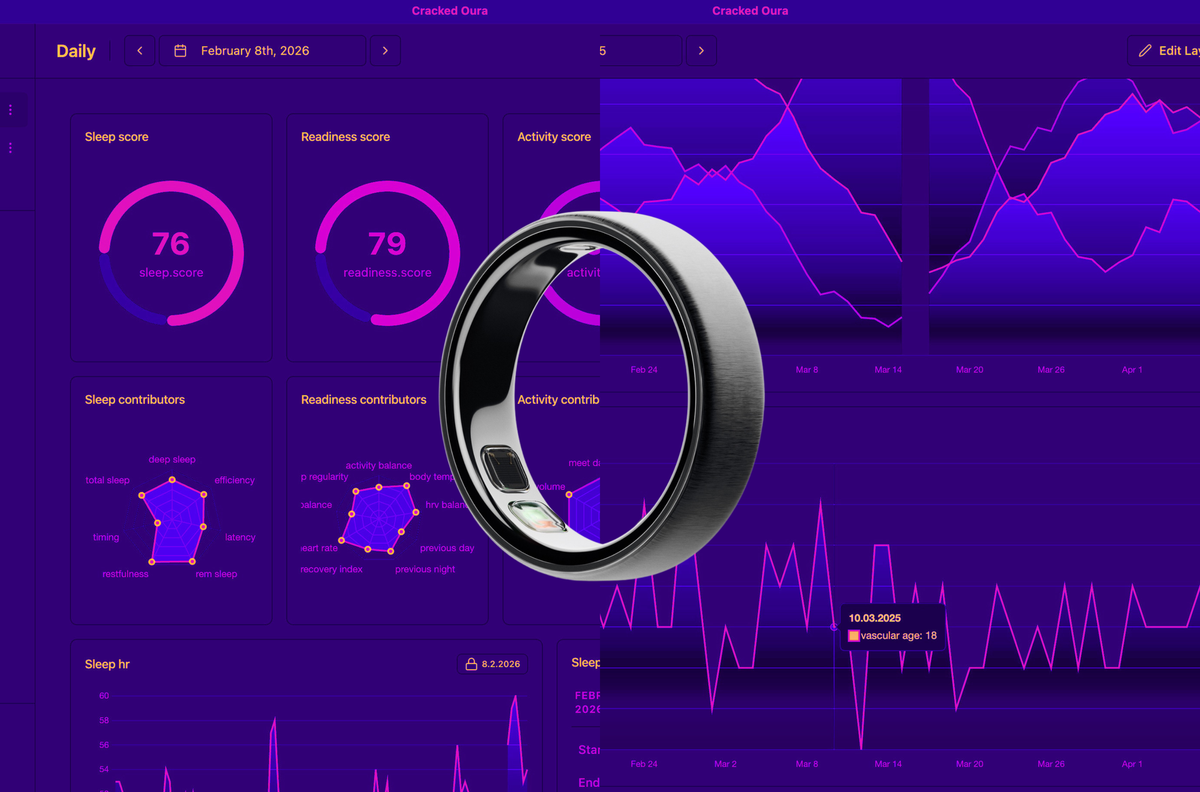
Oura launched the Ring 5 at $399-$499, while the required subscription to access usable sleep, stress, and exercise insights costs nearly $70 per year or $6 per month. The article highlights consumer frustration with Oura's paywall and the emergence of an open-source alternative, Cracked Oura, that bypasses the monthly fee. Overall impact appears limited to product and subscription sentiment rather than a broader market catalyst.
This is less about one gadget and more about the fragility of the “data monetization” model in wearables. If third-party tools can recreate the core analytics layer, the subscription becomes a tax on convenience rather than a true moat, which raises churn risk and weakens pricing power across the category. The second-order effect is that hardware differentiation has to do more work: buyers will increasingly compare devices on sensor quality, comfort, and ecosystem openness, not on the bundled dashboard.
The near-term winner is the consumer, but the longer-term winner may be the broader health-data stack: open APIs, coaching apps, and employers/insurers that can ingest raw biometrics without paying platform rents. That shifts value away from closed consumer subscriptions and toward software layers that aggregate, interpret, and act on the data. For incumbents, the danger is not immediate revenue collapse; it is slower cohort degradation as power users and price-sensitive users quietly self-select out over the next 2-4 quarters.
The key catalyst to watch is whether this remains a niche workaround or becomes a template for broader jailbreak-style tooling across premium wearables. If adoption spreads, it increases refund/support friction and makes future launches harder to upsell, especially when hardware prices are already elevated. The countervailing risk is enforcement: if the platform tightens APIs or changes device-side data access, the open-source angle could lose functionality quickly, but that likely triggers an even more visible backlash among the most engaged users.
Contrarian takeaway: the market may overestimate the defensibility of recurring consumer subscriptions in hardware-adjacent categories. The real vulnerability is not one app, but the precedent it sets that analytics can be commoditized once data ownership is established by the user. That argues for owning the picks-and-shovels layer of interoperable health data rather than the closed-end subscription layer.
AI-powered research, real-time alerts, and portfolio analytics for institutional investors.
Request DemoOverall Sentiment
neutral
Sentiment Score
-0.05
