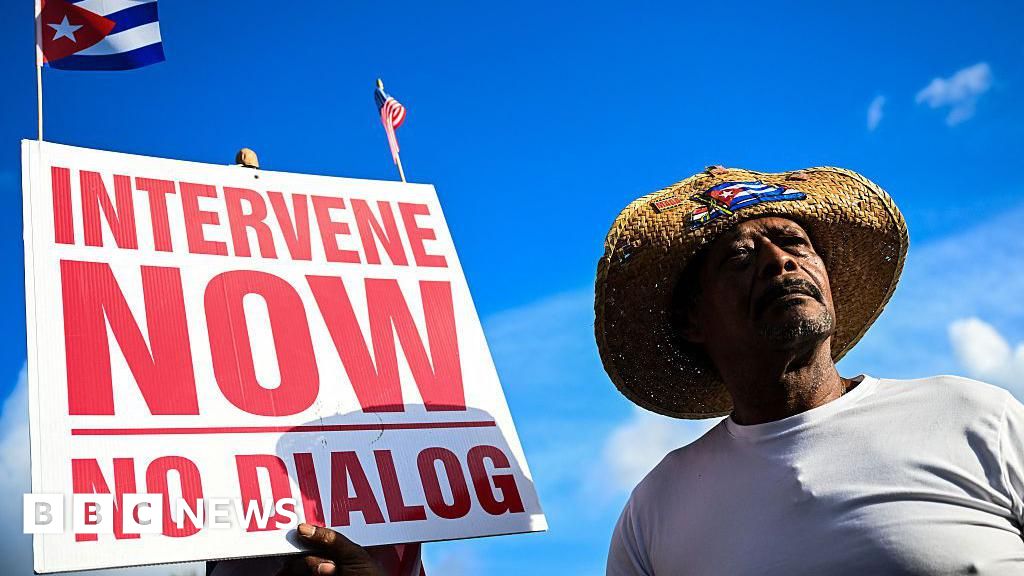
The article lays out three high-risk scenarios for Cuba after the U.S. indictment of 94-year-old Raúl Castro: a U.S. capture operation, negotiated leadership change, or economic collapse. Cuba is already facing severe fuel shortages, hours-long daily blackouts, and massive food shortages, raising the risk of domestic turmoil and migration pressures. The piece also highlights the possibility of U.S. military or covert intervention, making this a materially elevated geopolitical risk.
The market implication is less about Cuba itself than about the probability distribution of a broader US coercion campaign in the Caribbean. The first-order trade is not a Cuba-specific asset but a rise in event risk for sovereign spreads, regional FX, and any corridor-dependent logistics tied to Florida/Mexico migration and maritime disruption. If Washington tests a capture-or-leadership-change playbook, the signal to other sanctioned regimes is that legal indictment can be a precursor to kinetic or covert action, which raises the odds of retaliatory cyber, intelligence, and energy-market noise over the next 1-3 months.
The more important second-order effect is on migration and domestic US politics. A disorderly Cuban collapse would likely create a fast, ugly humanitarian flow into Florida and Mexico, which increases pressure for border enforcement, maritime interdiction, and politically charged headlines into the next election cycle. That raises the probability of policy whiplash: hawkish rhetoric now, followed by selective de-escalation if refugee flows spike or if allied governments object, creating a classic short-horizon volatility trap.
For markets, the direct beneficiary is the US security state rather than the military contractor complex alone: watch intelligence, surveillance, and border/security vendors that benefit from persistent monitoring rather than a one-off strike. The overdone part of consensus is assuming regime fragility equals imminent regime replacement; the state-security apparatus can outlast the economy, so the highest-probability path is prolonged dysfunction, not clean transition. That argues for positioning around volatility persistence, not binary outcome certainty.
The clearest reversal catalyst is a backchannel negotiation that preserves Cuba’s institutions in exchange for economic opening and reduced Russian/Chinese footprint. If that emerges over the next 4-8 weeks, the headline risk premium should compress quickly, especially in defense and anti-immigration thematic baskets, while humanitarian and remittance-related names could stabilize. Until then, the tape should reward convexity over outright directional bets.
AI-powered research, real-time alerts, and portfolio analytics for institutional investors.
Request DemoOverall Sentiment
strongly negative
Sentiment Score
-0.65
Ticker Sentiment
