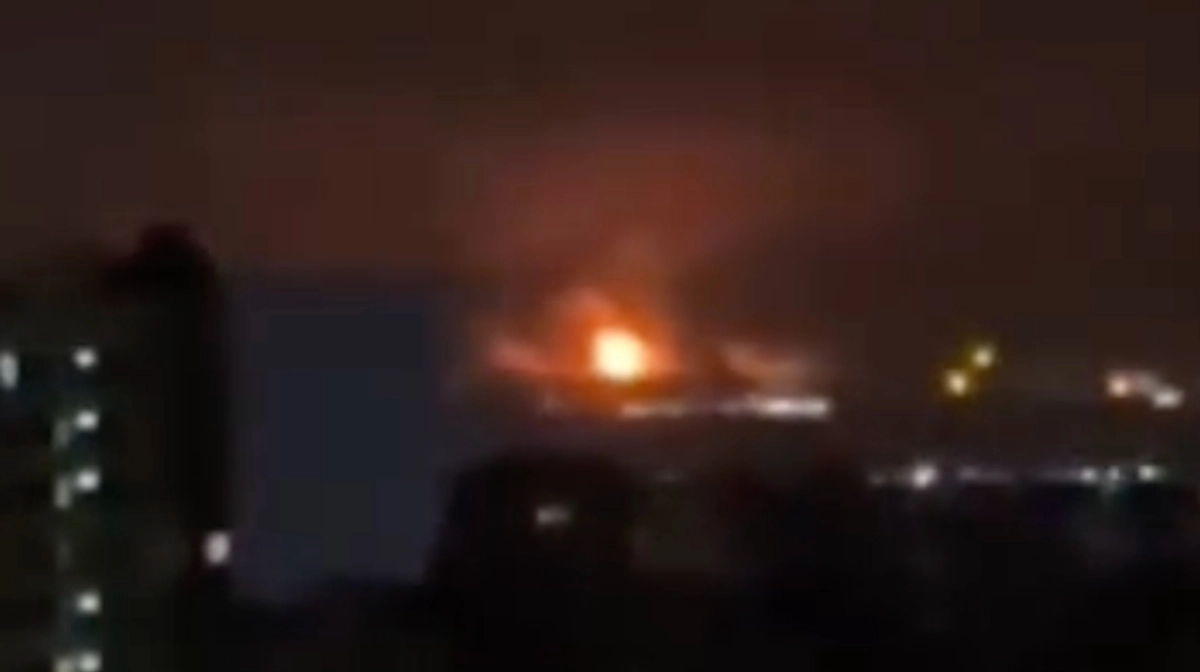
Drone and missile attacks were reported overnight across Moscow, Yaroslavl and Rostov-on-Don, with 264 UAVs claimed downed by Russian authorities and temporary flight restrictions imposed at Moscow’s Vnukovo and Domodedovo airports. A fire broke out at the Yaroslavnefteorgsintez oil refinery, while debris from intercepted drones caused damage in multiple cities in Rostov Oblast. The incidents highlight escalating wartime disruption risk for Russian energy infrastructure and air travel.
The market implication is not the headline fire risk itself but the widening asymmetry in Russia's domestic security premium: repeated drone penetration near Moscow forces higher spend on air defense, dispersal, and hardening while also creating periodic transport disruptions that are small in isolation but cumulative for logistics reliability. That tends to be inflationary for Russian operating costs and marginally supportive for ex-Russia defense suppliers, especially firms exposed to interceptors, sensors, EW, and base-hardening systems. In energy, the key question is not whether one refinery outage moves Brent materially, but whether the pattern is becoming a persistent refining bottleneck that lifts regional product spreads and export arbitrage, particularly for diesel and jet fuel into Eastern Europe and the Black Sea basin.
Second-order effects are most relevant in transportation and industrial supply chains: airport restrictions around Moscow can ripple through passenger flows, cargo scheduling, and just-in-time replenishment, while strikes in the south raise risk premia for rail and road logistics feeding military and commodity corridors. Over days, that creates volatility in Russian domestic fuel distribution and potentially tighter product availability in nearby markets; over months, it pressures refining maintenance budgets and insurance costs, which can reduce throughput even after physical damage is repaired. The broader strategic signal is that Ukraine appears able to impose recurring economic friction at distances that challenge Russia's ability to fully shield its core assets.
The contrarian point is that markets often overestimate the immediate macro impact of individual attacks and underestimate the cumulative effect on loss rates, insurance, and capex allocation. The likely near-term trade is not a crude bull thesis, but a relative-value setup favoring defense and European energy security beneficiaries versus broad Russia-exposed risk assets. If attacks continue into the next 2-4 weeks, expect Moscow to respond with louder escalation rhetoric but only modest incremental market reaction unless a major refinery, pipeline node, or airport hub is materially disabled.
AI-powered research, real-time alerts, and portfolio analytics for institutional investors.
Request DemoOverall Sentiment
strongly negative
Sentiment Score
-0.72
