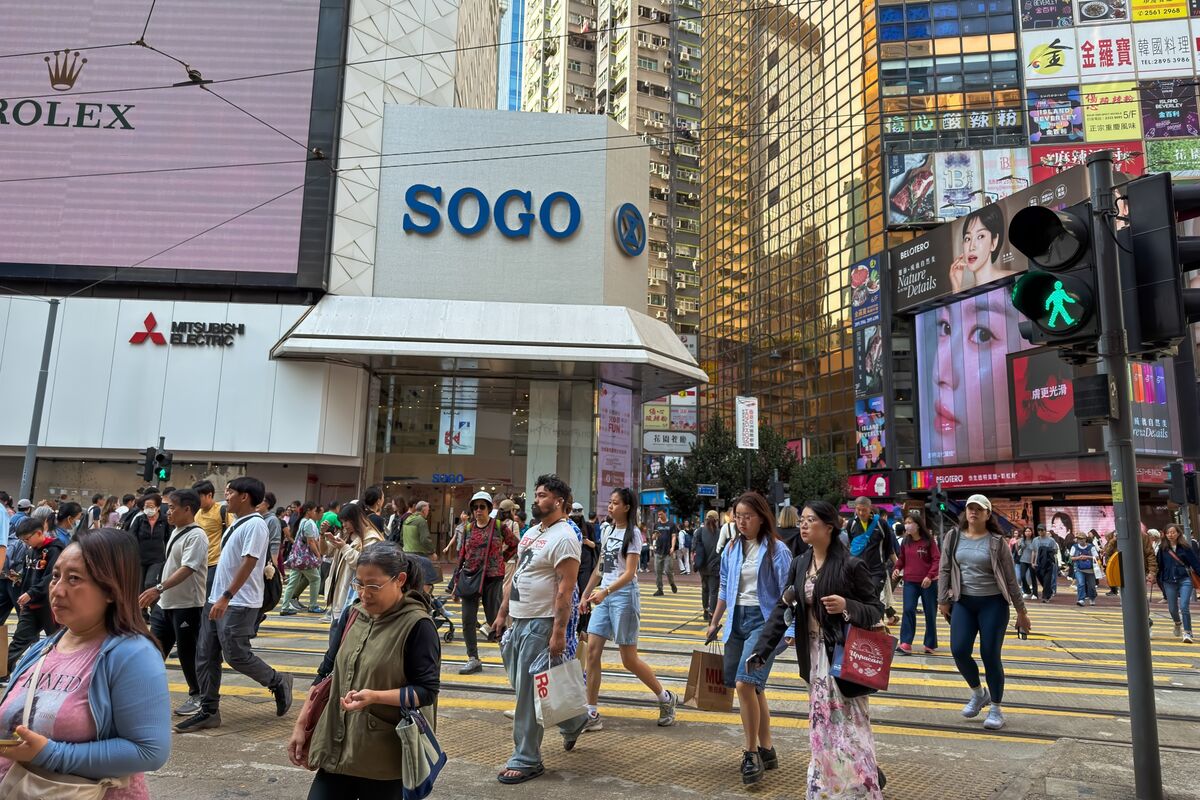
Lifestyle International Holdings still needs about HK$2 billion ($255 million) in commitments to refinance HK$6.75 billion of outstanding debt on its Sogo department store loan, with less than a month before maturity. Negotiations with banks have already lasted more than four months, highlighting refinancing stress in Hong Kong’s property downturn. The situation is negative for credit sentiment but is likely to matter mainly for the company and its lenders rather than the broader market.
This is less about one retail landlord and more about the bank syndicate signaling that Hong Kong commercial real estate is still in the repricing phase, not the clearing phase. When a refinancing takes months and still lands short, it usually forces lenders to choose between extending on weaker economics or crystallizing a restructuring process that exposes collateral haircuts across the broader portfolio. The second-order effect is tighter marginal credit for mid-market property-linked borrowers, which can compress liquidity in sectors that rely on warehouse funding and revolving bank lines.
The near-term winners are balance-sheet conservative banks with low CRE concentrations and fee-heavy franchises; the losers are lenders with Hong Kong property exposure and any sponsor-owned RE asset that needs refinancing in the next 6-12 months. Retail and consumer names with exposure to Hong Kong malls can also feel a knock-on hit if lenders and landlords start prioritizing cash preservation over occupancy incentives, leading to slower leasing, higher tenant churn, and weaker rent reversion than headline footfall would suggest.
The risk catalyst is not default alone but the refinancing calendar: every near-maturity deal that gets pushed becomes a data point for higher credit spreads and lower valuation marks. If the city’s funding environment stays tight for another 1-2 quarters, expect a wave of asset sales and recapitalizations rather than clean takeouts, which would pressure appraised values and potentially trigger covenant cascades in private credit vehicles. A policy-led reversal would likely require visible rate relief or a more forceful stabilization effort from local banks; absent that, the market is still pricing in too much optimism about how quickly property liquidity normalizes.
The contrarian angle is that this may be more of a liquidity squeeze than a solvency event for high-quality, central assets, meaning the eventual restructuring value could be better than the market fears. That argues against indiscriminate shorts on Hong Kong property-linked names and instead favors selective expressions where refinancing risk is highest and transparency lowest. The opportunity is to own the lenders least exposed to CRE while shorting the weakest balance-sheet property and retail credits that must refinance in the next two reporting cycles.
AI-powered research, real-time alerts, and portfolio analytics for institutional investors.
Request DemoOverall Sentiment
moderately negative
Sentiment Score
-0.45
